



Vancouver Appliance Energy Bills: Why Your Old Fridge Costs You More Than You Think
Wondering why your BC Hydro bill keeps climbing despite your best energy-saving efforts? Your aging refrigerator and other old appliances might be silently draining hundreds of dollars from your wallet each year, especially with Vancouver’s recent electricity rate changes.Picture this: you’re diligently unplugging chargers and switching to LED bulbs, yet your monthly electricity costs continue their upward march. The real culprits behind those eye-watering utility bills might be hiding in plain sight – that trusty 15-year-old refrigerator humming in your kitchen, the clothes dryer that takes multiple cycles to get your laundry truly dry, or the dishwasher that seems to work fine but actually consumes far more energy than modern models.Understanding exactly how much your old appliances cost to operate isn’t just about satisfying curiosity. With Vancouver’s unique coastal climate accelerating appliance wear and BC Hydro’s evolving rate structures, homeowners across neighborhoods like Kitsilano, Richmond, and Burnaby are discovering that appliance efficiency now plays a bigger role than ever in determining monthly electricity costs.
Key Outtakes
- Old refrigerators from 2000 can consume 72 kWh monthly versus 28-39 kWh for modern Energy Star models, costing Vancouver homeowners an extra $30-60 annually per appliance
- Phantom power consumption from always-on devices accounts for up to 10% of household electricity usage, potentially costing $100-300+ annually in unnecessary utility expenses
- Appliance energy efficiency has improved dramatically since 2000, with clothes washers showing the most significant gains at 75% reduction in energy consumption
- Vancouver’s coastal climate and humidity can accelerate appliance degradation, particularly affecting seals and gaskets that compromise efficiency over time
- BC Hydro offers rebate programs up to $2,500 for heat pump upgrades and $30 buyback for old spare refrigerators to help offset replacement costs
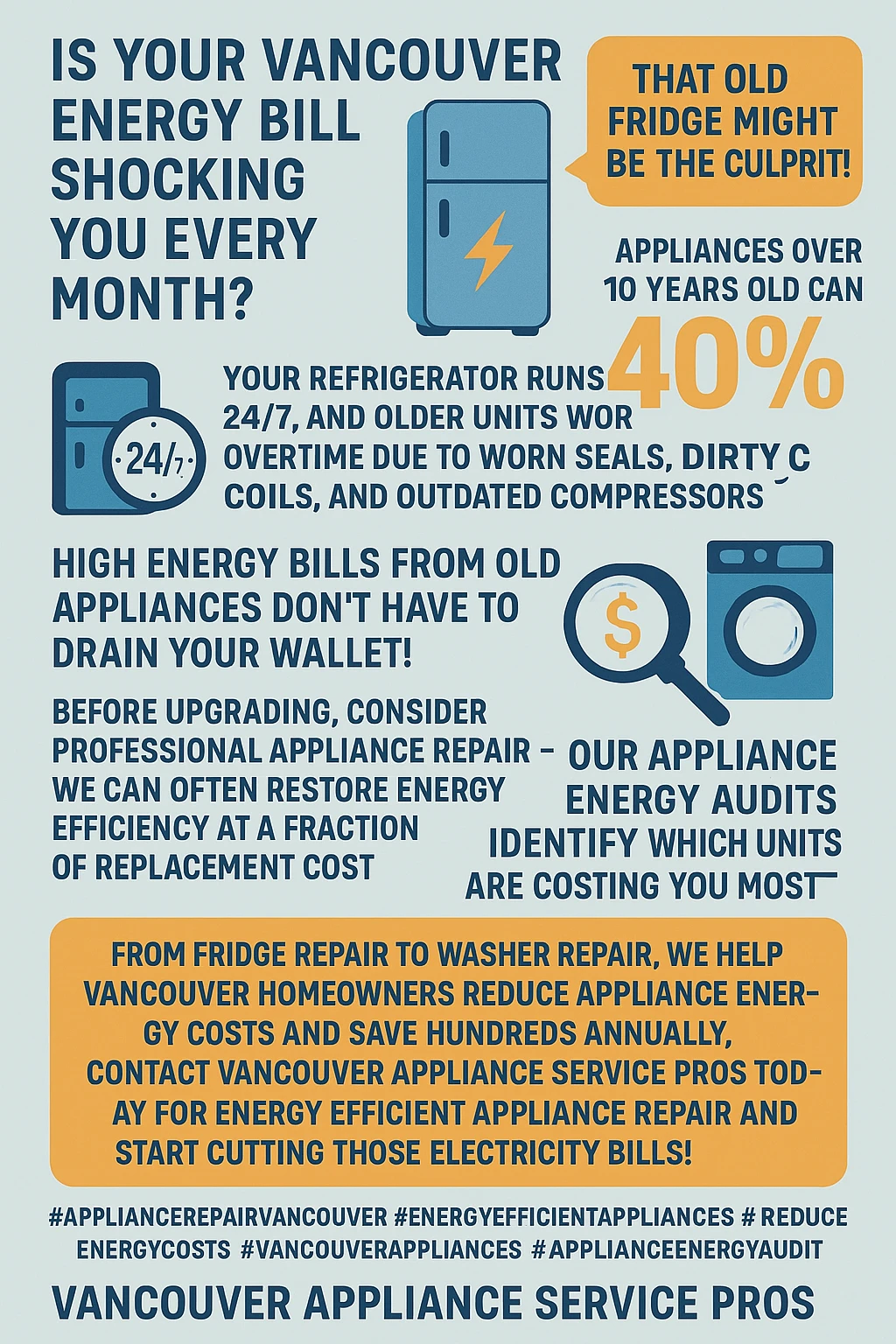
The True Cost of Running Old Appliances in Vancouver
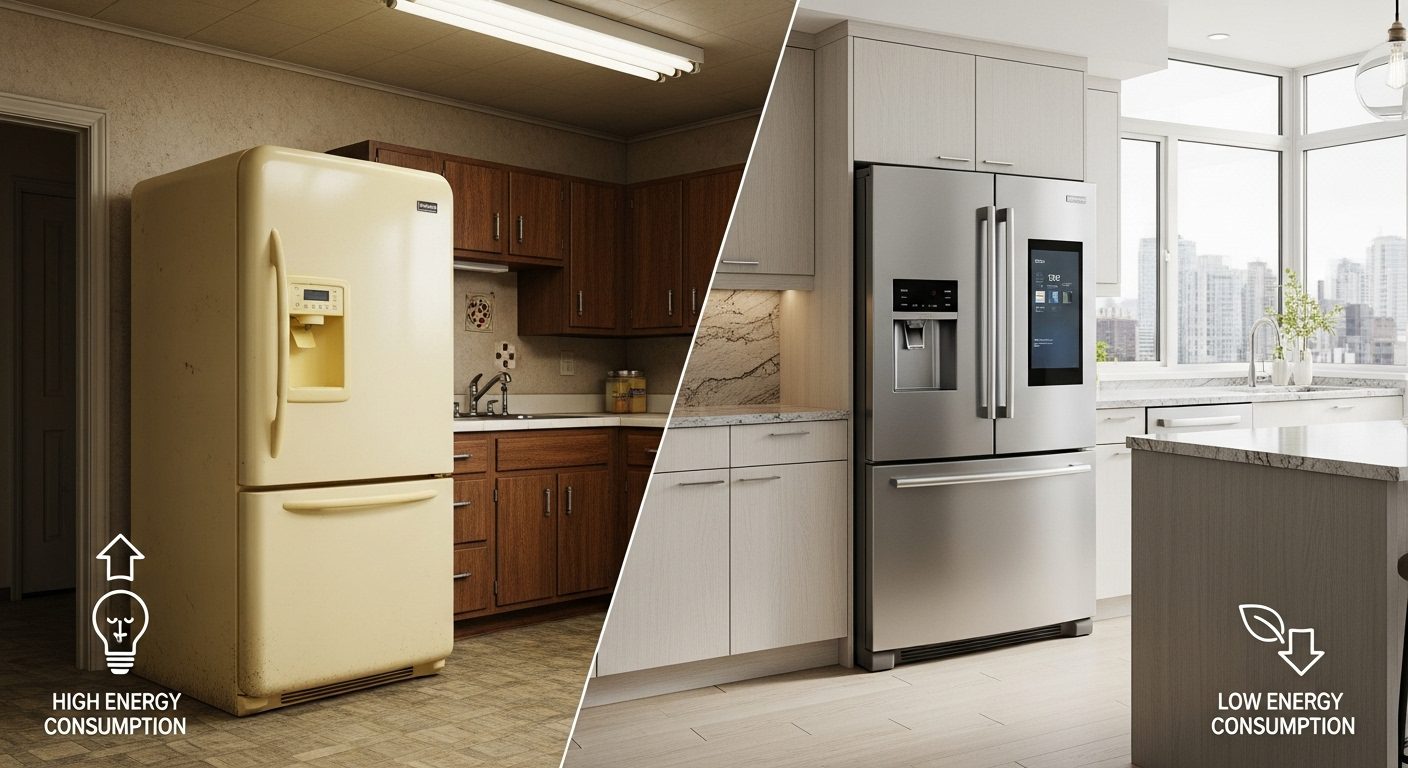 Your seemingly functional older appliances are actually working overtime to deliver diminishing performance while consuming dramatically more electricity than necessary. The numbers behind this hidden waste are more startling than most homeowners realize, especially when you factor in BC Hydro’s current electricity rates and the compound effect of running inefficient appliances 24/7.Refrigerators provide the most dramatic example of this efficiency gap. A 15 cubic foot refrigerator manufactured in 2000 consumes approximately 72 kWh per month, while a comparable modern Energy Star model uses only 28 kWh monthly. At current BC Hydro rates, this translates to roughly $6.64 versus $4.23 per month respectively – a difference of nearly $30 annually for a single appliance that never gets a break from running.The efficiency improvements extend far beyond refrigerators to virtually every major household appliance. Between 2000 and 2019, energy consumption data shows that clothes washers experienced the most dramatic improvement, with average annual consumption dropping from over 600 kWh to just 134 kWh. If you’re still using a washer from the early 2000s in your Vancouver home, you’re potentially paying for nearly five times more electricity than necessary for this single appliance, adding hundreds of dollars to your annual utility costs.Vancouver’s coastal environment compounds these efficiency problems in ways that don’t affect homeowners in drier climates. The marine air and humidity levels accelerate the degradation of appliance seals and gaskets, particularly in refrigerators and dishwashers. When these components begin to fail, your appliances must work significantly harder to maintain performance, driving up energy consumption beyond normal aging patterns and creating costs that continue escalating until the appliance is replaced.
Understanding Phantom Loads and Energy Vampire Devices
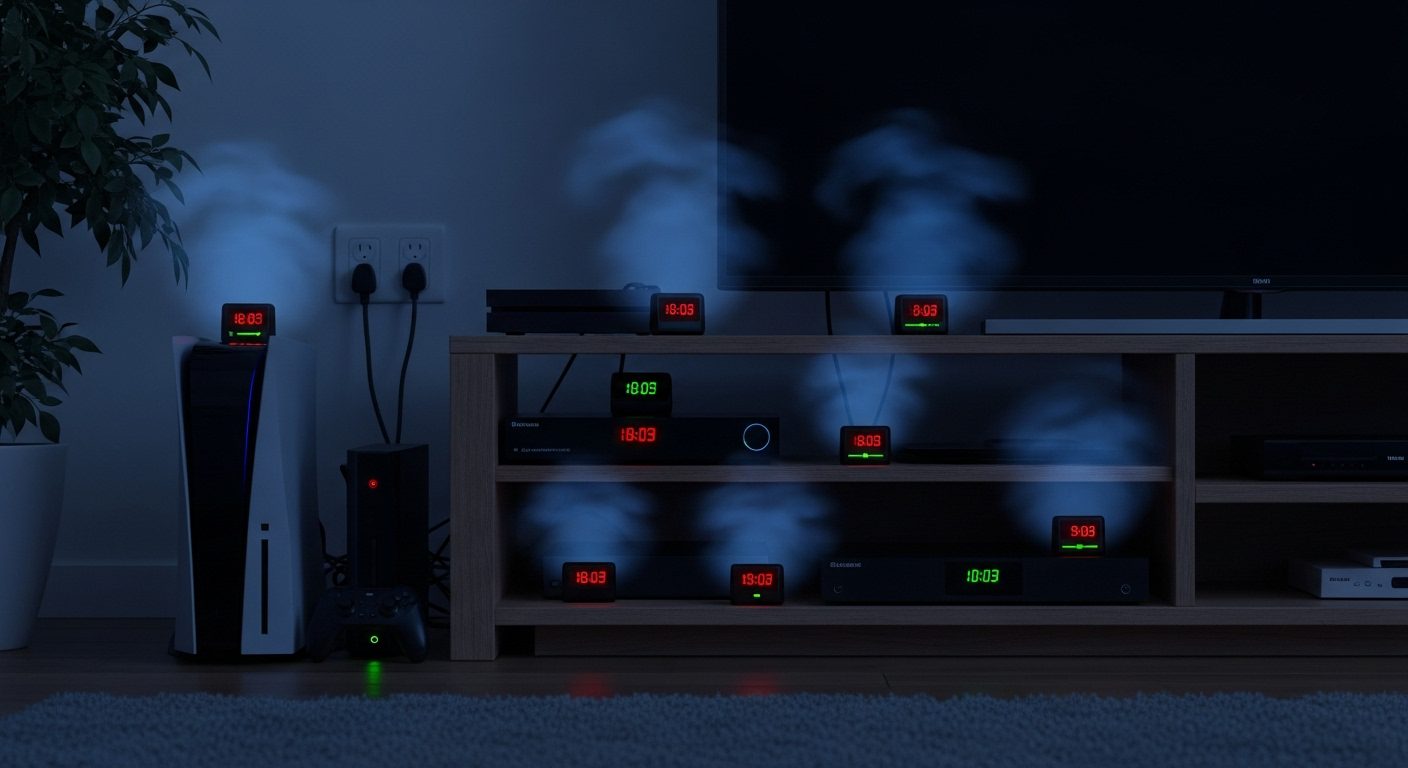 Beyond the obvious energy drains from major appliances, a hidden network of phantom loads throughout your Vancouver home steadily siphons electricity even when devices appear to be turned off. These energy vampire devices collectively account for up to 10% of household electricity consumption, representing a significant but often overlooked expense that can easily cost homeowners $100-300 annually in unnecessary utility charges.The most common energy vampires hiding in Vancouver homes include coffee makers with digital displays, microwave ovens with LED clocks, and cable boxes that maintain network connections around the clock. Gaming consoles present particularly significant phantom loads when left in standby mode rather than being fully powered down. A PlayStation or Xbox in standby mode can consume 233 kWh annually, costing approximately $35 per year just to maintain that instant-on convenience.Home entertainment systems create some of the most expensive phantom load scenarios, especially in homes with multiple devices. A typical setup including a large screen TV, cable box, sound system, and streaming devices can easily consume 139-200 kWh annually just from standby power, translating to $20-30 in electricity costs for the privilege of using remote controls and maintaining network connectivity.Phone chargers and laptop adapters left plugged in represent smaller individual loads but become significant when multiplied across multiple devices and family members. Even when not actively charging, these adapters continue drawing small amounts of power that add up over time. The solution involves using power strips that can be switched off completely, or simply unplugging chargers when not in use – a simple habit change that can reduce your phantom loads by 30-50%.
How Vancouver’s Climate Affects Appliance Efficiency
Vancouver’s unique coastal climate creates specific challenges for appliance efficiency that homeowners in drier inland areas don’t experience. The combination of mild temperatures, high humidity, and salt air affects how your appliances operate and how quickly they degrade, ultimately impacting both performance and energy consumption in ways that can significantly increase your electricity costs over time.The marine environment accelerates corrosion and wear on appliance components, particularly affecting metal parts and seals that maintain efficiency. Refrigerators and freezers face unique challenges as their seals and gaskets deteriorate more quickly in humid conditions, forcing the compressor to work harder to maintain proper temperatures. This increased workload translates directly to higher energy consumption that can add 10-20% to the operating costs of these appliances compared to similar units in drier climates.Heat pumps, which are becoming increasingly popular in Vancouver homes, actually operate more efficiently in the coastal climate compared to areas with extreme temperature swings. However, the humidity can affect their defrost cycles and overall performance during the wet winter months. Understanding these climate-specific factors helps homeowners make informed decisions about maintenance schedules and replacement timing to optimize both performance and energy efficiency.The salt air common in coastal areas of Vancouver, particularly in neighborhoods closer to the water like English Bay or Richmond, can accelerate the deterioration of electronic components and metal housing. This environmental factor means that appliances may need more frequent maintenance or earlier replacement compared to identical models used in inland locations, making energy efficiency considerations even more important for long-term cost management.
BC Hydro Programs and Energy Efficiency Incentives
 Understanding the true cost of your old appliances becomes even more actionable when you discover the extensive rebate and incentive programs available specifically to Vancouver homeowners. These financial support systems can dramatically reduce the upfront costs of appliance upgrades while accelerating your payback timeline through immediate savings and ongoing efficiency improvements that compound over years.BC Hydro’s residential rebate programs offer substantial financial support for energy-efficient appliance upgrades that directly address the highest-consumption devices in Vancouver homes. The utility provides up to $2,500 for heat pump installations and $1,000 for heat pump water heaters in electrically heated buildings, making these high-impact upgrades accessible to homeowners who want to eliminate the biggest energy drains from their monthly bills.Even more generous support comes through income-qualified programs that can cover virtually the entire cost of major appliance upgrades for eligible households. These comprehensive programs include up to $19,000 for heat pump installations and $3,500 for heat pump water heaters, often eliminating the financial barriers that prevent homeowners from upgrading their most energy-hungry appliances.BC Hydro also offers a practical immediate incentive through their fridge buyback program, providing $30 for spare refrigerators that typically cost $84 or more annually to operate. While the immediate payment might seem modest, eliminating that ongoing $84 annual operating cost creates genuine long-term savings. For Vancouver homeowners with basement or garage refrigerators that rarely get used, this program provides both immediate cash and permanent elimination of unnecessary energy consumption.
When to Repair Versus Replace Energy-Hungry Appliances
The transition from understanding energy costs to making practical replacement decisions requires a systematic approach that balances immediate repair expenses against long-term energy savings and appliance reliability. The 50% rule provides clear guidance for these situations: if repair costs exceed half the price of a new energy-efficient model, replacement typically delivers better financial results over the appliance’s remaining lifespan.Refrigerators older than 10-15 years present compelling replacement cases even when still functioning normally, especially given the dramatic efficiency improvements in modern models. A refrigerator manufactured in 2000 consuming 72 kWh monthly costs approximately $10.87 to operate, while a comparable modern Energy Star model uses only 28-39 kWh monthly, costing $4.23-$5.89. This $5-6 monthly difference adds up to $60-72 in annual savings, making replacement financially advantageous even for appliances that seem to work fine.Clothes dryers present more complex replacement decisions because their energy consumption varies significantly based on usage patterns and load types. However, older dryers often require multiple cycles to fully dry loads, essentially doubling their energy consumption and your time investment. Heat pump dryers represent a revolutionary efficiency improvement, using only 0.54 kWh per load compared to 2.5-4 kWh for conventional models, but their higher upfront costs require careful calculation of payback periods based on your household’s laundry frequency.Water heaters deserve immediate replacement consideration if they’re more than 8-10 years old, given both efficiency improvements and reliability concerns. Electric water heaters consuming 380-500 kWh monthly cost $57-75 to operate, while modern heat pump water heaters use only 77-111 kWh monthly for the same hot water production. The potential monthly savings of $40-60 can justify replacement costs relatively quickly, especially when combined with available rebate programs that offset initial expenses.
Frequently Asked Questions
How much money can I save by replacing a 15-year-old refrigerator?
Replacing a 15-year-old refrigerator can save Vancouver homeowners $30-60 annually in electricity costs alone. A refrigerator from 2000 typically consumes 72 kWh monthly, costing approximately $10.87 to operate, while modern Energy Star models use only 28-39 kWh monthly, costing $4.23-$5.89. Over the 10-15 year lifespan of a new refrigerator, these savings can add up to $300-900 in reduced electricity bills, not including potential repair costs for keeping the old unit running.
What appliances use the most electricity in Vancouver homes?
Electric water heaters typically consume the most electricity in Vancouver homes, using 380-500 kWh monthly and costing $57-75 per month to operate. Heating systems account for the largest percentage of household energy consumption at approximately 40-50% of total usage, followed by water heating at 14-25%. Clothes dryers, refrigerators, and other major appliances each represent smaller percentages individually but can collectively account for significant portions of your monthly electricity bill, especially if they’re older, less efficient models.
How do I know if my appliances are energy vampires?
Energy vampire appliances continue drawing power even when turned off, often indicated by digital displays, clocks, or standby lights that remain active. Common culprits include coffee makers with digital displays, microwave ovens with LED clocks, cable boxes, gaming consoles in standby mode, and phone chargers left plugged in. You can identify these phantom loads by checking if devices feel warm when supposedly off or by using a simple power meter to measure consumption when appliances appear inactive.
Wrapping Up
Your old appliances are costing you far more than you realize, with efficiency improvements over the past two decades creating dramatic savings opportunities for Vancouver homeowners willing to upgrade their energy-hungry devices. Between phantom loads draining up to 10% of your electricity usage and outdated major appliances consuming 2-5 times more energy than modern alternatives, the financial impact of keeping old appliances can easily reach hundreds or thousands of dollars annually in unnecessary utility costs.When you’re ready to take control of your energy costs and upgrade to more efficient appliances, Vancouver Appliance Service Pros can help you navigate the complex decisions around repair versus replacement, identify the most cost-effective upgrade priorities, and ensure your new appliances are properly installed for maximum efficiency and longevity. Our experienced technicians understand how Vancouver’s coastal climate affects appliance performance and can provide expert guidance on maintenance schedules and energy-saving strategies that deliver real results on your monthly BC Hydro bills.