




Wondering why your Vancouver energy bills keep climbing higher despite your best conservation efforts? Your seemingly efficient appliances might actually be hidden energy vampires, quietly draining both electricity and money from your home 24 hours a day. 
Last month, I helped my friend Sarah in Kitsilano investigate her mysteriously high BC Hydro bill. Despite religiously turning off lights and unplugging devices, her monthly costs had increased by nearly 30% over the past year. After conducting a thorough appliance energy audit, we discovered that her 12-year-old refrigerator, seemingly innocent coffee maker, and entertainment system were consuming far more power than she realized—even when they appeared to be ‘off.’
Vancouver homeowners face unique challenges when it comes to appliance efficiency. Our mild coastal climate means we rely heavily on electric appliances year-round, while BC Hydro’s tiered pricing structure makes every kilowatt-hour count. What many residents don’t realize is that outdated appliances and phantom power consumption can account for hundreds of dollars in unnecessary annual expenses, making energy efficiency upgrades not just environmentally responsible but financially essential.
Related Services: Dishwasher Repair | Washing Machine Repair | Dryer Repair
Key Outtakes
- Appliances manufactured before 2010 typically use 20-40% more energy than current Energy Star models, costing Vancouver homeowners an extra $200-500 annually
- Phantom loads from standby devices can account for 5-10% of your total electricity consumption, equivalent to running an extra refrigerator
- BC Hydro offers rebates up to $5,000 for qualifying heat pump installations and additional incentives for Energy Star appliances
- Professional energy audits identify the most cost-effective upgrade priorities across neighborhoods like Mount Pleasant, Commercial Drive, and West End
- Smart power strips and strategic appliance placement can eliminate up to 75% of phantom power consumption without sacrificing convenience
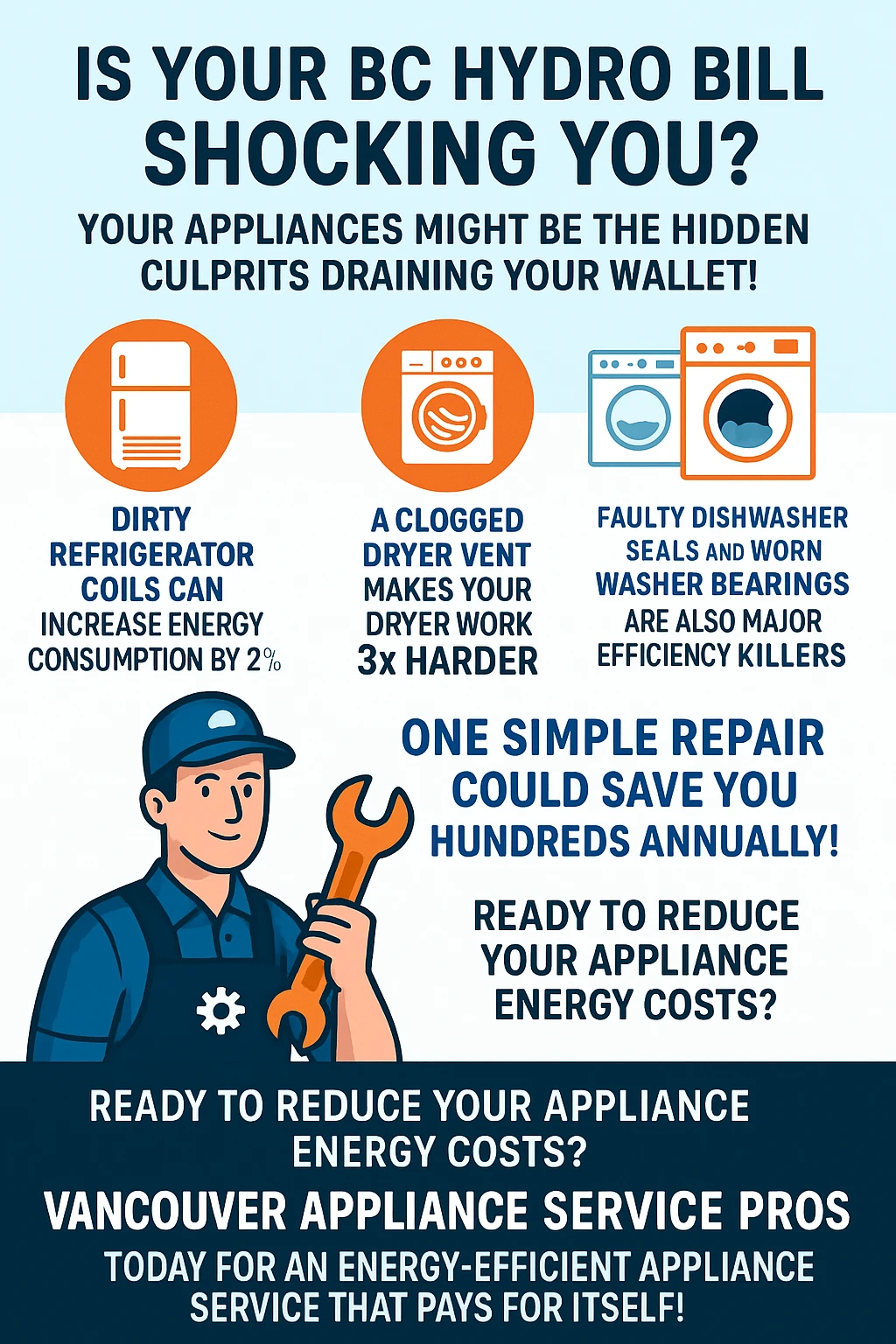
Understanding Your Vancouver Home’s Energy Consumption Patterns
Before diving into specific appliance costs, it’s crucial to understand how Vancouver homes consume electricity differently than other Canadian cities. Our temperate climate means less extreme heating and cooling demands, but higher year-round use of appliances like dehumidifiers, clothes dryers, and electric water heaters. The result is a more consistent baseline consumption that makes inefficient appliances particularly costly over time.
BC Hydro’s two-tier residential pricing structure amplifies the impact of energy-wasting appliances. The first 1,350 kWh per billing period costs 9.45 cents per kWh, while consumption above this threshold jumps to 14.17 cents per kWh. Inefficient appliances don’t just consume more electricity—they push you into the higher-cost tier more quickly, creating a compounding effect on your monthly bills.
Seasonal variation in Vancouver also affects appliance efficiency in unexpected ways. The high humidity during our rainy months forces refrigerators and freezers to work harder to maintain proper temperatures, while clothes dryers require longer cycles to achieve adequate drying. Understanding these patterns helps prioritize which appliances to audit first for maximum savings potential.
The Biggest Energy Vampires in Vancouver Homes
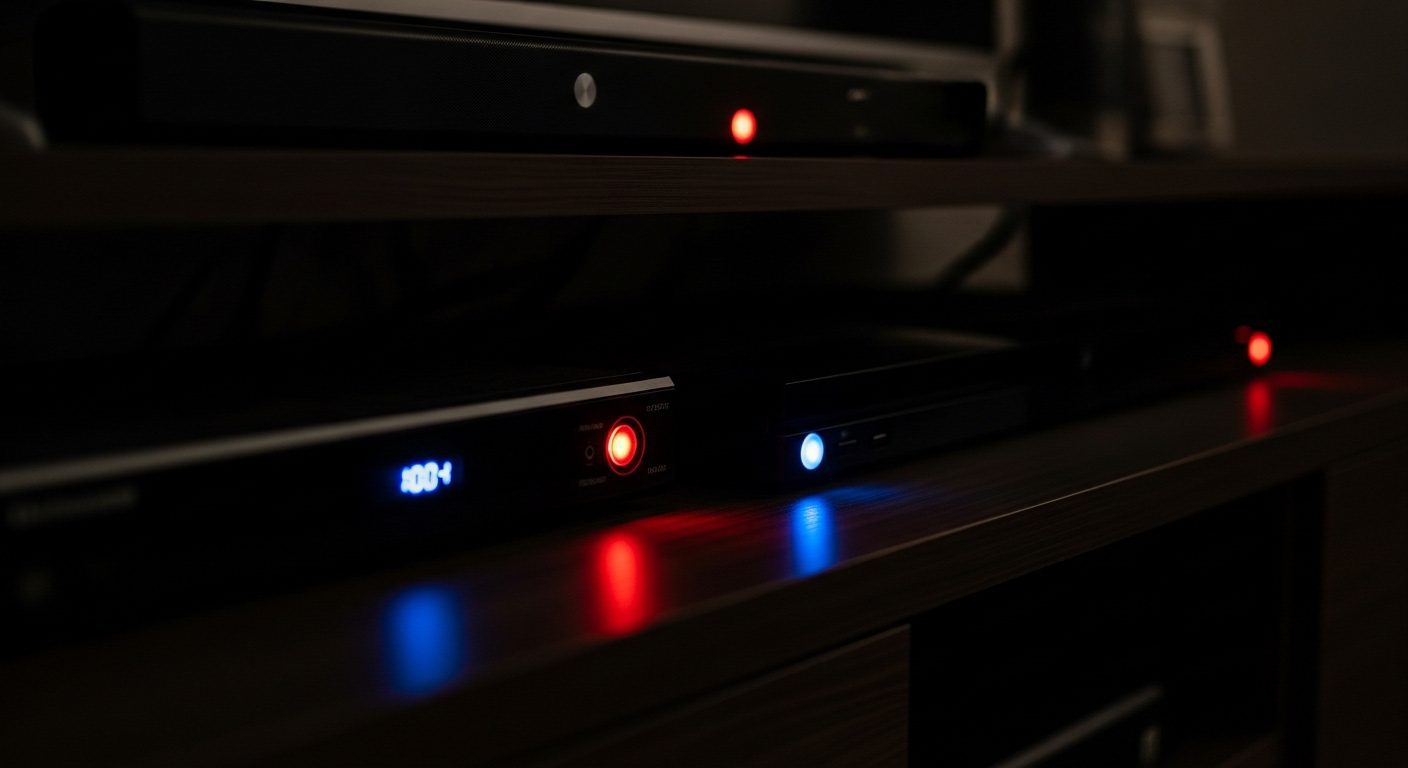
Energy vampire appliances continue drawing power even when they appear completely shut off, maintaining features like digital displays, remote control sensors, and network connections. These phantom loads individually seem insignificant, but collectively represent one of the largest opportunities for immediate energy savings in most Vancouver homes.
Entertainment systems top the list of energy vampires, with cable boxes, gaming consoles, and sound systems consuming between 15-45 watts continuously. A typical setup including a cable box, gaming console, and sound bar can easily draw 40 watts around the clock, costing approximately $35-50 annually just to maintain standby functions. Gaming consoles are particularly problematic, as features like instant-on mode and automatic downloads can increase standby consumption to over 150 watts.
Kitchen appliances with digital displays represent another major category of phantom power consumption. Microwaves, coffee makers, dishwashers, and even toaster ovens typically draw 1-4 watts each to maintain their clock displays and electronic controls. While individual consumption seems minimal, the cumulative effect of six kitchen appliances drawing 3 watts each equals 18 watts of continuous consumption, costing roughly $15-20 annually for functionality you rarely use.
Home office equipment deserves special attention because these devices often operate continuously by design. Desktop computers in sleep mode, monitors maintaining quick-wake functions, printers ready for wireless commands, and networking equipment like routers and modems all contribute to baseline consumption. Network equipment particularly impacts costs because routers and modems typically draw 8-15 watts each and never truly turn off, making them steady contributors to your electricity bill.
The integration of smart home devices has created new categories of energy vampires that many homeowners don’t consider. Smart TVs maintaining internet connections, voice assistants listening for wake words, and smart thermostats with display backlighting all contribute to phantom loads. While individually small, homes with comprehensive smart automation can easily accumulate 50-75 watts of continuous phantom consumption, translating to $45-70 in annual costs.
Calculating the True Cost of Outdated Appliances
Moving beyond phantom loads to examine actual appliance efficiency reveals even more dramatic cost differences. Modern appliance efficiency standards have improved significantly over the past decade, meaning appliances that seem perfectly functional may actually be costing far more to operate than necessary. Understanding these efficiency improvements helps quantify exactly how much your older appliances cost.
Refrigerators demonstrate the most striking efficiency improvements over time. A refrigerator manufactured in 2000 consumed approximately 800-1000 kWh annually, while a current Energy Star model uses only 300-400 kWh per year for equivalent capacity. At Vancouver’s current electricity rates, this difference translates to $60-80 in additional annual costs for keeping an older refrigerator running. Over the typical 15-year replacement cycle, you’re looking at over $1,200 in unnecessary electricity expenses.
Clothes washers show equally dramatic efficiency gains, with energy consumption decreasing by over 80% since 2000. Older top-loading washers without high-efficiency features can use 40 gallons of water per load and require significant energy for heating, while modern front-loading Energy Star models use as little as 13 gallons per load with advanced wash action that achieves better cleaning results. The combined water and energy savings typically amount to $50-75 annually for average Vancouver households.
Dishwashers have improved both water and energy efficiency substantially, with current Energy Star models using 30% less energy and 40% less water than standard models from 2010. Modern soil sensors eliminate unnecessary pre-rinsing and optimize cycle length based on actual cleaning requirements, while improved insulation reduces both energy consumption and noise levels. These improvements typically save $25-40 annually while providing superior cleaning performance.
Water heaters represent potentially the largest efficiency upgrade opportunity, especially in Vancouver homes still using electric resistance units. Heat pump water heaters use 60-70% less electricity than conventional electric models, while tankless units eliminate standby losses entirely. The annual savings for replacing a 15-year-old electric water heater with a heat pump model typically range from $300-500, making this upgrade one of the most cost-effective efficiency improvements available.
Vancouver-Specific Efficiency Programs and Professional Services
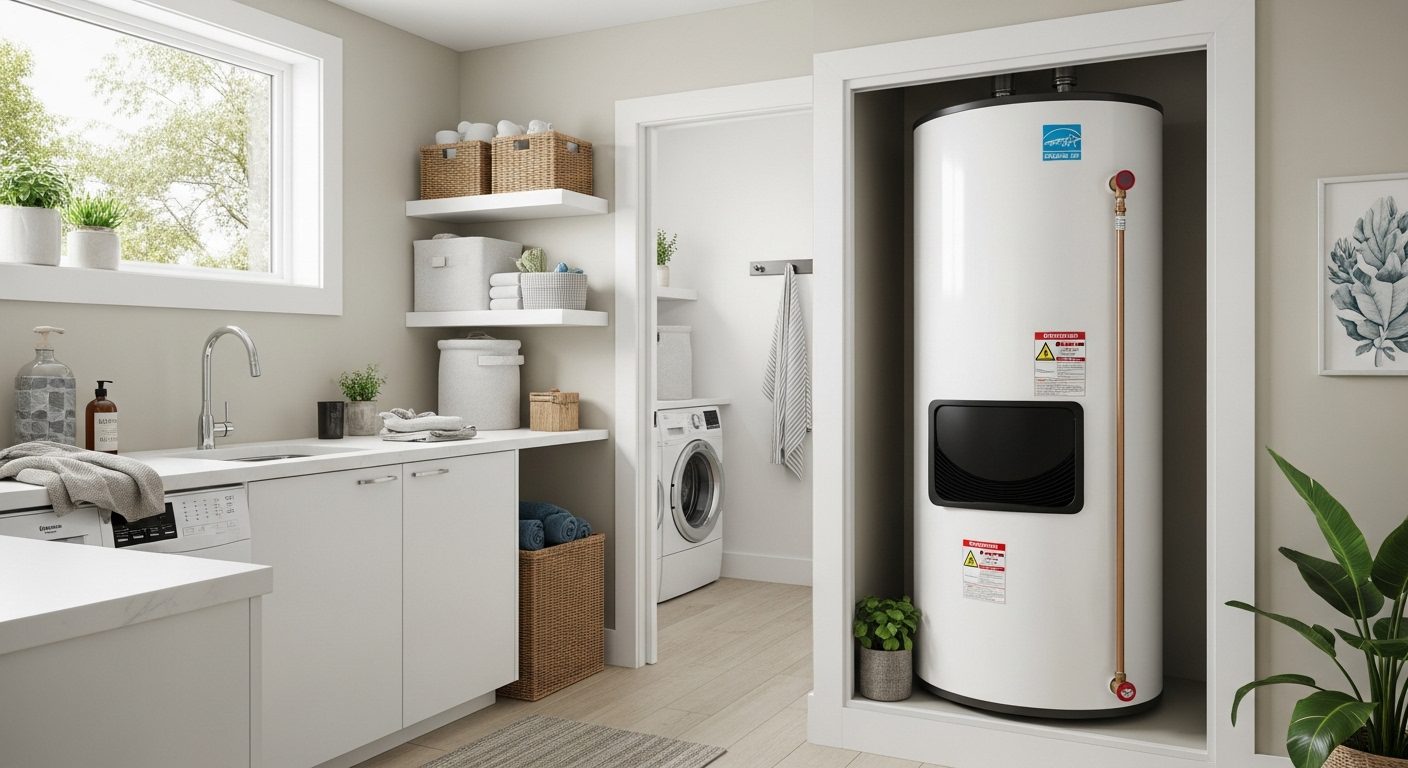
Vancouver homeowners have access to unique rebate programs and professional services that can dramatically reduce the cost of appliance upgrades while ensuring optimal performance in our specific climate conditions. These programs often provide financial incentives that make efficiency upgrades more affordable while connecting residents with qualified professionals who understand local requirements and conditions.
BC Hydro’s comprehensive rebate programs offer substantial financial support for energy-efficient appliances across multiple categories. The residential heat pump program provides rebates up to $5,000 for qualifying installations, while the heat pump water heater rebate offers up to $1,000 for eligible units. Additional rebates cover Energy Star appliances, smart thermostats, and whole-home energy efficiency improvements, often reducing upgrade costs by 20-50%.
CleanBC programs extend these incentives even further for income-qualified households, providing access to rebates totaling up to $44,900 for comprehensive home energy upgrades. This includes up to $19,000 for heat pump installations and $3,500 for heat pump water heaters, often covering the entire cost of major appliance upgrades. The program also includes free energy coaching and professional assessments to help prioritize the most cost-effective improvements.
Professional energy audit services in Vancouver have evolved to provide comprehensive appliance assessments using advanced diagnostic equipment. These services typically include blower door testing to identify air leakage, thermal imaging to detect insulation problems, and detailed appliance energy monitoring to quantify actual consumption versus manufacturer specifications. Many local companies now offer integrated services that combine energy audits with appliance repair and replacement recommendations, streamlining the upgrade process while ensuring optimal results.
Municipal programs through the City of Vancouver provide additional support for energy efficiency improvements, particularly for multi-family buildings and major renovations. The Green Homes program establishes efficiency standards for new construction and renovations, while various rebate programs support upgrades in existing buildings. These municipal initiatives often coordinate with provincial and federal programs to maximize available incentives and ensure comprehensive efficiency improvements.
Frequently Asked Questions
How much can I actually save by replacing my old appliances with energy-efficient models?
Savings depend on the age and type of your current appliances, but Vancouver homeowners typically save 20-40% on electricity costs related to appliance consumption after comprehensive upgrades. Replacing a 15-year-old refrigerator, clothes washer, and water heater with Energy Star models often results in $200-400 annual savings. Heat pump installations can provide even larger savings, particularly when replacing electric baseboard heating or older heat pumps.
The payback period for appliance upgrades varies significantly based on available rebates and current appliance condition. With BC Hydro and CleanBC rebates, many upgrades pay for themselves within 3-7 years through energy savings alone, while also providing improved performance and reliability.
Are professional energy audits worth the cost for Vancouver homeowners?
Professional energy audits typically cost $300-500 but often identify savings opportunities that far exceed this investment. Vancouver’s unique climate conditions and building styles create specific efficiency challenges that trained professionals can identify and quantify accurately. Many audit services also provide detailed reports that help prioritize upgrades for maximum cost-effectiveness and assist with rebate applications.
Additionally, some utility and government programs require professional audits for certain rebates, making the audit cost a necessary investment to access larger incentives. The detailed analysis typically identifies 10-20% more savings opportunities than DIY assessments, often paying for the audit cost within the first year of implementing recommendations.
What’s the best way to identify energy vampire appliances in my home?
The most effective approach combines visual inspection with actual power monitoring using a plug-in electricity meter available at most hardware stores for $20-30. Start by checking devices with digital displays, remote controls, or network connections, as these are most likely to draw phantom power. Focus on entertainment systems, kitchen appliances with clocks, home office equipment, and smart home devices.
Smart power strips provide an excellent solution for eliminating phantom loads without sacrificing convenience. These devices automatically cut power to connected equipment when primary devices shut off, eliminating standby consumption while maintaining normal operation for frequently used features.
Wrapping Up
Understanding your appliances’ true energy costs empowers you to make informed decisions about upgrades while taking advantage of Vancouver’s generous rebate programs. From identifying phantom loads that waste electricity 24/7 to calculating the real cost of keeping outdated appliances running, comprehensive energy auditing reveals opportunities for significant savings that many homeowners never recognize.
At Vancouver Appliance Service Pros, we help homeowners throughout the Lower Mainland identify efficiency opportunities and implement cost-effective solutions that reduce both energy consumption and monthly utility bills. Our comprehensive appliance assessments combine professional expertise with understanding of local rebate programs, ensuring you maximize both performance and savings from your efficiency investments.