




Staring at your broken dishwasher and wondering if it’s worth fixing or time to hit the appliance store? We’ve got you covered with the ultimate guide to making smart repair-versus-replace decisions that’ll save you money and keep your Vancouver home running smoothly.
Picture this: It’s Sunday morning, you’re prepping for your weekly meal prep session, and suddenly your refrigerator starts making that dreaded clicking sound. Or maybe your washing machine decides to turn your laundry room into a mini water park. We’ve all been there, standing in front of a malfunctioning appliance with that familiar sinking feeling in our stomachs.
As a Vancouver homeowner, you’re probably familiar with the unique challenges our coastal climate brings to home maintenance. The salty air, fluctuating temperatures, and occasional power outages can all take a toll on our trusty household helpers. But here’s the thing I’ve learned after years of dealing with appliance drama: not every hiccup means it’s time to start shopping for a replacement.
Related Services: Dishwasher Repair | Washing Machine Repair | Dryer Repair
Key Outtakes:
- The 50% rule is your best friend: if repair costs exceed half the price of a new appliance, replacement usually makes more sense
- Appliance age matters significantly – most major appliances have predictable lifespans that should guide your decision
- Energy efficiency improvements in newer models can offset replacement costs through lower utility bills
- Vancouver’s unique climate considerations can affect appliance longevity and repair frequency
- Professional consultation is essential for accurate cost assessments and safety considerations
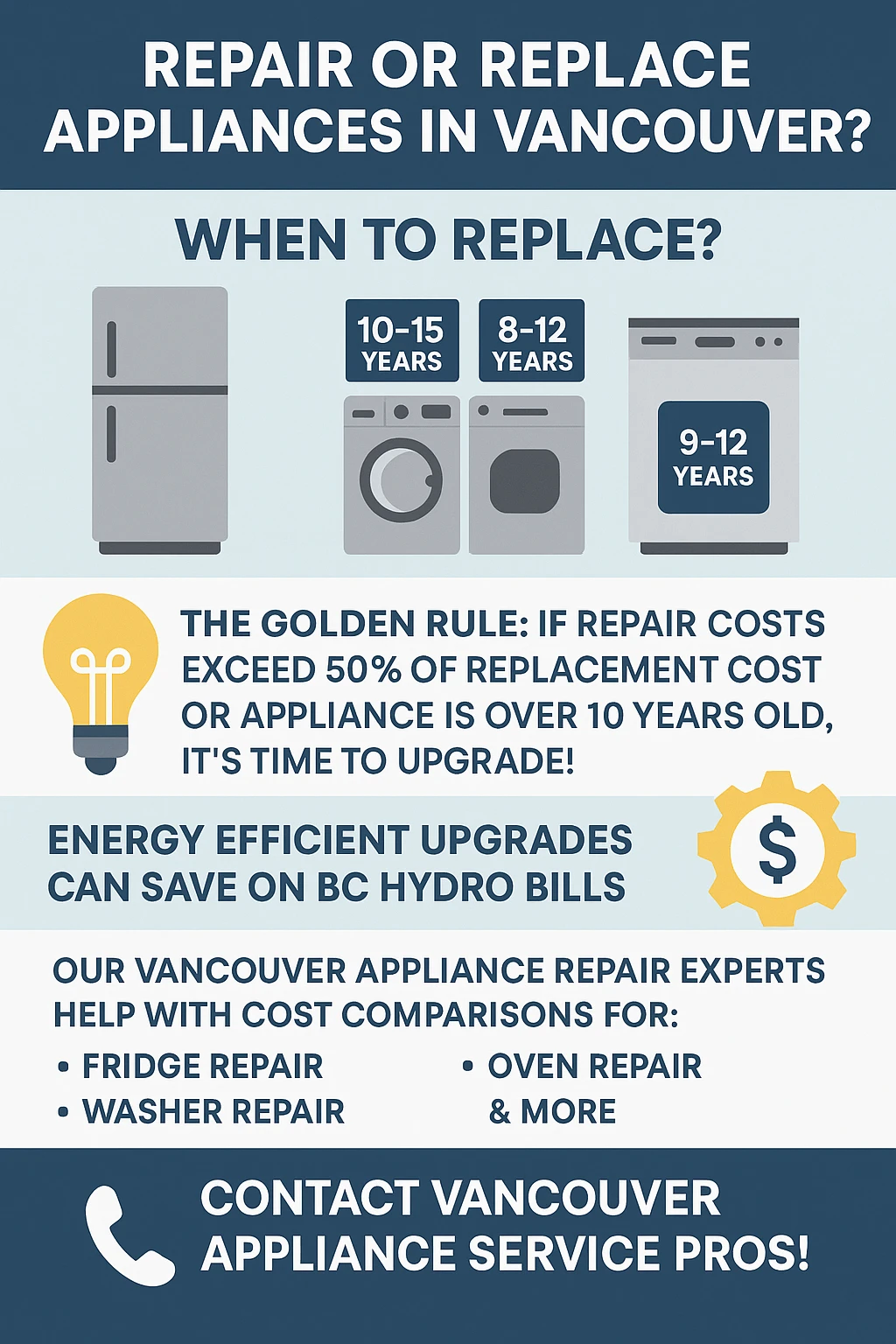
Understanding Appliance Lifecycles in Vancouver Homes

Let’s get real about appliance lifespans because this knowledge is going to be your secret weapon in making smart decisions. Most people think appliances should last forever, but the truth is, they’re a lot like cars – they have predictable lifespans, and knowing where yours falls on that timeline can save you from throwing good money after bad. In Vancouver’s coastal environment, some appliances face additional challenges that can affect their longevity.
Your refrigerator, the workhorse of your kitchen, typically soldiers on for 12 to 15 years. However, Vancouver’s humidity levels and the salt air near the coast can sometimes shorten this lifespan, particularly affecting the exterior coils and seals. Washing machines and dryers usually tap out around the 10 to 13-year mark, though front-loading washers might need attention sooner due to seal issues exacerbated by our damp climate. Dishwashers generally give you about 9 to 12 years of faithful service, while ranges and ovens can keep cooking for 13 to 15 years with proper maintenance.
Here’s where it gets interesting: if your appliance is within the first half of its expected lifespan and the repair cost is reasonable, fix it. If it’s approaching or past that halfway point, you need to start thinking more strategically. A 6-year-old refrigerator with a compressor issue? Probably worth repairing. A 12-year-old fridge with the same problem? Time to start appliance shopping. The math changes when you consider that older appliances are more likely to develop additional problems shortly after one major repair, creating what I like to call the ‘repair cascade effect’.
The Financial Mathematics of Repair vs Replace
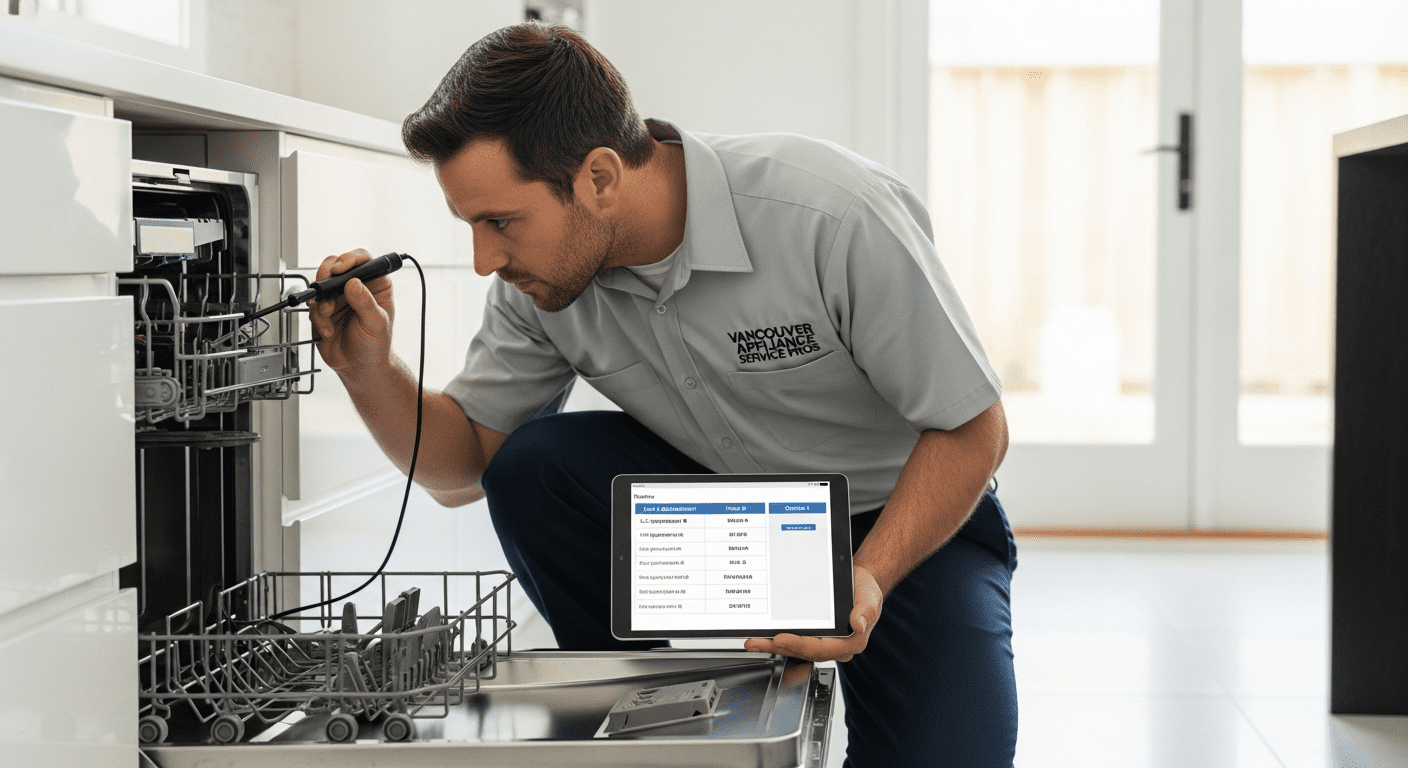
Now that we understand appliance lifespans, let’s dive into the financial analysis that should drive your decision-making process. This isn’t just about comparing repair quotes to price tags at the appliance store – there are several layers to consider that can significantly impact your long-term costs and satisfaction with your choice.
The famous 50% rule serves as an excellent starting point for your decision-making process. If the repair quote exceeds 50% of what you’d pay for a comparable new appliance, replacement typically makes more financial sense. But don’t stop there – this rule assumes you’re comparing apples to apples, which isn’t always the case. A repair might cost $400 on your 8-year-old mid-range dishwasher, while a similar new model costs $800. That seems to violate the 50% rule, but what if comparable new models now offer features like soil sensors and energy-efficient cycles that could save you $50 annually on utility bills?
Energy efficiency represents a game-changing factor in your calculations, especially with Vancouver’s rising electricity costs. Modern appliances often use 20-40% less energy than models from even five years ago. Your old refrigerator might be functioning perfectly, but if it’s costing you an extra $200 annually in electricity, that seemingly expensive repair starts looking different when you factor in continued high operating costs. Energy Star ratings can help you calculate these differences, and many Vancouver utility providers offer rebates for energy-efficient appliance purchases that can sweeten the replacement deal.
Don’t forget to factor in the hidden costs of both options. Repairs often come with labor charges, service calls, and the possibility of additional issues surfacing during the work. Replacement involves delivery fees, installation costs, disposal of the old unit, and potentially some electrical or plumbing modifications. I learned this the hard way when my ‘simple’ dryer replacement turned into a half-day project requiring new venting because current codes had changed since my original installation. Warranty considerations add another layer to your financial analysis, as extended warranties can make repair decisions much easier when they cover both parts and labor.
Vancouver-Specific Climate and Environmental Factors
Living in Vancouver brings unique challenges that don’t exist in drier, more stable climates, and these factors should absolutely influence your repair-versus-replace decisions. Understanding how our local environment affects appliances can help you make choices that account for these regional realities rather than relying solely on general advice that might not apply to our coastal conditions.
Our proximity to the ocean means salt air infiltration, even for homes not directly on the waterfront in areas like Kitsilano, Richmond, or Burnaby. This salt air can accelerate corrosion in appliance components, particularly affecting metal parts in washing machines, dishwashers, and the exterior coils of refrigerators. If you’re dealing with corrosion-related issues on an appliance that should theoretically have several years of life left, you might be looking at an accelerated replacement timeline regardless of the typical lifespan expectations.
Vancouver’s notorious dampness creates its own set of challenges, especially for appliances dealing with moisture management. Front-loading washing machines, while energy-efficient, are particularly susceptible to mold and mildew issues in our humid climate. If you’re facing repeated seal replacements or persistent odor problems, these aren’t just isolated repairs – they’re symptoms of an ongoing battle against our environment that might make replacement with a top-loading model more sensible despite the energy efficiency trade-off.
The frequency of power fluctuations and outages in Vancouver can stress appliance electronics more than in areas with stable power grids. If you’re experiencing repeated control board failures or electronic component issues, consider whether a newer appliance with better surge protection might save you from ongoing frustration and repair costs. Some neighborhoods, particularly older areas with aging electrical infrastructure, see more appliance electronics problems than others, making this a particularly relevant consideration for homeowners in these areas.
When Repair Makes Perfect Sense
After understanding the numbers and regional factors, let’s talk about those clear-cut situations where repair is absolutely the right choice. Recognizing these scenarios can save you from unnecessary appliance shopping and keep your existing appliances running efficiently for years to come.
Minor mechanical issues on relatively young appliances almost always favor repair. We’re talking about things like broken door handles, faulty door seals, clogged filters, or worn belts – problems that cost under $200 to fix on appliances that are less than halfway through their expected lifespan. These repairs often restore full functionality and can extend the appliance’s life by several years, making them excellent investments.
Warranty situations represent another clear repair scenario. If your appliance is still under manufacturer warranty, even major repairs might cost you nothing more than a service call fee. Extended warranties, while often dismissed as unnecessary, can make repair decisions much easier when they cover both parts and labor. Even if you’re just outside the warranty period, manufacturers sometimes offer goodwill repairs for known defects – it never hurts to call and ask, especially for higher-end brands.
Single-component failures on quality appliances also lean toward repair, especially when the failed component isn’t integral to the overall system. A broken ice maker in an otherwise functional refrigerator, a faulty heating element in a reliable oven, or a worn pump in a well-maintained dishwasher can often be fixed for a fraction of replacement cost while preserving the investment you’ve already made in a quality appliance.
Clear Signs It’s Time to Replace
Sometimes the writing is on the wall, and recognizing when an appliance has reached the end of its useful life can save you from throwing good money after bad. These situations almost always favor replacement over continued repairs, regardless of your emotional attachment to that trusty old refrigerator.
Multiple system failures happening simultaneously or in quick succession signal that an appliance is experiencing cascade failure. When your washing machine needs a new motor and the control board fails within weeks of each other, you’re looking at an appliance that’s systemically wearing out. The cost of addressing multiple major components often approaches or exceeds replacement cost, and you’re likely facing additional failures soon.
Safety concerns should always trump financial considerations. If an appliance is experiencing electrical issues, gas leaks, or structural problems that could pose risks to your family or home, replacement is the only responsible choice. Don’t risk your safety to save a few hundred dollars on what might seem like an expensive repair when a new, safe appliance is the better long-term investment.
Efficiency degradation represents another compelling replacement argument, particularly for heating and cooling appliances. If your older refrigerator is struggling to maintain consistent temperatures despite repairs, or your dryer is taking twice as long to dry clothes as it used to, the ongoing operational costs and performance frustrations often justify replacement with a more efficient model that will provide better performance and lower utility bills.
Frequently Asked Questions
How do I calculate the true cost of appliance repair versus replacement?
Start with the 50% rule as your baseline, but expand your analysis to include energy efficiency differences, warranty coverage, and potential future repair needs. Calculate annual energy costs for both your current appliance and comparable new models, then factor in the likelihood of additional repairs based on the appliance’s age and recent repair history. Don’t forget to include hidden replacement costs like delivery, installation, and disposal fees, which can add $200-400 to your total replacement investment.
Are older appliances worth repairing given Vancouver’s climate challenges?
Vancouver’s coastal environment can accelerate appliance wear, particularly affecting seals, coils, and metal components. However, older mechanical appliances without complex electronics often handle our climate better than you might expect and can be very cost-effective to repair. The key is assessing whether climate-related damage is isolated or systemic. If salt air has corroded multiple components, replacement might be wise, but if the damage is limited to easily replaceable parts like door seals or filters, repair often makes sense.
When should I prioritize energy efficiency over repair costs?
Energy efficiency becomes a priority when your current appliance is more than 10 years old and you’re facing repair costs exceeding $300. Modern Energy Star appliances can use 20-40% less energy than older models, potentially saving $50-200 annually depending on the appliance type and your usage patterns. If the energy savings over the appliance’s expected lifespan approach or exceed the price difference between repair and replacement, the newer model often represents better long-term value.
Wrapping Up
Making smart repair-versus-replace decisions comes down to understanding your appliance’s age, the scope of needed repairs, and how Vancouver’s unique environment affects longevity. While the 50% rule provides a solid starting point, don’t forget to factor in energy efficiency, warranty coverage, and the likelihood of future repairs when making your final decision.
When you’re facing tough appliance decisions in Vancouver, Richmond, or Burnaby, Vancouver Appliance Service Pros is here to help with honest assessments and expert repair services that can extend your appliances’ lives and save you money. Our experienced technicians understand how local climate conditions affect appliance performance and can provide the guidance you need to make informed decisions about your home’s essential systems.