




Vancouver Appliance Moving Tips: Safe Transport Guide
Moving appliances around Vancouver and worried about damaging your precious fridge or that brand-new washer you just bought? We’ve got the insider scoop on how to transport your heavy-duty household heroes without breaking your back, your budget, or your beautiful hardwood floors.
Let’s be real – moving appliances is basically like trying to relocate a small elephant that’s also filled with delicate glass parts. I learned this the hard way when I tried to move my friend’s vintage fridge in Kitsilano without proper equipment (spoiler alert: it didn’t end well for anyone involved, especially the doorframe). Whether you’re relocating from a cozy Vancouver West condo to a spacious Burnaby home, or just rearranging your kitchen setup, proper appliance moving techniques can save you from costly repairs and potential injuries.
The key to successful appliance transportation lies in preparation, the right tools, and understanding that these mechanical beasts require special care. From disconnecting water lines to securing moving parts, every step matters when you’re dealing with expensive household investments that keep your daily life running smoothly.
Key Outtakes:
- Always recruit at least one helper – appliance moving is never a solo mission, even for smaller units
- Invest in proper equipment like appliance dollies and moving blankets to protect both your appliance and floors
- Allow 24 hours for refrigerators and freezers to defrost before moving to prevent water damage
- Keep appliances as upright as possible during transport to protect internal components
- Wait before plugging in appliances after transport – timing varies by appliance type and position during move
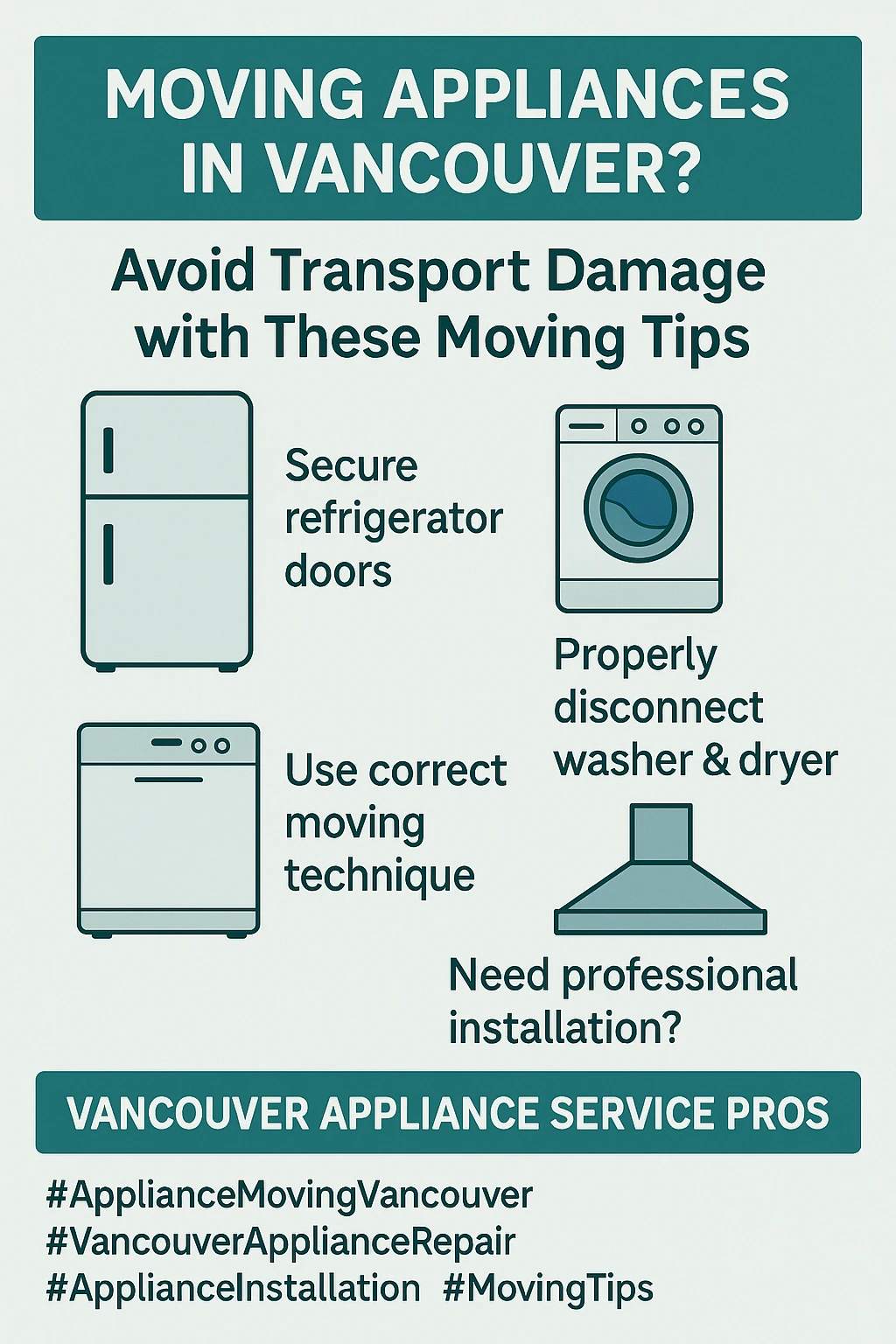
Understanding Vancouver Appliance Moving Challenges
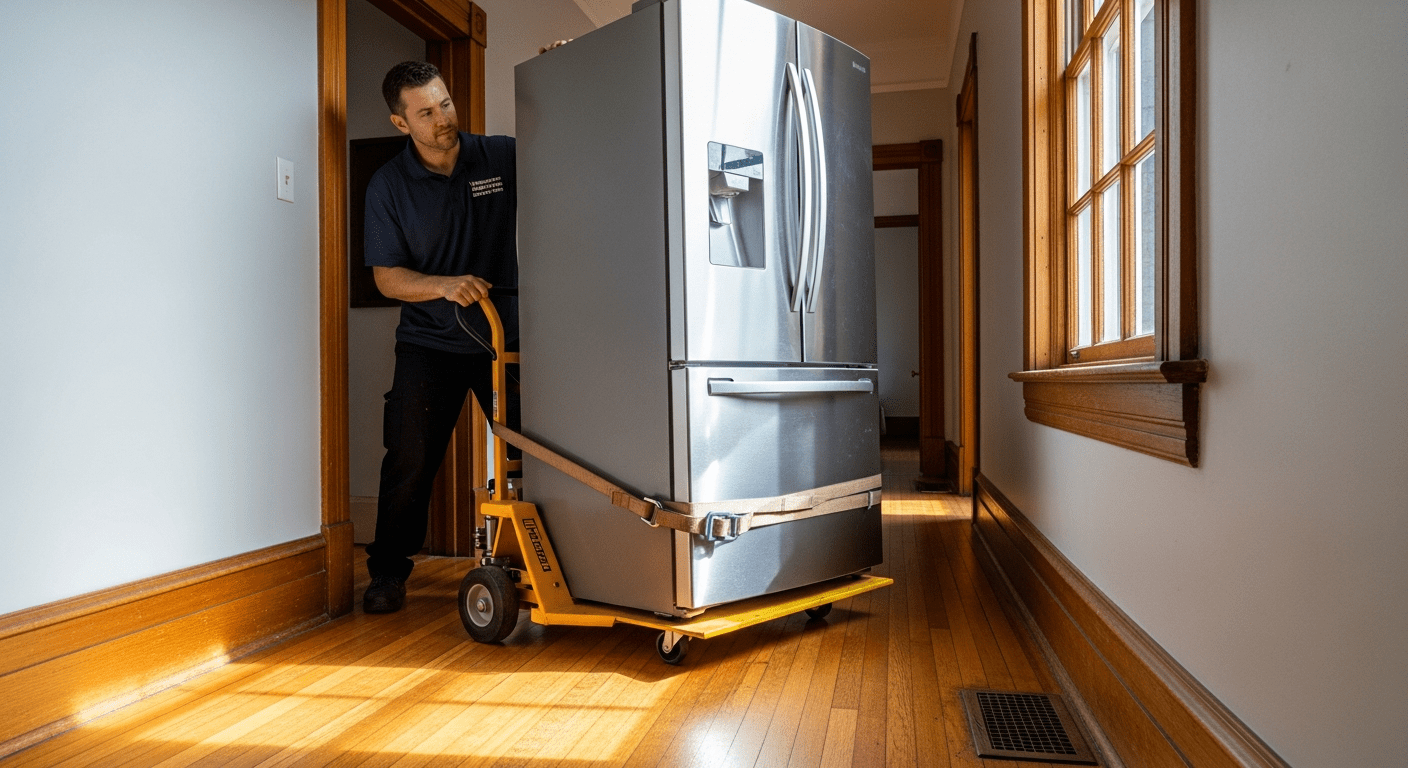
Vancouver’s unique housing landscape presents some serious challenges when it comes to moving appliances. Think about those charming heritage homes in Mount Pleasant with their narrow staircases, or the sleek high-rise condos in Coal Harbour with their compact elevator dimensions. Each scenario requires a different game plan, and trust me, you don’t want to figure this out while you’re already committed to moving a 300-pound refrigerator.
The combination of older building infrastructure and modern appliance sizes creates what I like to call the “Vancouver squeeze.” Many of our beautiful character homes were built long before today’s super-sized fridges and front-loading washers became standard. Add in the region’s notorious rainy weather, which can make outdoor transport treacherous, and you’ve got a recipe for appliance-moving anxiety.
Beyond the physical challenges, there’s also the matter of protecting your investment. Modern appliances aren’t just heavy – they’re sophisticated machines with sensitive internal components that can be damaged by improper handling. The compressors in refrigerators, the suspension systems in washers, and the delicate electronics throughout all these units require careful consideration during any move.
Essential Tools and Supplies for Safe Transport
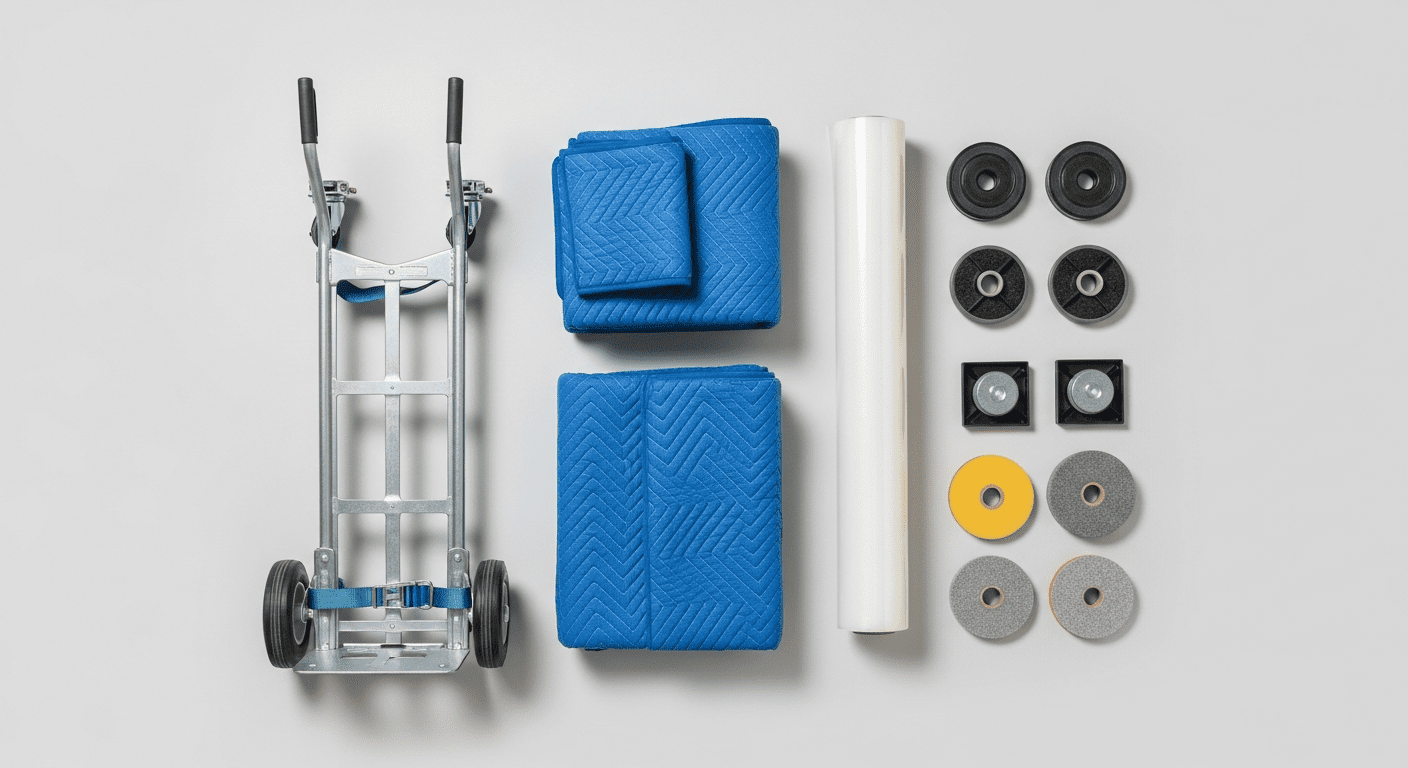
Before we dive into the nitty-gritty of moving specific appliances, let’s talk about assembling your appliance-moving toolkit. Having the right equipment isn’t just about making the job easier – it’s about preventing damage to your appliances, your home, and most importantly, yourself. I’ve seen too many DIY disasters that could have been avoided with proper preparation and the right tools.
The star of your moving arsenal should be either an appliance dolly or a heavy-duty hand truck. Appliance dollies are those four-wheeled platforms that lift completely off the ground, making them incredibly stable and less likely to tip. Hand trucks, on the other hand, have two wheels and require you to tilt the appliance backward – they’re actually better for stairs but require more skill to maneuver safely. For most Vancouver homes, especially those with multiple levels, a quality hand truck often proves more versatile.
Don’t skimp on protective materials either. Moving blankets are absolutely essential for wrapping your appliances – they protect against scratches, dings, and that heart-stopping moment when you accidentally bump into a wall corner. Furniture sliders or gliding pads can be lifesavers for getting appliances out of tight spaces without scratching your floors. These little discs adhere to appliance feet and let you slide heavy units across surfaces smoothly.
Stretch tape becomes your best friend for securing doors and loose parts during transport. Unlike regular tape, stretch tape won’t leave residue on your appliance surfaces, and it provides that extra security you need when navigating bumpy streets or elevator rides. Finally, lay down protective sheets or flattened cardboard boxes along your moving path – your floors will thank you later, and cleanup becomes much easier.
Preparing Appliances for Transport
The preparation phase is where most people either set themselves up for success or create unnecessary headaches down the line. Think of this stage as the pre-flight checklist for your appliance journey – skip steps at your own peril. The time you invest in proper preparation will pay dividends in preventing damage and making the actual moving process much smoother.
Start with the obvious but often overlooked step: empty everything out. This means every last ice cube from the freezer, every forgotten sock from behind the washer, and every spice jar that’s been hiding in your refrigerator door. Not only does this reduce weight, but it also prevents items from becoming projectiles inside your appliances during transport. Take this opportunity to give everything a thorough cleaning too – trust me, you don’t want mysterious odors developing in a sealed, unplugged appliance.
For refrigerators and freezers, the defrosting process is absolutely critical and requires planning ahead. Allow at least 6-8 hours for standard units, but I always recommend starting this process a full 24 hours before moving day. This gives you buffer time for stubborn ice buildup and ensures everything is completely dry before wrapping and transport. Remove all shelving and drawers, wrapping them separately to prevent breakage during the move.
Water-connected appliances like washing machines and dishwashers need special attention to drainage. Disconnect water supply lines carefully – have towels ready because there’s always more water than you expect – and run empty cycles to clear out remaining water. For washing machines, you’ll want to secure the drum with transit bolts if you still have them from the original installation, or use foam padding to prevent the drum from bouncing around during transport.
Safe Moving Techniques by Appliance Type
Different appliances have their own personalities when it comes to moving requirements, and understanding these quirks can mean the difference between a successful relocation and an expensive repair bill. Let’s break down the specific techniques for the most common household appliances you’ll encounter in Vancouver homes.
Refrigerator Moving Strategy
Refrigerators are probably the trickiest appliances to move properly, mainly because of their internal refrigerant systems and the sheer awkwardness of their size. The golden rule with fridges is to keep them as upright as possible throughout the entire moving process. When you absolutely must tilt a refrigerator, never exceed a 45-degree angle, and always tilt from the side rather than forward or backward.
The loading technique is crucial here. Position your hand truck or dolly alongside the refrigerator rather than behind it, then gently tip the unit just enough to slide your equipment underneath. Use straps to secure the fridge tightly to your moving equipment – this isn’t the time to trust gravity or hope for the best. When navigating corners and doorways, move slowly and have your helper guide you through tight spots.
If your fridge absolutely must be laid down during transport – maybe you’re dealing with a low-ceiling moving truck or a particularly challenging stairway – make sure to place it on its side with the hinges facing up. This prevents the doors from swinging open unexpectedly. More importantly, you’ll need to let the fridge stand upright for at least 24 hours before plugging it in to allow the refrigerant system to settle back into place.
Washer and Dryer Transport
Washing machines present their own unique challenges, primarily because of their internal suspension systems designed to handle the vigorous spinning cycles. These same systems can work against you during a move if not properly secured. If you still have the original transit bolts from when the washer was first installed, now’s the time to reinstall them – these bolts lock the drum in place and prevent it from bouncing around during transport.
For dryers, the main concern is disconnecting the venting system safely. Electric dryers are straightforward – just unplug and disconnect the vent hose. However, if you’re dealing with a gas dryer, this is absolutely the time to call in a professional appliance technician. Gas line connections are not DIY territory, and the safety risks simply aren’t worth the potential savings.
When loading washers and dryers, these appliances are generally more forgiving than refrigerators when it comes to positioning. However, still aim to keep them upright when possible, and always secure doors with stretch tape to prevent them from swinging open during transport. The relatively compact size of most washers and dryers makes them ideal candidates for dolly transport rather than hand trucks.
Floor Protection and Route Planning
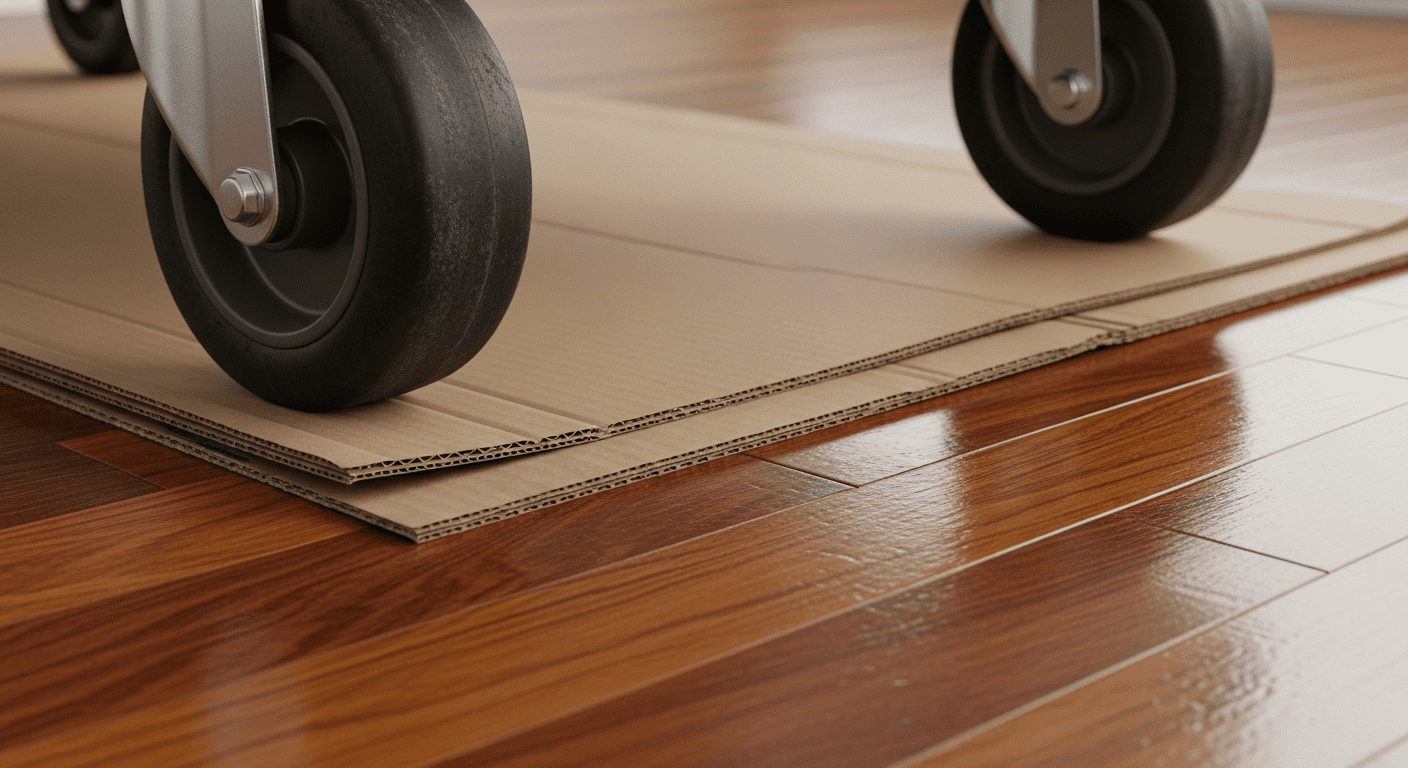
One aspect that often gets overlooked until it’s too late is protecting your floors and planning your route through the house. Vancouver homes, especially those gorgeous heritage houses in neighborhoods like Shaughnessy, often feature beautiful original hardwood floors that can be easily damaged by heavy appliance feet or moving equipment wheels.
Before you even think about moving that first appliance, walk through your planned route and clear everything out of the way. Measure doorways, hallway widths, and any tight corners you’ll need to navigate. Take actual measurements – don’t just eyeball it. I’ve seen too many situations where someone was convinced their fridge would fit through a doorway, only to discover they needed to remove the door entirely or find an alternate route.
Lay down protective covering along your entire path. Cardboard works in a pinch, but specialized floor protection film or even old blankets can provide better protection and are less likely to slip underfoot. Pay special attention to transitions between different flooring types – these areas are particularly vulnerable to scratches and gouges from moving equipment.
Don’t forget about walls and door frames either. Even with the most careful maneuvering, appliances and moving equipment can easily scuff paint or damage trim work. Consider padding sharp corners along your route, and always have your helper act as a spotter to watch for potential contact points while you’re focused on maneuvering the appliance.
When to Call Professional Vancouver Appliance Services
While DIY appliance moving can save money and give you complete control over the process, there are definitely situations where calling in professional help is the smarter choice. Recognizing these scenarios early can save you from costly mistakes and potential injuries that far exceed the cost of professional services.
Gas appliance connections are an absolute must for professional intervention. Whether you’re dealing with a gas range, dryer, or any other gas-powered appliance, the safety risks of improper disconnection or reconnection are simply too high for DIY attempts. Professional appliance technicians have the training and specialized tools to handle gas connections safely and in compliance with local Vancouver building codes.
Consider professional help if you’re dealing with particularly valuable or delicate appliances, especially newer models with complex electronic systems or smart home connectivity. The cost of professional moving services often pales in comparison to repair or replacement costs for damaged high-end appliances. Additionally, if your move involves multiple flights of stairs, extremely tight spaces, or transport over long distances, professional movers bring specialized equipment and experience that can make the difference between success and disaster.
Complex installations also warrant professional attention. While moving an appliance might seem straightforward, properly reconnecting water lines, ensuring level installation, and testing all functions requires expertise that goes beyond basic DIY skills. Professional services often include installation verification and basic functionality testing, giving you peace of mind that everything is working correctly in your new setup.
Frequently Asked Questions
How long should I wait before plugging in my refrigerator after moving?
The waiting period depends on how your refrigerator was transported. If you kept it upright throughout the entire move, you can generally plug it in immediately after positioning it in its new location. However, if the refrigerator was tilted beyond 45 degrees or laid down at any point during transport, you should wait at least 24 hours before plugging it in.
This waiting period allows the refrigerant oil to settle back into the compressor where it belongs. Plugging in too soon after the refrigerant system has been disturbed can damage the compressor and lead to costly repairs that definitely aren’t covered under warranty.
Can I move appliances by myself, or do I always need help?
Moving appliances solo is strongly discouraged for safety reasons, even for smaller units like compact washers or apartment-sized refrigerators. The awkward shapes and weight distribution of appliances make them difficult to control single-handedly, especially when navigating stairs, corners, or doorways. Even if you can physically handle the weight, having a second person to spot potential hazards and guide you through tight spaces dramatically reduces the risk of injury or property damage.
At minimum, recruit one strong helper who can assist with lifting, maneuvering, and watching for obstacles. For larger appliances or challenging moving situations, consider having two helpers available to ensure everyone’s safety and make the process much more manageable.
What’s the difference between an appliance dolly and a hand truck for moving?
Appliance dollies are four-wheeled platforms that lift completely off the ground, making them very stable and less likely to tip over during transport. They’re excellent for moving appliances across flat surfaces and are generally easier for inexperienced movers to use safely. Hand trucks have two wheels and require tilting the appliance backward to balance the load, which takes more skill but makes them better suited for stairs and uneven surfaces.
For most Vancouver home situations, especially heritage houses with stairs, a heavy-duty hand truck often proves more versatile. However, if you’re primarily moving across flat surfaces or are concerned about stability, an appliance dolly might be the safer choice for your specific situation.
Wrapping Up
Successfully moving appliances in Vancouver requires careful planning, proper equipment, and realistic assessment of your own capabilities and limitations. From the narrow staircases of Kitsilano heritage homes to the elevator constraints of downtown high-rises, each moving situation presents unique challenges that are best met with preparation and patience. Remember that protecting your investment in quality appliances is worth the extra time and effort required to do the job safely.
When appliance moving becomes too complex or risky for DIY approaches, Vancouver Appliance Service Pros is here to help with professional appliance disconnection, transport assistance, and reinstallation services throughout the Greater Vancouver area. Our experienced technicians understand the unique challenges of Vancouver homes and can ensure your appliances are moved safely and reconnected properly in their new location, giving you peace of mind and protecting your valuable household investments.