




Struggling with your smart refrigerator displaying cryptic error codes while your neighbor’s decade-old fridge hums along perfectly? We’re breaking down the real-world repair costs, failure patterns, and maintenance headaches that Vancouver homeowners face when choosing between cutting-edge smart appliances and reliable traditional models.
Picture this: you’re standing in your kitchen at 7 AM, coffee mug in hand, and your smart dishwasher starts flashing error codes like it’s trying to communicate with aliens from another galaxy. Meanwhile, your neighbor’s 15-year-old traditional dishwasher is humming along like a trusty old friend who never lets you down. Sound familiar? This scenario plays out in homes across Vancouver every single day, and it’s got homeowners scratching their heads about whether all that fancy tech is really worth the potential headaches.
As someone who’s spent way too much time researching appliance failures and repair costs (yes, I’m that person who gets excited about warranty comparisons), I’ve discovered that the smart versus traditional appliance debate isn’t just about convenience – it’s about your wallet, your sanity, and how much you enjoy troubleshooting technology at ungodly hours. The truth is, both smart and traditional appliances have their breaking points, but they fail in completely different ways that can impact your bank account and your daily routine.
Key Outtakes:
- Smart appliances typically experience software-related failures within the first 2-3 years, while traditional appliances usually face mechanical wear after 7-10 years of use
- Repair costs for smart appliances average 20-30% higher due to specialized parts and diagnostic requirements
- Traditional appliances have more predictable failure patterns and often allow for DIY troubleshooting, reducing service call expenses
- Smart appliance repairs frequently require specialized technicians familiar with both mechanical and digital systems
- Vancouver’s tech-savvy market has created a growing demand for smart appliance repair services, but availability varies by brand and model
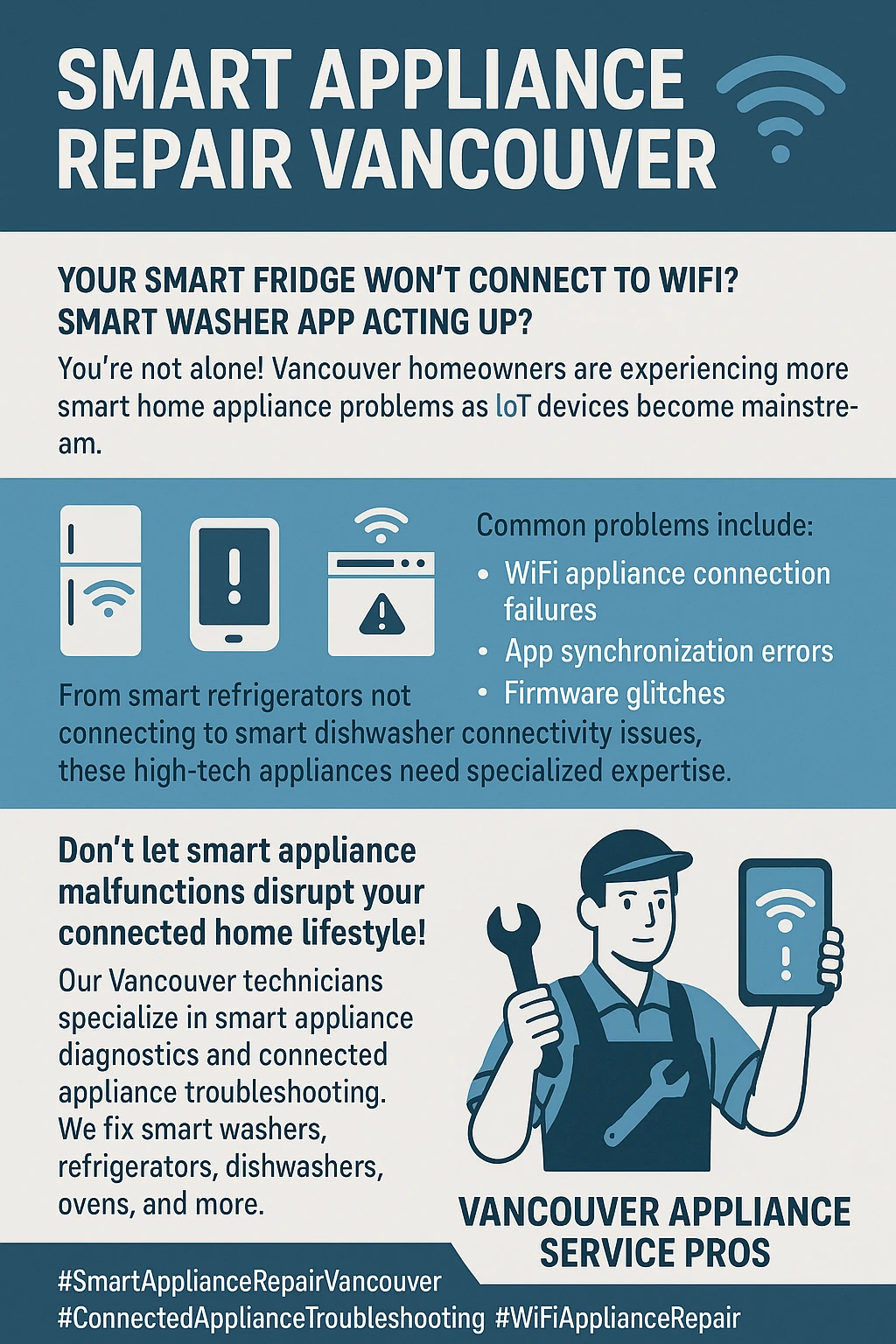
Understanding the Core Differences in Appliance Reliability
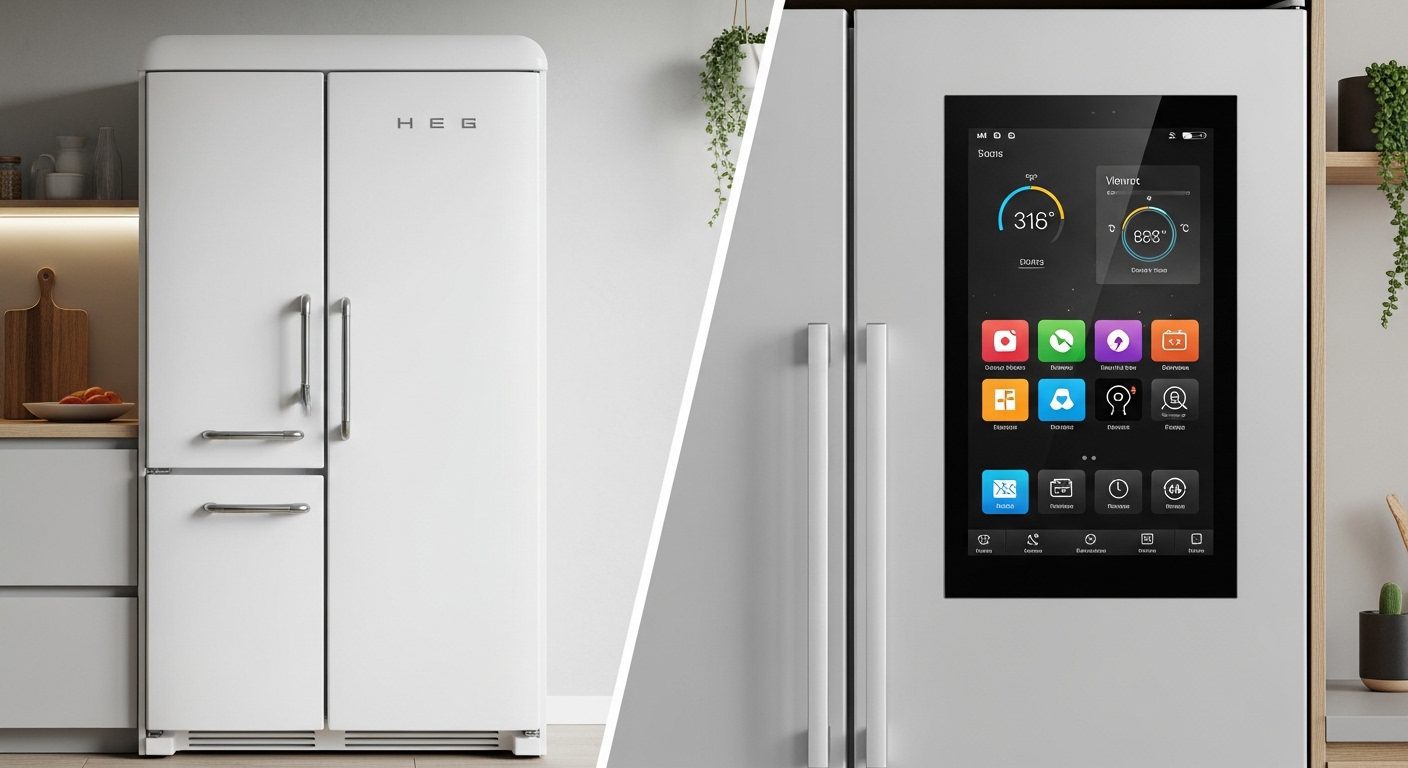
When we talk about appliance reliability, we’re essentially comparing two completely different approaches to getting the job done in your home. Traditional appliances are like that reliable friend who shows up on time, does exactly what they promised, and doesn’t complicate things with unnecessary drama. They operate on straightforward mechanical principles – switches flip, motors turn, heating elements heat up, and water flows through pipes. When something goes wrong, it’s usually pretty obvious: a belt breaks, a motor burns out, or a seal starts leaking.
Smart appliances, on the other hand, are like that brilliant but high-maintenance friend who can do amazing things but also needs constant attention and sometimes has mysterious mood swings. They combine traditional mechanical components with sophisticated electronic systems, sensors, Wi-Fi connectivity, and software that can be updated remotely. This means they have twice as many potential failure points – both the mechanical parts that can wear out and the digital components that can glitch, crash, or become incompatible with updates.
The fundamental difference lies in complexity and predictability. Traditional appliances follow well-established patterns of wear and tear that appliance repair technicians have been dealing with for decades. A washing machine’s transmission might start making noise before it fails completely, giving you warning signs and time to plan for repairs. Smart appliances can fail suddenly due to software bugs, connectivity issues, or sensor malfunctions that provide little to no warning.
The Real Cost Breakdown: Smart vs Traditional Appliance Repairs in Vancouver
Let’s talk money – because at the end of the day, that’s what keeps most of us awake at night when our appliances start acting up. The cost difference between repairing smart and traditional appliances goes far beyond just the price of replacement parts, and understanding these differences can help you make more informed decisions about your home’s appliance ecosystem. Whether you’re living in the trendy neighborhoods of Kitsilano, the family-friendly streets of Richmond, or the bustling areas of Burnaby, these cost considerations remain consistent across Vancouver’s diverse communities.
Traditional appliance repairs are generally straightforward affairs. When a heating element burns out in your dryer, the technician orders a $40 part, spends 30 minutes installing it, and charges you for the part plus labor. The diagnostic process is usually quick because experienced technicians can identify common problems based on symptoms and visual inspection. Most mechanical failures are obvious – you can hear grinding noises, see leaking water, or notice that something isn’t heating up properly.
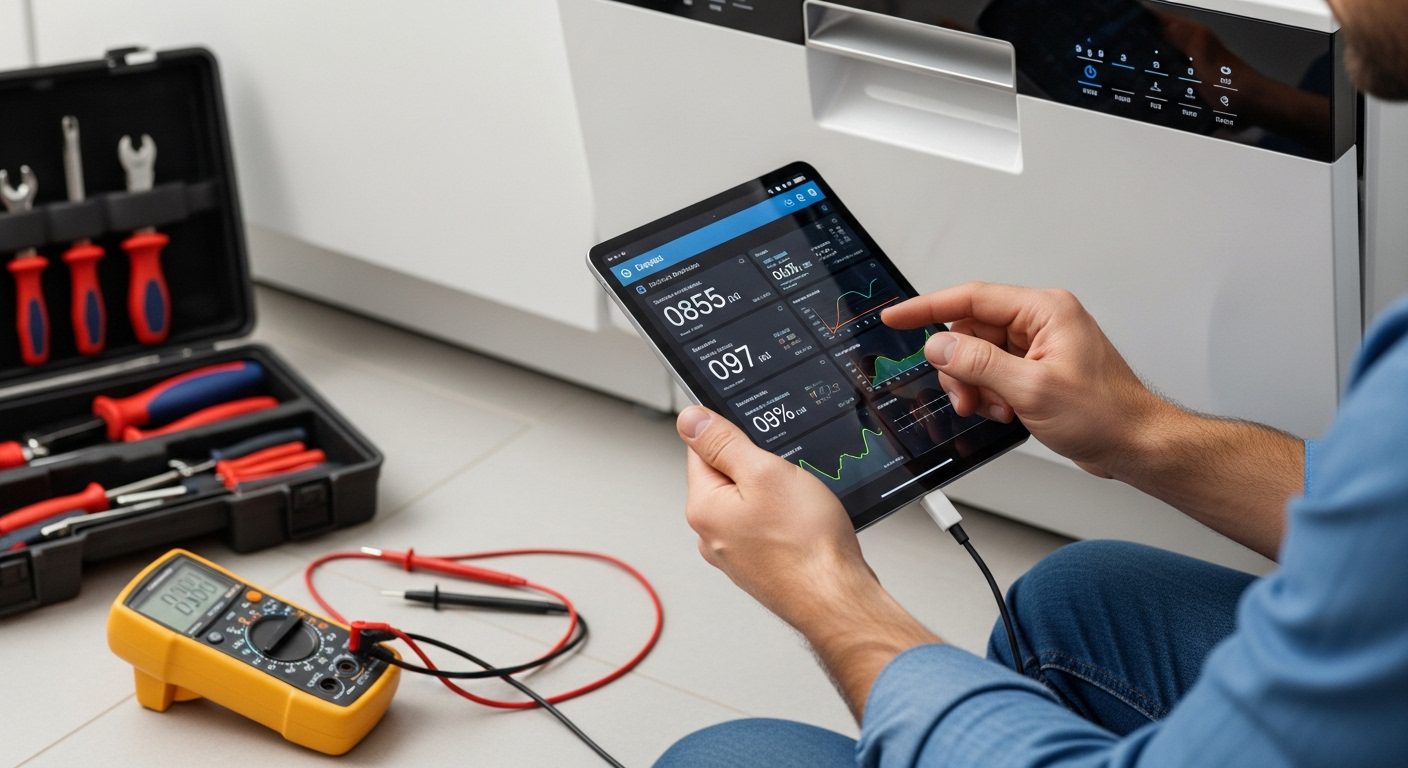
Smart appliance repairs, however, operate in a completely different cost structure. According to industry data, standard appliance repair costs around $175, while smart appliance repairs often cost upwards of $350. This significant difference stems from the extended diagnostic time needed to troubleshoot both mechanical and digital systems. Technicians need to run software diagnostics, check connectivity issues, calibrate sensors, and test various electronic components. This extended diagnostic time translates directly into higher labor costs, even before any parts are replaced.
Parts and Labor Cost Differences
The parts themselves also tend to be more expensive for smart appliances. While a traditional dishwasher might need a $25 door seal, a smart dishwasher might need a $150 control board replacement. Electronic components generally cost more than mechanical ones, and they often need to be ordered directly from the manufacturer rather than sourced from generic parts suppliers. In Vancouver specifically, diagnostic service calls range from $100-$230, with repair costs varying significantly based on the complexity of both the appliance and the underlying problem.
Here’s something that might surprise you: Vancouver’s coastal climate with salt air and humidity creates unique challenges for smart appliances’ electronic components. The salty ocean breeze that makes our summers so pleasant can actually accelerate corrosion on circuit boards and sensors, potentially leading to more frequent connectivity issues and sensor malfunctions. Traditional mechanical systems, being less sensitive to environmental factors, tend to be more resilient to these coastal conditions. I’ve spoken with local repair technicians who’ve noticed patterns in smart appliance failures during Vancouver’s particularly humid winter months, when condensation can affect sensor accuracy and connectivity reliability.
Specialized Technician Requirements
Here’s something that many homeowners don’t realize until they’re faced with a malfunctioning smart appliance: not all repair technicians are created equal. Traditional appliance repair requires mechanical knowledge and experience with common failure patterns. Smart appliance repair requires all of that plus expertise in electronics, software troubleshooting, and often specific brand training for proprietary systems.
This specialization shortage drives up costs in several ways. First, technicians with smart appliance expertise often command higher hourly rates because their skill set is more specialized and in higher demand. Second, if your local repair service doesn’t have smart appliance capabilities, you might need to wait longer for service or pay premium rates for a specialist to travel to your location. Third, some smart appliance issues require remote diagnostics or software updates that can only be performed by manufacturer-certified technicians.
Breakdown Frequency and Common Failure Points
Now here’s where things get really interesting, and I’m going to share some insights that might surprise you based on real-world data from Vancouver appliance repair services. The frequency of breakdowns between smart and traditional appliances tells a fascinating story about how different technologies age and fail over time. This pattern holds true whether you’re dealing with appliances in a heritage home in Point Grey or a modern condo in Coal Harbour.
Traditional appliances typically follow what repair technicians call the “bathtub curve” – they might have some early failures if there are manufacturing defects, then they settle into a reliable middle period that can last 10-15 years, followed by increasing failure rates as components wear out. The most common issues are mechanical: worn bearings in washing machines, failed heating elements in dryers, clogged drain pumps in dishwashers, and compressor problems in refrigerators. These problems are predictable, and experienced homeowners often recognize the warning signs.
Smart appliances, however, have a different failure pattern entirely. They experience what I like to call “digital growing pains” in their first few years, where software bugs, connectivity issues, and sensor calibration problems can cause frequent service calls. A smart refrigerator might stop connecting to Wi-Fi after a router update, or a smart oven might display temperature readings that don’t match reality due to a sensor glitch. These aren’t mechanical failures – they’re digital hiccups that can be just as disruptive to your daily routine.
Most Common Smart Appliance Problems
Based on service call data from Vancouver repair companies, the most frequent smart appliance issues include connectivity problems (about 35% of calls), sensor malfunctions (25%), software glitches requiring updates or resets (20%), and traditional mechanical failures (20%). What’s particularly frustrating for homeowners is that many of these digital issues seem to appear randomly and can sometimes be resolved with simple troubleshooting steps that don’t require a service call.
Traditional appliances, by contrast, have more predictable failure patterns. Washing machine agitators wear out after thousands of cycles, dryer heating elements burn out from thermal stress, and refrigerator compressors fail due to mechanical wear. While these failures can be inconvenient, they’re often preceded by warning signs like unusual noises, decreased performance, or visible wear that gives homeowners time to plan for repairs or replacement.
Repair Complexity and DIY Troubleshooting Options
Here’s where the rubber meets the road for many Vancouver homeowners, especially those handy folks who love tackling weekend projects around the house. The complexity of repairs and the potential for DIY troubleshooting creates a significant divide between smart and traditional appliances that goes well beyond just the initial purchase price. This DIY factor becomes particularly relevant in Vancouver’s expensive housing market, where every dollar saved on repairs can make a meaningful difference in household budgets.
Traditional appliances are remarkably DIY-friendly, and I say this as someone who’s spent more Saturday afternoons than I care to admit with appliance manuals spread across my kitchen counter. Most traditional appliance problems can be diagnosed with basic tools and common sense. When your dryer stops heating, you can check the lint trap, inspect the exhaust vent, and test the heating element with a multimeter. When your washing machine won’t drain, you can examine the drain hose and pump filter. These troubleshooting steps don’t require specialized software or proprietary diagnostic tools.
Smart appliances, however, often require specialized diagnostic procedures that aren’t accessible to the average homeowner. While you might be able to reset your smart dishwasher’s Wi-Fi connection or run a self-diagnostic cycle, more complex issues involving sensor calibration, firmware updates, or communication protocol problems typically require professional intervention. The irony is that smart appliances are designed to be more user-friendly, but when they malfunction, they often become less accessible to DIY repairs than their traditional counterparts.
Warranty and Service Considerations
The warranty landscape also differs significantly between smart and traditional appliances. Traditional appliances typically come with straightforward warranties covering mechanical parts and labor for 1-2 years. Smart appliances often have more complex warranty structures that distinguish between mechanical components and electronic systems, with different coverage periods and terms for each. Some manufacturers offer extended software support, while others may discontinue app support or cloud services for older models, effectively rendering smart features obsolete even if the mechanical components still function perfectly.
This creates a unique situation where a smart refrigerator might lose its connectivity features and smartphone app compatibility while still functioning as a perfectly good traditional refrigerator. However, some homeowners find this transition frustrating because they purchased the appliance specifically for its smart capabilities. Traditional appliances don’t face this type of planned obsolescence – a 20-year-old traditional oven still bakes just as well as it did when new, assuming proper maintenance.
Long-term Value and Replacement Considerations
Let’s dive into the long-term financial picture, because this is where things get really interesting for Vancouver homeowners planning their appliance investments. The total cost of ownership between smart and traditional appliances involves more than just purchase price and repair costs – it includes factors like energy efficiency, feature obsolescence, and replacement timing that can significantly impact your household budget over time. This becomes especially relevant in Vancouver’s competitive real estate market, where modern appliances can influence property values and rental appeal.
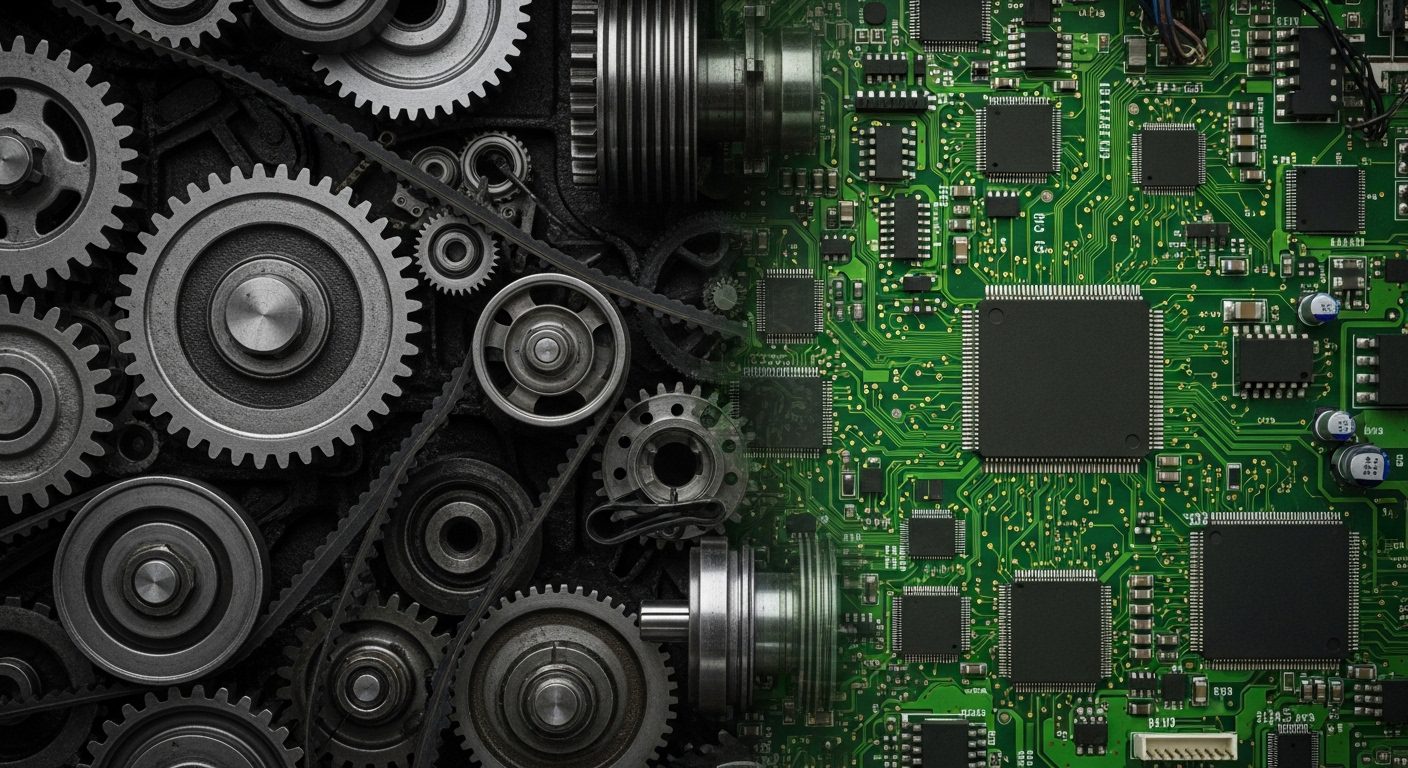
Traditional appliances have a proven track record of longevity. It’s not uncommon to find traditional washers, dryers, and refrigerators that have been running reliably for 15-20 years with routine maintenance. These appliances were built with the philosophy that simpler is better, and their mechanical systems can often be repaired multiple times over their lifespan. When a traditional appliance finally reaches the end of its useful life, it’s usually due to mechanical wear that makes repairs uneconomical rather than technological obsolescence.
Smart appliances face a different set of long-term challenges. While their mechanical components might last just as long as traditional appliances, their smart features have a shorter lifespan tied to technological advancement and manufacturer support. A smart refrigerator purchased today might lose app compatibility in 5-7 years when the manufacturer releases new models with updated connectivity standards. This creates a situation where homeowners might feel pressure to replace appliances that are mechanically sound but technologically outdated.
Energy Efficiency and Operating Costs
However, smart appliances often provide superior energy efficiency that can offset some of their higher repair and replacement costs. Smart thermostats can reduce heating costs, smart washing machines optimize water and energy usage based on load size, and smart refrigerators can maintain more precise temperatures while reducing energy consumption. In Vancouver’s environmentally conscious market, these efficiency gains align with both cost savings and sustainability goals that many homeowners prioritize.
The energy savings from smart appliances can be substantial over time. A smart dishwasher might use 15-20% less water and energy than a comparable traditional model, and a smart dryer might reduce drying times through better moisture sensing. For households with high appliance usage, these savings can accumulate to hundreds of dollars annually, potentially offsetting the higher repair costs and shorter replacement cycles associated with smart technology.
Frequently Asked Questions
How much more expensive are smart appliance repairs compared to traditional ones?
Smart appliance repairs typically cost 20-30% more than traditional appliance repairs, with average costs ranging from $300-$450 compared to $175-$300 for traditional appliances. This difference stems from longer diagnostic times, specialized parts, and the need for technicians trained in both mechanical and electronic systems. In Vancouver specifically, diagnostic fees alone can range from $100-$230, and smart appliances often require more extensive troubleshooting before the actual problem is identified.
Do smart appliances break down more frequently than traditional appliances?
Smart appliances tend to experience more frequent service calls in their first 2-3 years due to software-related issues, connectivity problems, and sensor calibration needs. However, traditional appliances generally have fewer issues during their initial years but may require more frequent mechanical repairs as they age beyond 7-10 years. The key difference is that smart appliance problems are often digital rather than mechanical, which can sometimes be resolved remotely or through simple resets.
Can I repair smart appliances myself, or do I always need a professional?
While some smart appliance issues like connectivity problems or software resets can be handled through DIY troubleshooting, most significant repairs require professional service due to the complexity of electronic systems. Traditional appliances offer more DIY repair opportunities because mechanical problems are often accessible to homeowners with basic tools and skills. Smart appliances frequently require specialized diagnostic equipment and manufacturer-specific training that isn’t available to typical homeowners.
How does Vancouver’s climate affect smart appliance reliability?
Vancouver’s coastal climate with high humidity and salt air can accelerate corrosion on electronic components in smart appliances, potentially leading to more frequent sensor malfunctions and connectivity issues. Traditional mechanical systems are generally more resilient to these environmental factors. Local repair technicians report increased smart appliance service calls during particularly humid periods, especially for connectivity and sensor-related problems that don’t typically affect traditional appliances.
Wrapping Up
The choice between smart and traditional appliances isn’t just about upfront costs or convenience features – it’s about understanding the total cost of ownership and your comfort level with technology troubleshooting. While smart appliances offer impressive capabilities and energy efficiency, they come with higher repair costs, more complex failure patterns, and shorter technological lifespans that can impact your long-term budget planning.
Whether you’re dealing with a malfunctioning smart refrigerator in your Kitsilano kitchen or a traditional washer acting up in your Richmond laundry room, Vancouver Appliance Service Pros has the expertise to handle both mechanical and digital appliance challenges. Our certified technicians understand the unique requirements of smart appliance diagnostics while maintaining the skills to efficiently repair traditional appliances, ensuring you get reliable service regardless of your appliance technology choices.