


Vancouver Appliance Winter Freeze Damage Prevention Guide
Worried about your expensive appliances getting destroyed by Vancouver’s unpredictable winter weather and power surges? You’re absolutely right to be concerned – recent storms have caused over $300,000 in appliance damage across just 33 homes in North Vancouver, and understanding how to protect your investment could save you thousands in emergency repairs and replacements. Winter in Vancouver brings unique challenges that most homeowners never see coming. While we might not face the brutal -30°C temperatures that prairie cities endure, our coastal climate creates a perfect storm of conditions that can be even more destructive to household appliances. The combination of freezing rain, power outages, and restoration surges creates a dual-threat scenario where your appliances face both freeze damage and electrical destruction simultaneously. What makes Vancouver’s winter weather particularly dangerous for appliances is the unpredictable nature of our storms. One day you’re dealing with mild rain, the next you’re facing an ice storm that coats power lines and brings down tree branches, triggering cascading electrical failures throughout entire neighborhoods. When BC Hydro restores power after these events, the resulting voltage spikes can instantly destroy the sensitive electronic components in modern smart appliances, turning what should be reliable household helpers into expensive repair bills.
Key Outtakes:
- Vancouver ice storms create dual-threat scenarios where freezing temperatures damage water-dependent appliances while power restoration surges destroy electronic components
- The November North Vancouver storm demonstrated how quickly damage escalates, with individual homeowners facing $8,000+ in appliance repairs from a single weather event
- Modern smart appliances prove exponentially more vulnerable to electrical damage than traditional mechanical appliances due to sensitive circuit boards and continuous connectivity
- Post-storm appliance inspection within 24-48 hours is critical for identifying damage, ensuring safety, and preserving insurance claim eligibility
- Whole-house surge protection systems could prevent 90%+ of electrical appliance damage during power restoration events
Understanding Vancouver’s Perfect Storm Conditions
Vancouver’s unique geographic location creates unprecedented vulnerability for household appliances during winter weather events. Our coastal moisture, mature tree canopy, and aging electrical infrastructure transform routine winter storms into appliance-destroying catastrophes that can devastate entire neighborhoods within hours. The recent Pemberton Heights incident perfectly illustrates this phenomenon, where residents described hearing a loud “boom” or “kaboom” before losing power – the exact moment when electrical infrastructure failed catastrophically. BC Hydro confirmed that trees contacting power lines directly caused the transformer damage in this specific incident, representing the most common trigger for surge-related appliance damage across the Lower Mainland. Vancouver’s dense urban forest creates beautiful neighborhoods, but those same mature trees become electrical hazards during ice storms when accumulated ice weighs down branches and high winds bring them into contact with live power lines. When branches or entire trees fall onto electrical infrastructure, they create instantaneous electrical faults that send unpredictable voltage spikes racing through the distribution system faster than traditional circuit breakers can detect and respond. The financial exposure for average Vancouver households has grown dramatically as modern homes now contain approximately $15,000 worth of surge-sensitive electronics and appliances. This represents a fundamental shift from previous generations of household equipment that relied primarily on simple mechanical switches and manual controls. Today’s appliances are essentially computers disguised as household equipment, containing sophisticated circuit boards, processors, and communication systems that require precise voltage regulation to function safely. Vancouver’s coastal climate introduces additional complications that accelerate appliance vulnerability during winter weather events. Salt air gradually corrodes electrical connections throughout home wiring systems, making appliances less capable of handling electrical stress effectively. High humidity levels typical of the Pacific Northwest create moisture infiltration challenges for appliance control boards and electrical components, even in the absence of direct water exposure. The frequent freeze-thaw cycles that characterize Vancouver winters put additional mechanical stress on appliance components, weakening seals, gaskets, and connection points that become more vulnerable to failure during electrical surge events.
The Dual Destruction Process: Electrical Surges and Freeze Damage
The most critical insight for Vancouver homeowners is understanding that appliance destruction typically occurs not when power goes out, but when electricity gets restored. This restoration surge phenomenon happens because utility crews must re-energize entire neighborhood electrical grids simultaneously, essentially jumpstarting massive distribution systems that have been completely de-energized. The process creates enormous voltage spikes that can overwhelm residential electrical systems within milliseconds, traveling through home wiring faster than traditional protective devices can respond. In the North Vancouver incident, residents experienced the perfect sequence of events that illustrates this dual-destruction process. The initial transformer explosion sent chaotic electrical surges through connected neighborhoods before safety systems could isolate the damaged equipment. When power was eventually restored several hours later, the utility’s re-energization process created additional massive voltage spikes that randomly damaged appliances throughout the affected area. One local electrician explained to affected homeowners that 240-volt power had surged through 120-volt lines, creating conditions where these distribution lines simply “can’t handle it, and that’s why it randomly kills appliances.” 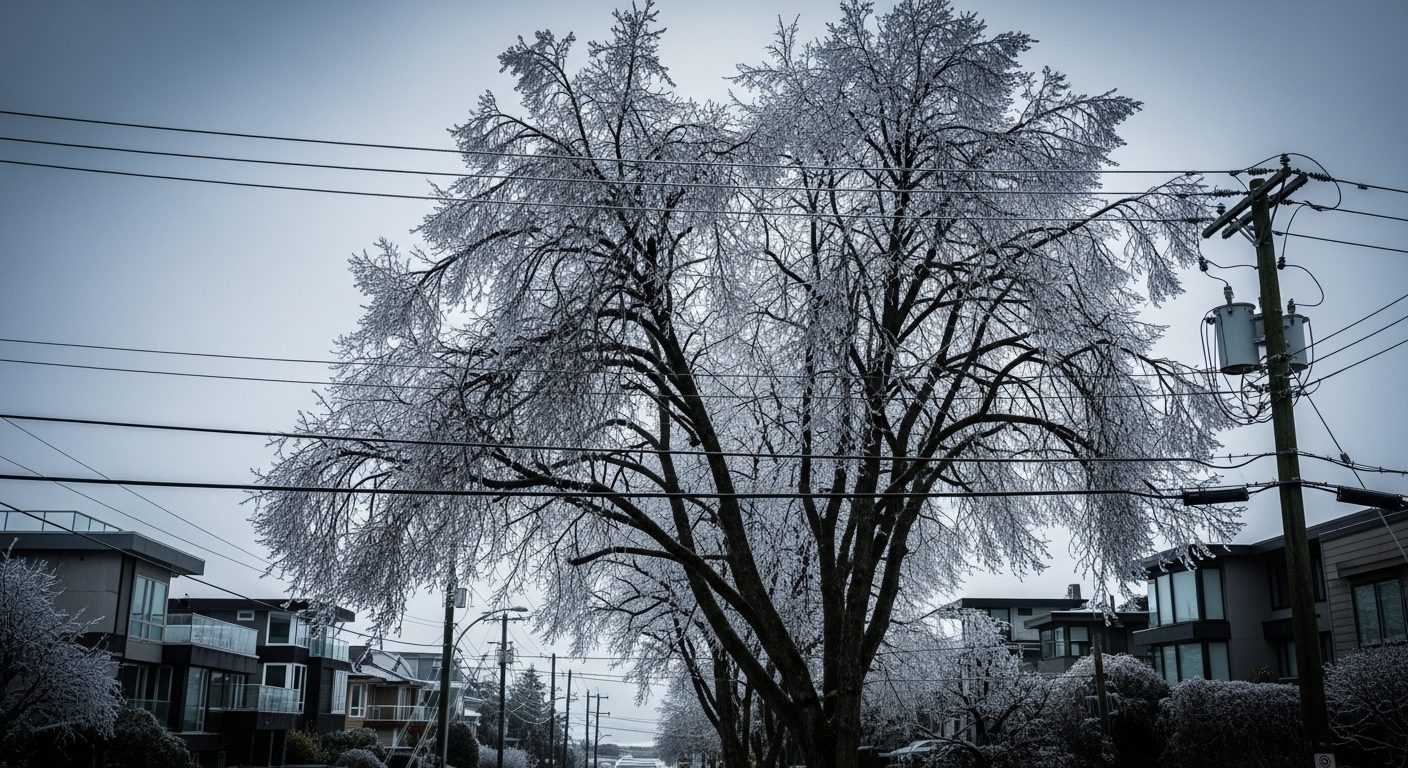 Modern smart appliances prove particularly vulnerable because their sophisticated electronic control systems operate at much lower voltages than traditional mechanical appliances. Your Wi-Fi-enabled refrigerator contains circuit boards and processors that require precise voltage regulation to function properly. When restoration surges overwhelm these delicate components, damage occurs instantly and permanently – burned-out compressor controls, fried circuit boards, and destroyed communication modules that cannot be repaired economically. The randomness of surge damage across affected neighborhoods demonstrates the chaotic nature of these electrical events. One home might lose its refrigerator, stove, and dishwasher while a neighboring residence experiences damage only to the television and Wi-Fi router. This unpredictable damage pattern reflects the complex interplay of which appliances were actively connected at the precise moment surge energy passed through each home’s electrical system, how effectively each home’s electrical panel could dissipate surge energy, and the specific voltage tolerances of individual appliance components.
Freeze Damage: The Secondary Threat to Water-Dependent Appliances
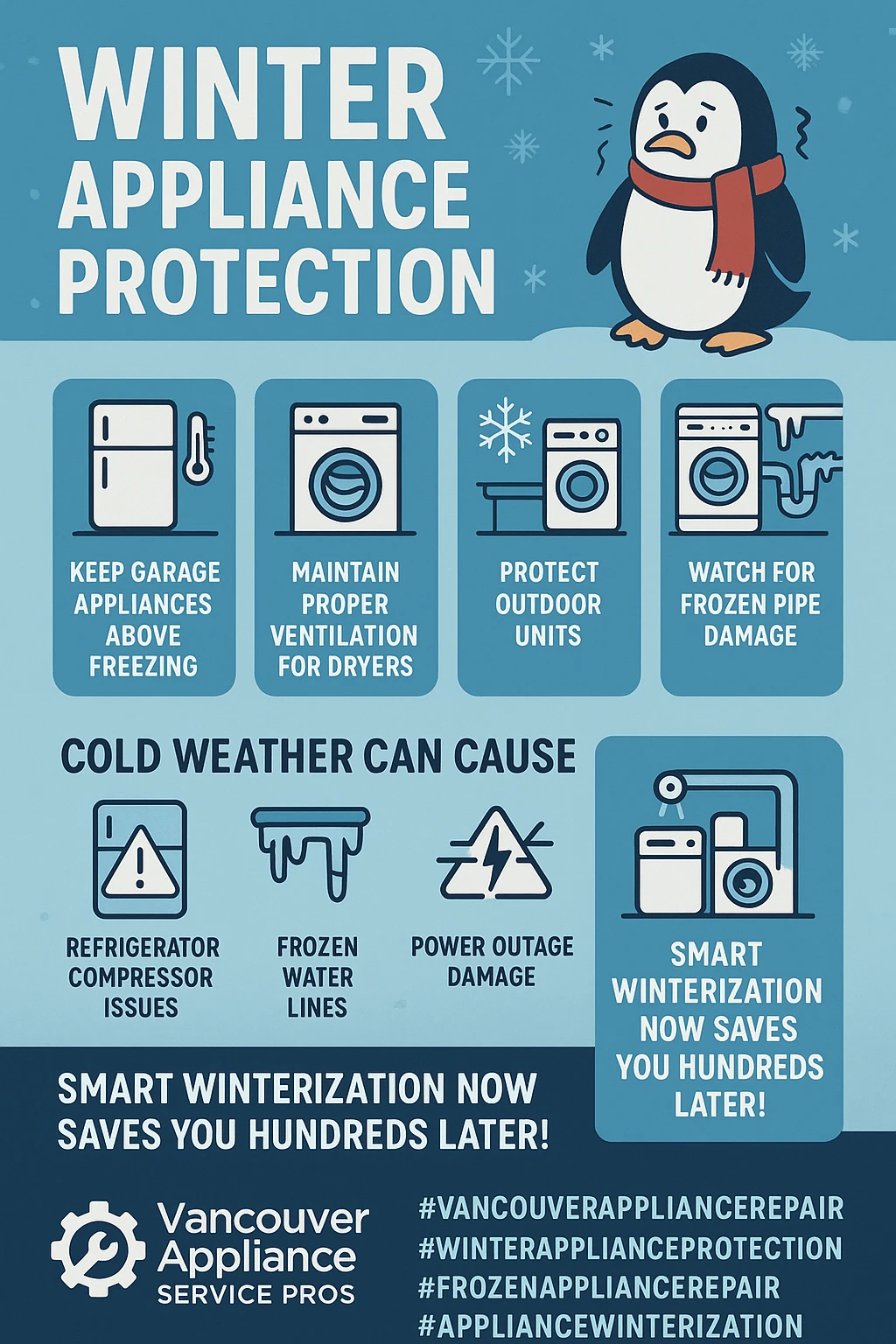
While electrical surges capture immediate attention due to their dramatic effects, Vancouver ice storms simultaneously create a second dimension of appliance vulnerability through freezing temperatures that damage water-dependent systems. Dishwashers, washing machines, and refrigerators with ice makers face significant risk when temperatures drop below freezing for extended periods. Water trapped within these appliances’ internal pipes, valves, and supply lines begins to freeze and expand, creating tremendous pressure that often results in burst pipes, cracked valves, and damaged internal seals. Dishwashers prove particularly vulnerable because their water supply connections often run through exterior walls or unheated crawl spaces where temperatures can drop below freezing even when indoor living spaces remain comfortable. When water within these supply lines freezes, the expanding ice creates pressure that can crack intake valves and develop leaks that may not become immediately apparent to homeowners. The problem becomes even more complex when frozen water blocks drain lines completely, preventing proper drainage and potentially causing water to back up into the home. Washing machines face similar freeze-damage risks, complicated by the fact that these appliances typically contain residual water in drain lines and pump systems even when not actively operating. Water trapped in drainage pumps or discharge hoses can freeze during extended cold periods, then expand and crack components that only reveal damage when the appliance operates again. Areas like Burnaby, Richmond, and North Vancouver have experienced significant freeze-related appliance damage during recent cold snaps, with repair costs often exceeding $1,000 per incident. Refrigerators with water dispensers and ice makers contain extensive internal water line networks that become vulnerable during power outages combined with freezing temperatures. When power fails, these water lines lose their heating elements and can freeze within hours if ambient temperatures drop sufficiently. The resulting ice expansion can crack water filters, damage solenoid valves, and rupture internal water lines that require expensive repairs or complete appliance replacement.
Post-Storm Appliance Safety Inspection Protocol
The first 24-48 hours after power restoration represent a critical window for identifying appliance damage before minor problems escalate into major safety hazards or expensive failures. This inspection period is essential not only for protecting your investment but also for preserving insurance claim eligibility and ensuring family safety. Many homeowners make the mistake of immediately resuming normal appliance operation without conducting proper safety checks, potentially masking serious damage that manifests weeks later. Begin your post-storm inspection by systematically checking each major appliance for obvious signs of electrical or freeze damage. Look for burnt odors, unusual sounds, error codes that weren’t present before the storm, or complete failure to power on normally. Pay special attention to appliances with digital displays or electronic controls, as these sophisticated components are most vulnerable to surge damage. Document everything you discover with photographs and detailed notes, including exact times and specific symptoms – this information becomes crucial for insurance claims and warranty protection. Don’t assume that appliances appearing to function normally have escaped damage completely. Many surge-damaged appliances continue operating with compromised internal components, leading to premature failure weeks or months later when the cumulative damage finally overwhelms critical systems. Test each appliance thoroughly by running complete cycles and monitoring for unusual behavior, temperature irregularities, or performance issues that indicate internal damage. Water-dependent appliances require special attention for freeze damage assessment. Check around dishwashers, washing machines, and refrigerators for signs of water leaks, unusual pooling, or moisture where it shouldn’t be present. Inspect water supply connections, especially those running through unheated areas, for cracks, bulging, or obvious damage from ice expansion. Run these appliances through partial cycles while monitoring closely for leaks or operational problems that could indicate internal damage from frozen water lines. Contact your insurance company immediately if you discover any appliance damage, regardless of how minor it might appear initially. Most homeowners don’t realize that standard insurance policies often exclude power surge damage unless specific equipment breakdown coverage is included. The 24-48 hour reporting window can be crucial for preserving claim rights, and early documentation strengthens your case with both insurance companies and appliance manufacturers for warranty considerations.
Smart Appliance Vulnerability in Modern Homes
Modern smart appliances represent a massive surge vulnerability that most Vancouver homeowners completely underestimate. Your Wi-Fi-enabled refrigerator, connected dishwasher, and smart washing machine are essentially sophisticated computers disguised as household equipment, packed with electronic components that are exponentially more sensitive to electrical fluctuations than the simple motors and heating elements in older appliances. When Vancouver’s aging electrical infrastructure struggles during storm events, these smart devices become prime targets for voltage spike damage. 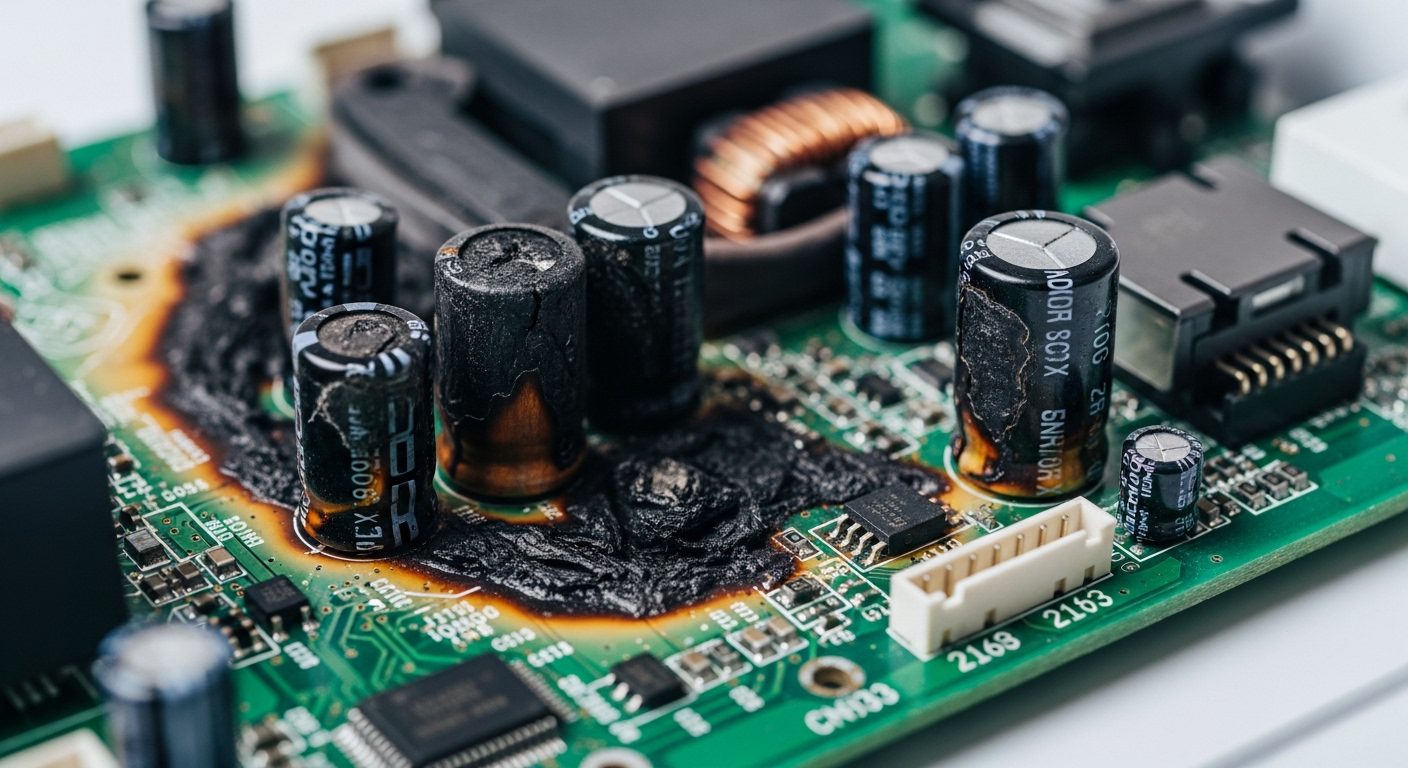 The connectivity that makes smart appliances convenient also makes them more vulnerable to electrical damage. These devices maintain constant connections to home networks, and electrical surges can propagate through data cables, ethernet connections, and even wireless signals under certain conditions. A single electrical event can potentially damage multiple smart devices simultaneously through interconnected systems, creating repair bills that quickly escalate into tens of thousands of dollars for a single household. Smart appliances also fail more catastrophically than traditional appliances when surge damage occurs. An older refrigerator might lose its digital display but continue cooling food effectively, while a smart refrigerator with damaged control circuits often becomes completely non-functional. The replacement costs are substantial – high-end smart refrigerators can cost $5,000 to $8,000 to replace, and complex digital controls rarely qualify for partial repairs when surge damage affects integrated circuit boards. The trend toward increased smart home integration means Vancouver households are accumulating more surge-sensitive devices each year. Smart thermostats, connected security systems, and automated lighting controls all add to the potential damage from electrical surges. When storm-related power events affect entire neighborhoods, the cumulative financial impact on families with multiple smart devices can be devastating, particularly when insurance coverage proves inadequate for the full scope of electronic equipment losses.
Building Comprehensive Surge Protection
Creating effective surge protection requires a layered defense strategy that addresses both external and internal electrical threats throughout your Vancouver home. The foundation starts with a whole-home surge protector installed directly at your electrical panel by a qualified electrician. These powerful devices create a protective shield around your entire electrical system, intercepting voltage spikes before they can reach outlets or appliances. 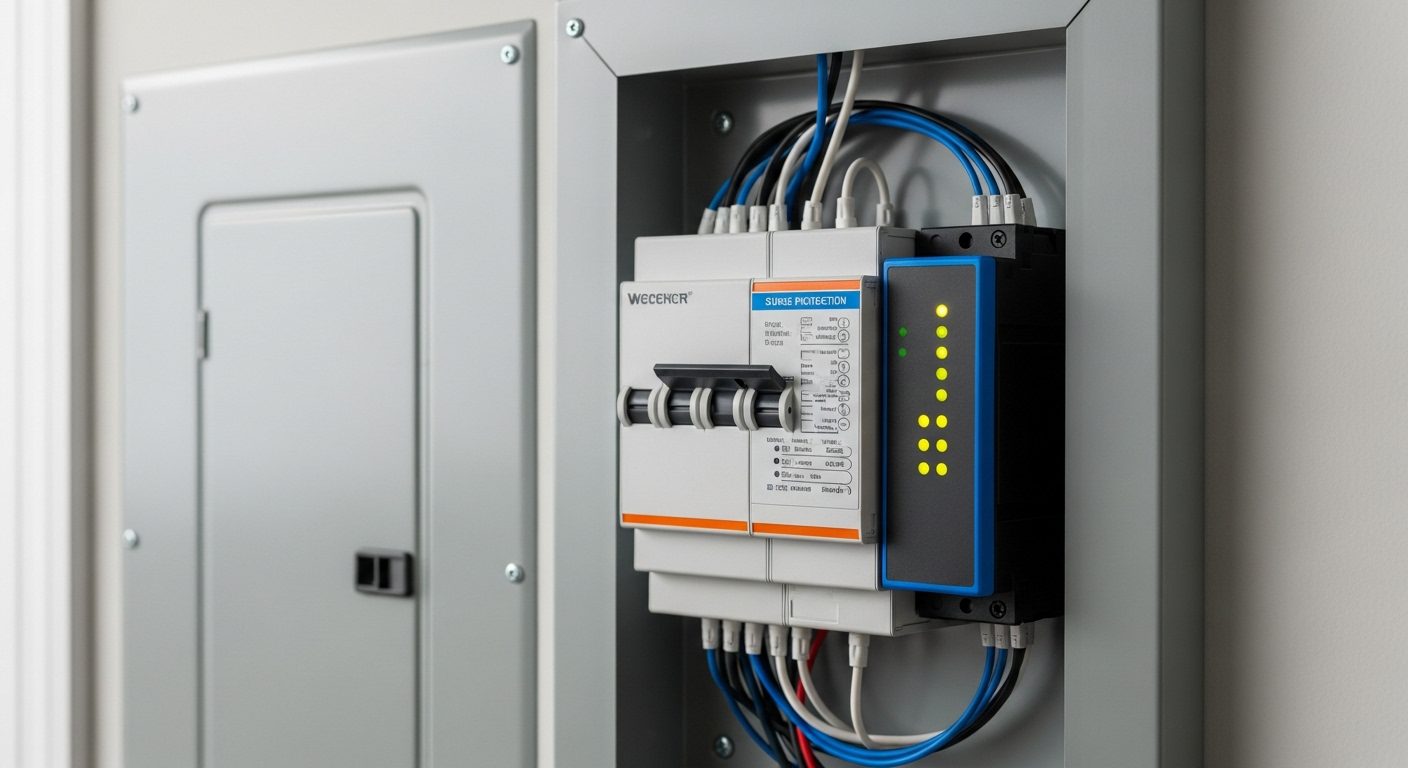 When properly installed, whole-home protectors can handle massive surges from direct lightning strikes or utility grid failures. Point-of-use surge protectors form your second line of defense, providing targeted protection for high-value electronics and appliances. These devices excel at catching smaller voltage spikes that might slip past whole-home protection, creating redundant safety layers essential for comprehensive protection. Quality point-of-use protectors should include high joule ratings indicating their capacity to absorb electrical energy, low clamping voltages for quick response times, and warranty coverage for connected equipment demonstrating manufacturer confidence. Vancouver’s coastal environment creates unique challenges requiring special consideration in protection strategies. Salt air from proximity to the Pacific Ocean gradually corrodes electrical connections throughout home wiring systems, making surge protectors less effective over time. Professional electrical inspections should be part of regular home maintenance routines, helping identify corroded components before they compromise surge protection effectiveness. Replace surge protectors every 3-5 years in coastal environments, as harsh conditions accelerate component degradation beyond normal wear patterns. Consider upgrading electrical panels and wiring systems that may not provide adequate protection for modern appliance loads. Many Vancouver homes built before smart appliance proliferation lack the electrical infrastructure to handle both normal operational demands and surge protection requirements effectively. Consulting with qualified electrical contractors familiar with coastal conditions can identify vulnerabilities and recommend upgrades that significantly improve appliance protection during storm events.
Frequently Asked Questions
How can I tell if my appliances were damaged by a power surge?
Common signs include appliances that won’t turn on, display error codes that weren’t there before, produce burning smells, or operate erratically with unusual noises. Digital displays that flicker, appliances that reset randomly, or equipment that appears functional but doesn’t maintain proper temperatures are red flags indicating potential surge damage that requires immediate professional assessment.
Will my homeowner’s insurance cover power surge damage to appliances?
Most standard homeowner insurance policies exclude power surge damage unless you have specific equipment breakdown coverage or electrical surge endorsements. Many Vancouver residents discover this exclusion when filing claims after storm damage. Contact your insurance agent to verify coverage and consider adding electrical equipment protection if not already included in your policy.
Are whole-home surge protectors worth the investment for Vancouver homes?
Absolutely, especially given Vancouver’s frequent storm activity and aging electrical infrastructure. Whole-home surge protectors typically cost $300-500 installed and can protect $15,000+ worth of appliances and electronics. With climate change intensifying storm patterns and increasing power grid stress, comprehensive protection becomes even more valuable for preventing catastrophic appliance losses.
How often should I replace surge protectors in Vancouver’s coastal climate?
Vancouver’s salt air and high humidity accelerate surge protector degradation, requiring replacement every 3-5 years rather than the typical 5-7 year lifespan in drier climates. Point-of-use protectors may need more frequent replacement if exposed to moisture or temperature fluctuations. Many modern protectors include indicator lights showing when replacement is needed, eliminating guesswork from maintenance timing.
Wrapping Up
Vancouver’s unique combination of severe weather, aging infrastructure, and smart appliance vulnerability creates perfect storm conditions for costly surge and freeze damage that most homeowners aren’t prepared to handle. With climate change intensifying storm patterns and households containing more sophisticated electronic equipment than ever before, protecting your appliances isn’t just smart – it’s financially essential. The 24-hour post-storm inspection window can mean the difference between minor repairs and total appliance replacement, while comprehensive surge protection and freeze prevention strategies provide peace of mind that your investment in modern appliances won’t disappear in the next electrical disaster. When appliance damage does occur despite your best prevention efforts, Vancouver Appliance Service Pros provides expert diagnosis and repair services throughout the Lower Mainland, helping homeowners in Burnaby, Richmond, and North Vancouver get their homes back to normal quickly and affordably while implementing protection strategies to prevent future weather-related appliance damage.