
You open the dishwasher after a full cycle, expecting clean dishes, and instead you’re greeted by a puddle of murky water sitting at the bottom of the tub. This guide walks you through exactly why that happens and what you can do about it, from the quick five-minute fixes to the situations where calling in help is the smarter move. Standing water in a dishwasher is one of the more common calls we get at Vancouver Appliance Service Pros. It’s frustrating, it’s a little gross, and it leaves you wondering whether your machine is on its last legs. The good news: most of the time, it isn’t. In Vancouver’s older housing stock, we often see this issue tied to maintenance habits rather than mechanical failure. A clogged filter or a sluggish drain connection is far more likely than a dead pump. Before you panic or start shopping for a replacement, give this a read. We’ll work through the causes in order of likelihood, from the ones you can fix in five minutes to the ones that call for a professional.
Key takeaways
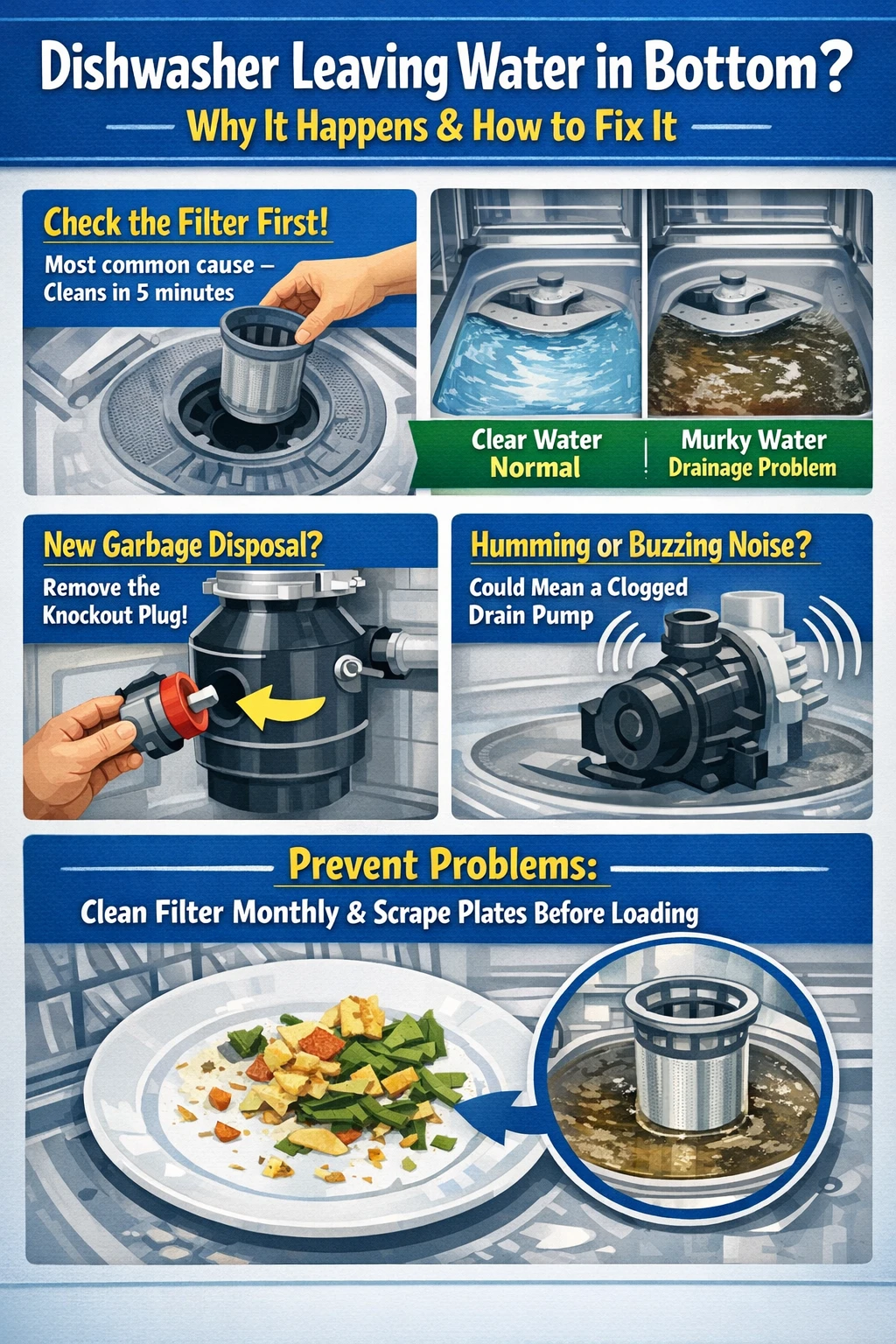
- A small amount of clean water near the filter area, roughly two cups or less, can be normal on many modern dishwasher models.
- A dirty or clogged filter is the most common cause of standing water, and cleaning it takes less than five minutes with no tools required.
- If a new garbage disposal was recently installed and the dishwasher knockout plug was not removed, the dishwasher cannot drain at all.
- Drain hose kinks or blockages are a frequent culprit, especially after kitchen renovations or disposal replacements.
- If the dishwasher hums or buzzes during the drain cycle but water stays behind, that often points to a blocked or failing drain pump.
- Monthly filter cleaning and scraping plates before loading are the two simplest habits that prevent most drain problems.
Why your dishwasher is leaving water in the bottom
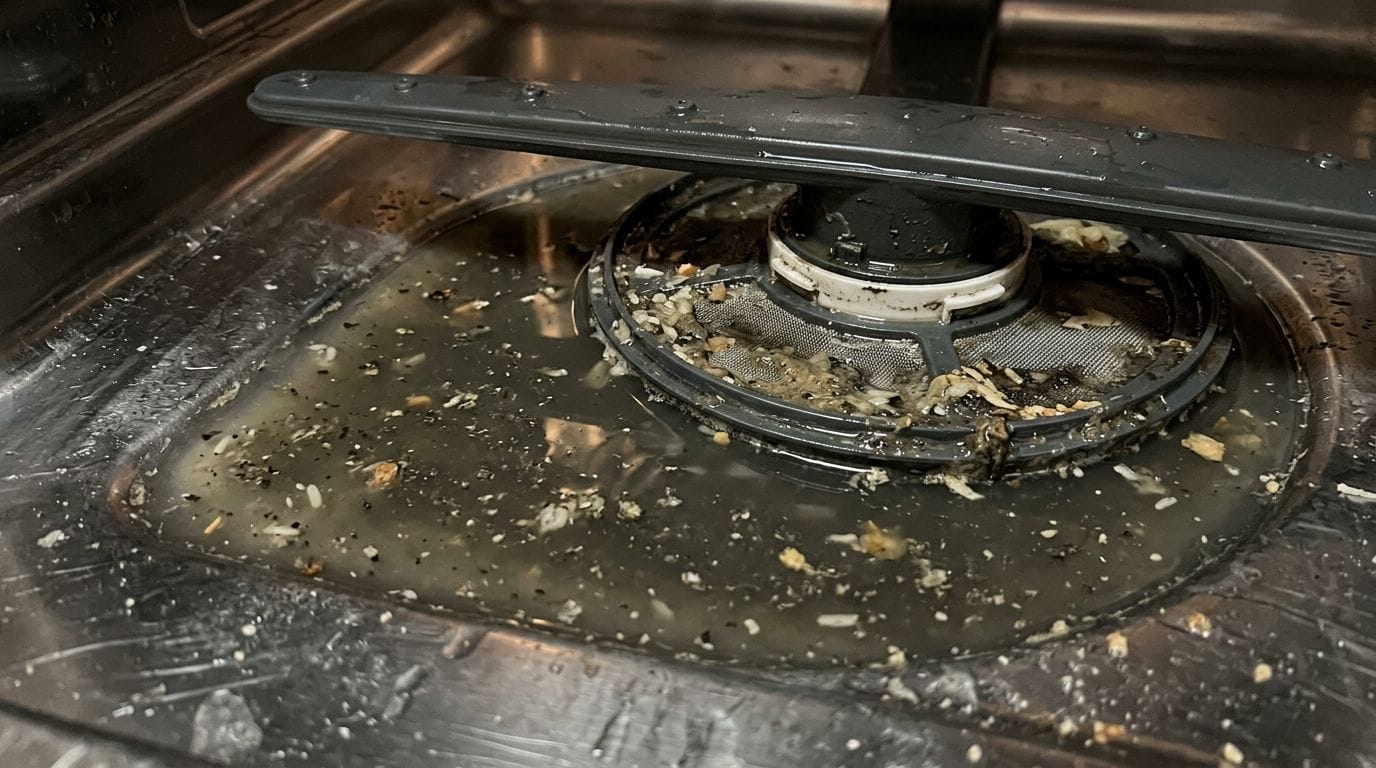 The most direct answer: your dishwasher has water pooling at the bottom because something is blocking or restricting the path water takes to drain out. That path runs from the filter and sump area, through a drain pump, out a drain hose, and into either a garbage disposal or a sink drain. Any obstruction along that route, or a pump that isn’t working properly, will leave you with standing water. Now, there’s a small caveat worth mentioning. Some newer dishwashers are designed to keep a bit of water, up to about two cups, sitting near the filter area between cycles. This is intentional. That small reservoir helps keep door seals from drying out, and many models drain it away automatically at the start of the next wash cycle. If the water you’re seeing is clear, clean, and limited to a shallow pool around the filter, you may not have a problem at all. But if the water is murky, smells off, covers the bottom of the tub, or reappears after every cycle? That needs attention. Dirty standing water is a breeding ground for bacteria and mold, and it tells you the drain cycle isn’t completing the way it should. In our experience, the fix is usually simpler than people expect.
The clogged filter: check this first
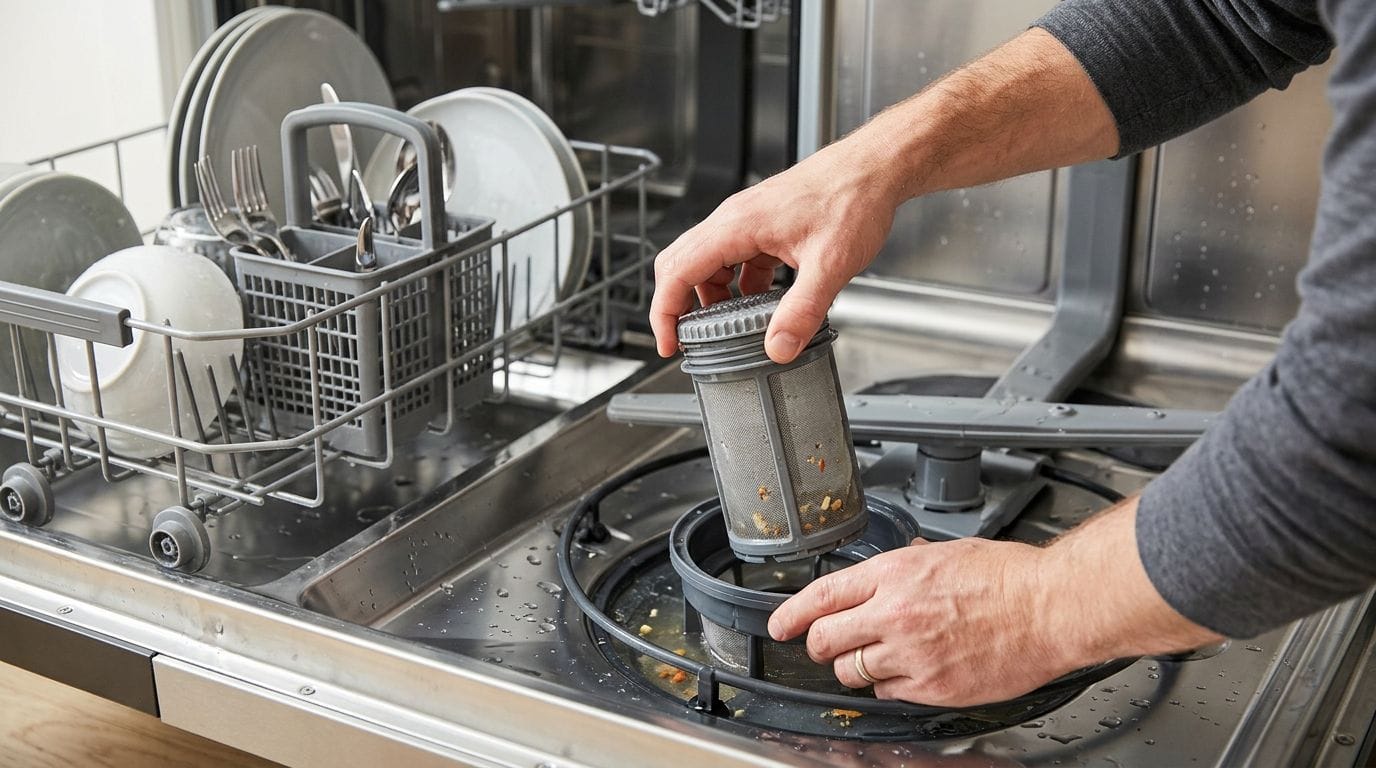 Honestly, this is the one to start with every single time. The dishwasher filter sits at the bottom of the tub, usually beneath or near the base of the lower spray arm. Its job is to catch food particles so they don’t recirculate onto your dishes or work their way into the drain pump. When it gets clogged, water has nowhere to go. Popcorn kernels, wet paper from container labels, small chunks of food, greasy buildup over time – it all collects there. Cleaning it takes about five minutes. Pull out the bottom rack, twist out the filter assembly (most come out by hand, though a few require a screwdriver – check your manual), and rinse it under warm running water. Use an old toothbrush to scrub off anything stubborn. Don’t use anything abrasive, because it can damage the mesh. Drop it back in, make sure the arrow marks align so it locks properly, and run a short cycle. If that clears the problem, you’ve found your culprit. Going forward, aim to clean the filter once a month. It takes a few minutes and prevents a lot of headaches. We see a lot of service calls in Kitsilano and Kerrisdale from homeowners in older homes where the dishwasher has never had the filter cleaned in years. The fix costs nothing. The service call would have.
The drain hose and garbage disposal connection
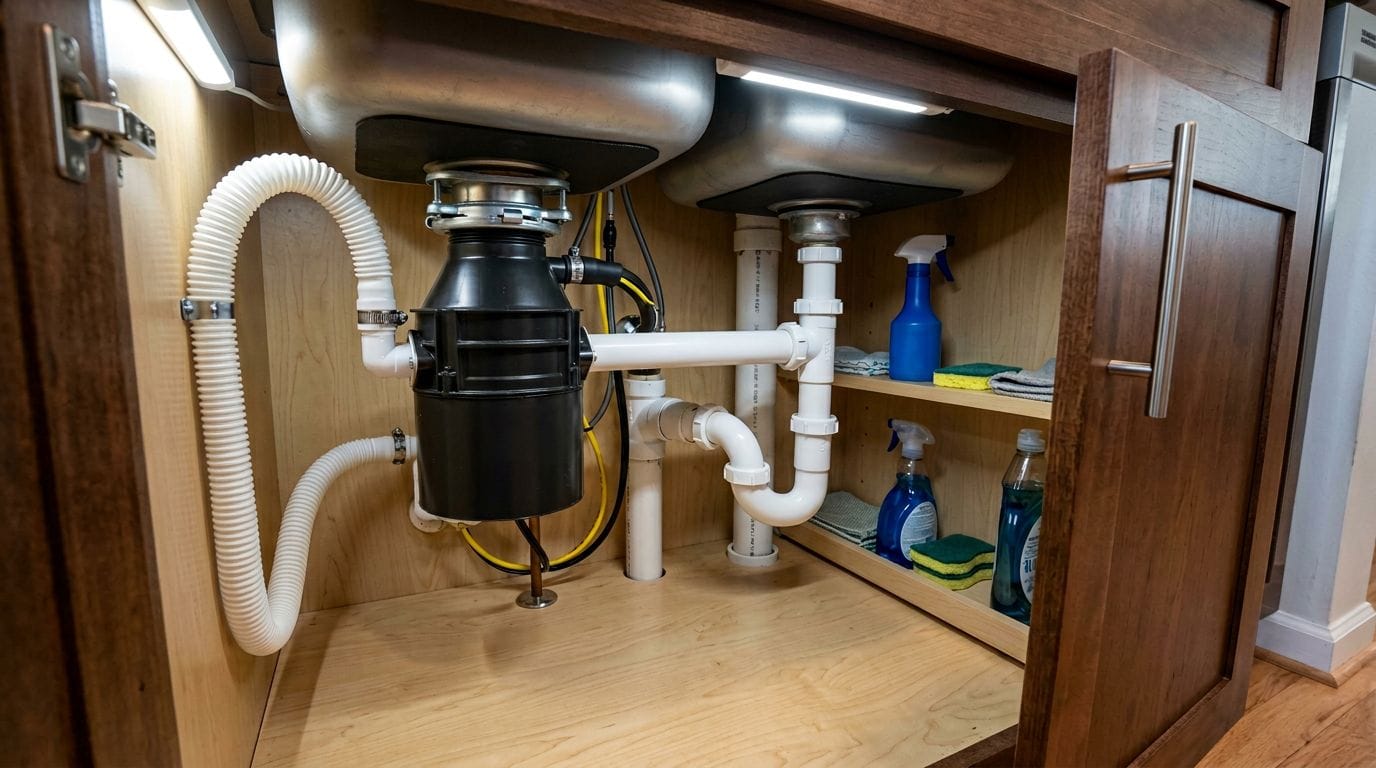 If cleaning the filter doesn’t solve it, the next place to look is the drain hose and how it connects to your plumbing. The drain hose carries water from the dishwasher out to your garbage disposal or sink drain. A few things can go wrong here. First, check for kinks. The hose runs under the sink, and it’s easy for it to get pinched during a renovation, after a disposal replacement, or just from being shoved around over the years. A kinked hose can restrict flow enough to leave water behind after every cycle. Look under the sink and trace the hose from where it exits the dishwasher to where it connects to the disposal or drain. If it’s bent sharply anywhere, try rerouting it so it runs in a smooth arc. Second, the high loop. The drain hose should be routed up to near counter height before dropping back down to the connection point. This creates a natural trap that prevents water from draining backward into the dishwasher when the pump shuts off. If the hose runs low or flat the whole way, water can siphon back in after a cycle, which explains why you see standing water even though the machine was draining fine during the cycle. Some installations use an air gap fitting mounted at the counter to accomplish the same thing. Third, and this is a surprisingly common one: if you recently installed a new garbage disposal, check whether the dishwasher knockout plug was removed. Every new disposal comes with a plug in the dishwasher inlet. It’s there in case you’re not connecting a dishwasher. If you don’t knock it out before connecting the drain hose, the dishwasher literally cannot drain anywhere. We’ve seen this mistake enough times that it’s always worth confirming.
Checking the garbage disposal itself
Even if the knockout plug is fine, a clogged garbage disposal can back water up into the dishwasher drain line. Before you start a dishwasher cycle, run the disposal for about thirty seconds to clear any food sitting in it. If you hear a loud grinding or the disposal seems sluggish, that’s worth addressing on its own. A backed-up disposal is often the last thing people think of when troubleshooting dishwasher drain problems, but the connection between the two systems is direct.
The air gap cylinder
Not every kitchen has one, but if you see a small cylindrical fitting mounted on your countertop or sink deck near the faucet, that’s your air gap. It prevents dirty drain water from siphoning back into the dishwasher. It does this by allowing air into the drain line, which breaks any vacuum that would otherwise pull water backward. Air gaps can clog. Debris from the drain line can work its way up into the cylinder, and over time it can restrict flow enough to cause drainage problems. The fix is simple: unscrew the cap, remove the inner cover, and clean out any buildup with a toothbrush or a bent paperclip. Rinse it through with water and reinstall it. If your air gap was clogged and the dishwasher is now draining, you’ve found your problem.
The drain pump: when the noise tells you something
If you’ve cleaned the filter, confirmed the hose isn’t kinked, checked the disposal connection, and the water is still sitting there, the drain pump deserves a closer look. The pump is what physically pushes water out of the machine. When it’s working normally, you can hear it cycling during the drain portion of the wash. A drain pump blockage is different from a pump failure. Small debris, a broken piece of glass, a pistachio shell, a fragment of a dish, can jam the impeller and prevent the pump from moving water effectively. You’ll often hear a humming or buzzing sound if the motor is running but the impeller can’t spin. To check, remove the bottom rack and filter assembly and look into the sump area with a flashlight. Remove anything you can see and safely reach. Do not reach into hidden areas or under panels with the machine powered on. For the Whirlpool and Maytag documentation on drain pump maintenance, the recommendation is to call a service technician if the pump appears blocked beyond what’s visible in the sump, or if the pump is humming but not moving water after you’ve cleared any visible debris. A pump that runs but doesn’t drain is often on its way out and needs to be replaced rather than repaired. We get calls from homeowners in East Vancouver and the surrounding areas about this fairly regularly, and in many cases the pump blockage is something small that shouldn’t have made it past the filter – but did. Pre-rinsing dishes and cleaning the filter monthly reduces the chance of that happening significantly.
When the problem is electrical or mechanical
A smaller percentage of drain problems aren’t caused by clogs at all. If the dishwasher never attempts to drain, or if the drain cycle seems to start but cuts off early, the issue may be with the control board, a door latch sensor, or the cycle timer on older machines. One quick test: after a cycle ends with water remaining, close the door and press the cancel or drain button. If the machine drains completely, the pump and drain system are working fine. The problem is that the drain cycle isn’t running at the right point in the wash program, which points toward a control or timer issue. That’s a job for a technician. Wiring problems can also cause this. There are real-world cases where wires inside the door panel get worn or pinched over years of opening and closing, causing intermittent signals that prevent the drain cycle from completing. It’s the kind of thing that doesn’t show up in a basic visual inspection and requires someone who knows what they’re looking for.
Frequently asked questions
These questions come up often, and they’re worth addressing directly before you decide whether to grab a screwdriver or pick up the phone.
Is it normal to have some water at the bottom of the dishwasher?
Yes, in limited amounts. Many modern dishwashers intentionally retain a small amount of clean water near the filter and sump area, typically no more than two cups, to keep door seals from drying out. This water drains away at the start of the next cycle. If the water is clear and shallow, it may not indicate any problem at all. If it’s murky, smells bad, or covers a significant portion of the tub floor, something is preventing the drain cycle from completing properly.
Can a new garbage disposal cause the dishwasher to stop draining?
Yes, and this one catches a lot of people off guard. New disposals come from the factory with a plastic knockout plug in the dishwasher drain inlet. It’s there in case the disposal is installed without a dishwasher. If that plug isn’t removed before connecting the dishwasher drain hose, the dishwasher has no path to drain. The fix is quick once you know to look for it: disconnect the drain hose from the disposal, use a screwdriver and hammer to knock the plug into the disposal cavity, then fish it out. Reconnect the hose and you’re done.
What does it mean if my dishwasher hums during the drain cycle but water stays in the bottom?
That hum means the drain pump motor is running, but something is preventing the impeller from spinning freely or the water isn’t moving through the drain path. The most likely explanation is a blockage in the pump, a kink in the drain hose, or a clogged air gap restricting outflow. Start by cleaning the filter and checking the sump area for debris, then trace the drain hose for kinks. If none of that resolves it, the pump impeller may be jammed or the pump may be failing, which usually means a replacement is needed.
Can I use drain cleaner to unclog my dishwasher?
No. Standard drain cleaners contain chemicals that can damage dishwasher components, including rubber seals and plastic fittings. For a natural approach, a combination of baking soda and white vinegar poured into the bottom of the tub can help with mild grease buildup and odors. For actual clogs, physical cleaning of the filter, sump, and drain hose is more effective and far safer for the machine.
My dishwasher drains fine when I cancel the cycle manually, but leaves water at the end of a full wash. What’s going on?
If the pump clearly works when you run a cancel or drain cycle, the mechanical components are probably fine. The issue is more likely in the control system – the machine isn’t triggering the drain at the right point in the wash cycle. This can be caused by a faulty timer on older machines, a control board issue, or occasionally a door latch sensor that’s affecting cycle completion. It’s worth having a technician look at it rather than replacing parts by guesswork.
Wrapping up
Most cases of standing water in a dishwasher come down to one of a handful of things: a dirty filter, a kink or blockage in the drain hose, a garbage disposal issue, or a jammed pump. Start with the filter, work your way through the drain path, and you’ll likely find the answer before you need to call anyone. If the pump is running but not draining, or if the machine isn’t attempting to drain at all, that’s when it makes sense to bring in someone with the right tools to diagnose it properly. If you’ve worked through these steps and still have water sitting in the bottom after every cycle, or if something just doesn’t feel right about how the machine is running, give Vancouver Appliance Service Pros a call. We handle dishwasher drain issues across Vancouver and the surrounding area and can usually tell you over the phone whether it sounds like a DIY fix or something that needs hands-on attention. No point replacing parts you don’t need to – let’s figure out what’s actually going on first.