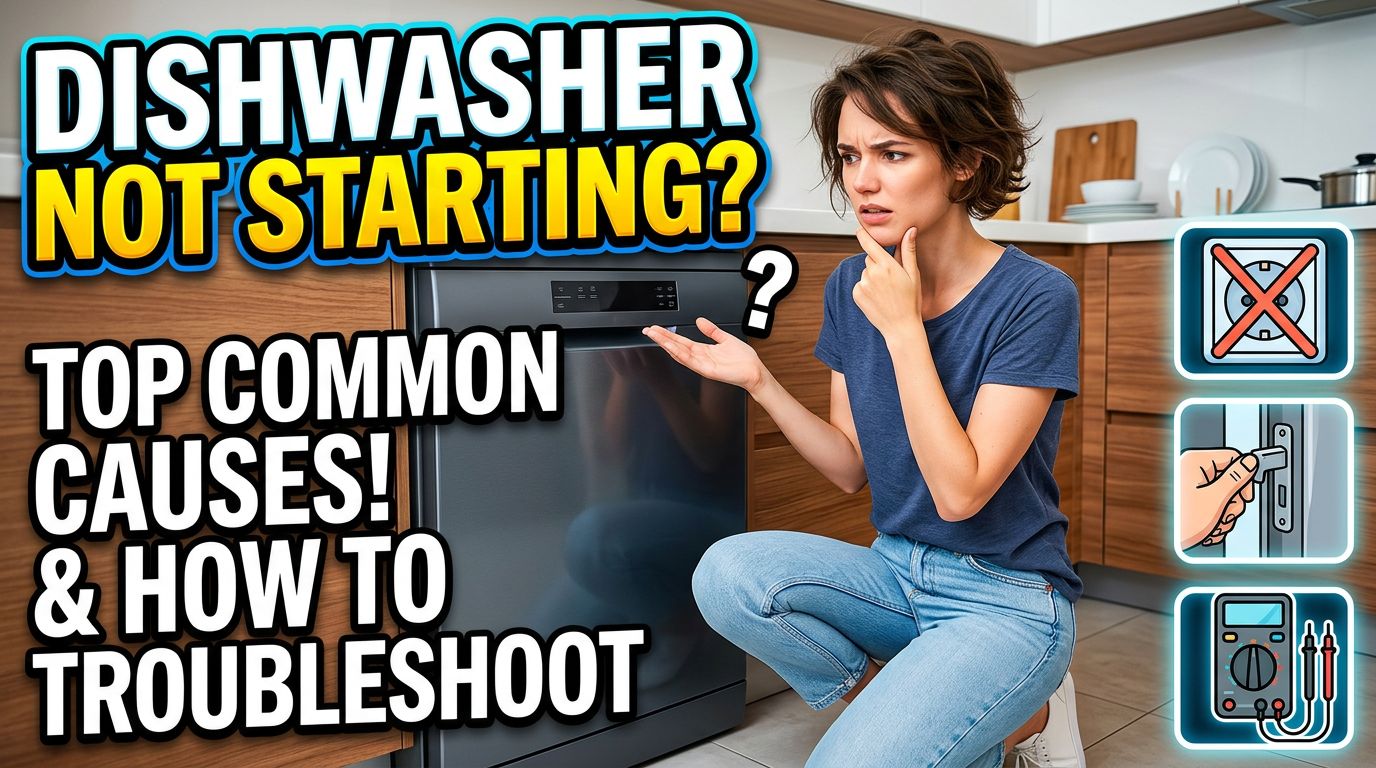
Standing water in the bottom of your dishwasher after a cycle is one of the more common appliance problems — and one that’s often diagnosable and fixable at home before calling a technician. Here’s a step-by-step troubleshooting guide, with callouts for Samsung, LG, Bosch, and Whirlpool.
Related Services: Dishwasher Repair in Vancouver
Step 1: Is the water normal?
First, a calibration point. Most dishwashers leave a small amount of water at the bottom of the tub after a cycle — typically 1 to 2 cups. This is normal and intentional: keeping the drain pump seal and sump area wet prevents it from drying out and cracking. If it’s a small amount and your dishes are clean, this may not be a problem at all.
True drainage failure means 2 inches or more of standing water, or water that’s been sitting since the previous cycle. That’s what this guide addresses.
Step 2: Clean the filter
On most modern dishwashers (particularly Bosch, LG, and Samsung), the filter lives at the bottom of the tub. A clogged filter is the single most common cause of drainage problems — the water can’t flow into the sump area because the filter is blocking it.
- Remove the bottom rack.
- Find the filter (center of the dishwasher floor, cylindrical assembly on most brands).
- Twist counterclockwise and lift out.
- Rinse under warm water; scrub with a soft brush.
- Check the area under the filter for debris — food chunks and glass can accumulate there.
- Reinstall and run a cycle.
Step 3: Check the drain hose
The drain hose carries water from the dishwasher pump to either the garbage disposal or the sink drain. Common problems:
- Kink or crimp: Pull the dishwasher forward and look at the hose where it exits the machine. A sharp bend prevents water from passing.
- Garbage disposal knockout plug: If you recently had a new disposal installed, the knockout plug in the dishwasher inlet port may not have been removed. This blocks drainage completely. Remove the disposal’s dishwasher inlet knockout plug — it requires a screwdriver and a hammer to punch it out from inside the disposal.
- High loop or air gap: The drain hose should run up to cabinet height before coming down to the disposal or drain. This prevents backflow. If the hose was recently reinstalled and the high loop is missing, dirty water can siphon back into the dishwasher.
- Clogged or slow sink drain: If the sink drain itself is slow, the dishwasher drain will struggle too. Test by running the sink — slow drain there will also cause dishwasher drainage issues.
Step 4: Check the drain pump
If the filter is clean and the hose is clear, the drain pump is the next suspect. The pump forces water through the drain hose — if the impeller is jammed or the motor has failed, water won’t move.
Jam vs. motor failure: Listen during the drain phase. If you hear a humming or buzzing but no water is moving, the impeller may be jammed by glass, a bone, or other debris. If you hear nothing from the pump area during the drain cycle, the pump motor may have failed.
To clear a jammed pump: on most dishwashers, you can access the pump through the filter area by removing the filter assembly and the bottom sump cover. Look for debris around the impeller blades and remove it manually (with the power off and machine unplugged).
Brand-specific drainage issues
Bosch dishwasher not draining (E24 or E25)
Bosch’s E24 error means “drain fault.” E25 means the drain pump is blocked. On Bosch, the most common cause is a clogged filter or debris around the pump impeller. After cleaning the filter, run a short cycle. If E24 persists, the drain pump solenoid may have failed — a repair job.
Samsung dishwasher not draining (5C / 5E error)
Samsung’s 5C or 5E error indicates a drain fault. Clean the filter, check the drain hose for kinks, and verify the connection to the garbage disposal. Samsung dishwashers also have a check valve in the drain hose that can stick in the closed position — if the hose and filter are clear, the check valve is worth inspecting.
LG dishwasher not draining (OE error)
LG’s OE (or 0E) error means drain fault. Same approach: clean filter first, check drain hose. LG dishwashers occasionally have the drain pump motor fail — they’re known to run quietly when working but completely silent when failed. If the filter and hose are clear and you hear nothing from the pump during the drain phase, the pump motor needs replacement.
Whirlpool dishwasher not draining (F6E4 or F8E4)
Whirlpool and Maytag share the same platform. The F6E4 error indicates a water supply issue; F8E4 is more specifically a fill/drain fault. Clean the filter, check the drain hose and the high loop. Whirlpool drain pump motors are a known failure point on units 5 to 8 years old.
How to manually drain a dishwasher
If you need to remove the standing water before attempting repairs:
- Scoop out as much water as possible with a cup.
- Lay towels on the floor to catch spillage.
- Use a wet/dry vacuum to remove the remaining water from the sump area.
- Once the machine is drained, you’ll have better access to the filter and pump area for inspection.
When to call a technician
Clean the filter and check the drain hose yourself — these are the most common fixes. Call for help if: the pump motor has failed (no sound during drain, filter and hose are clear), the pump impeller is jammed and you can’t safely access it, the drain solenoid has failed, or the problem persists after all basic checks.
Vancouver Appliance Service diagnoses dishwasher drainage problems across Metro Vancouver. We carry drain pumps for Samsung, LG, Bosch, Whirlpool, and other major brands and typically complete dishwasher drain repairs in a single visit.