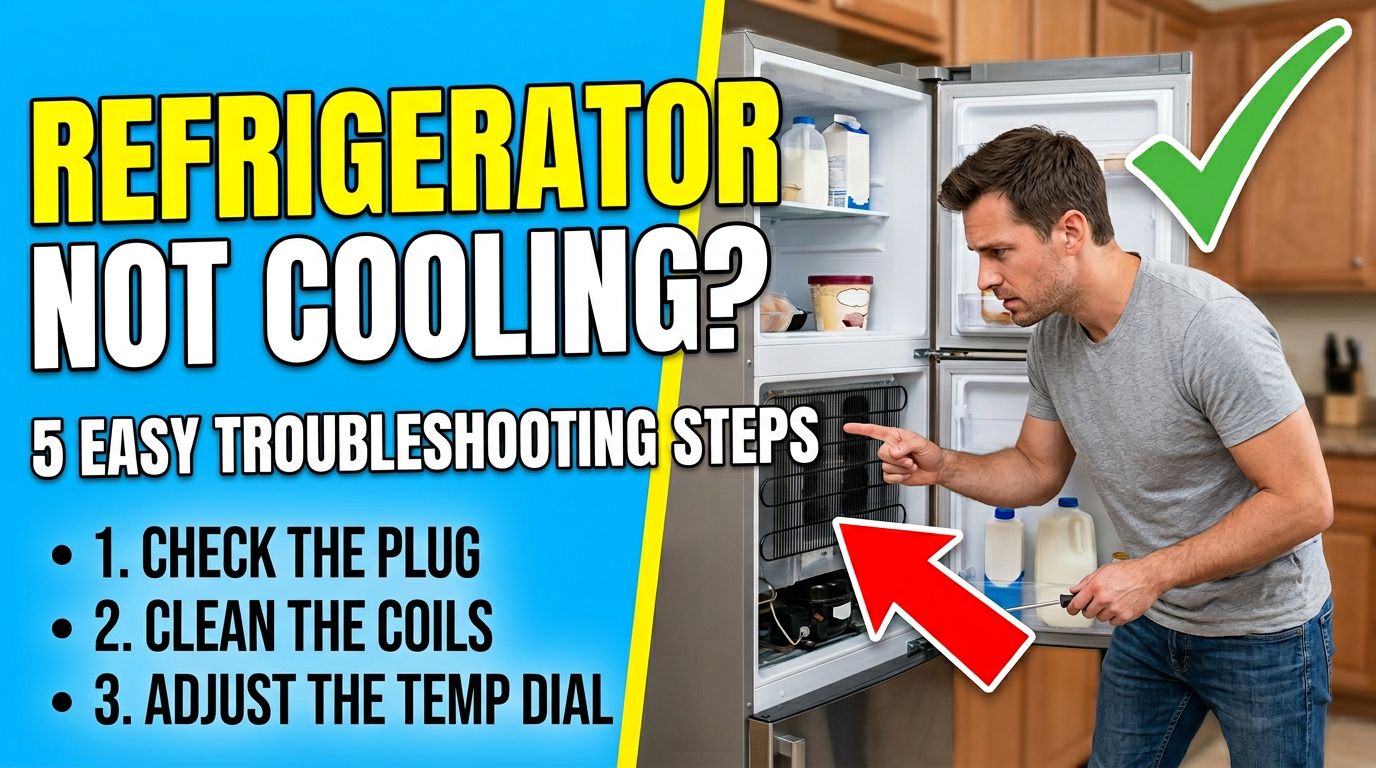
Your refrigerator is running, the light comes on when you open the door, but nothing inside is cold — and whatever was fresh yesterday is already starting to turn. This guide walks you through the most common reasons a fridge stops cooling and what you can check yourself before spending money on a service call.
A warm refrigerator is one of those problems that starts as a minor annoyance and turns into a genuine mess — spoiled groceries, mystery odors, and the nagging feeling that something expensive is about to happen. The good news is that most cooling problems have surprisingly simple causes. At Vancouver Appliance Service Pros, we get these calls regularly, and more often than not, the fix doesn’t require pulling the fridge apart. It requires a flashlight and about twenty minutes.
Vancouver’s climate plays a role here too. Homes in the Lower Mainland run their kitchens year-round in conditions that shift from damp and cool winters to warmer summers, and that temperature variation outside can affect how hard your fridge works to maintain its internal environment. Older homes, in particular, tend to have kitchen layouts where the fridge is squeezed into tight spaces with poor ventilation — which is one of the first things worth checking.
Key takeaways
- The ideal refrigerator temperature is between 33°F and 40°F, with 37°F being the sweet spot for keeping food fresh without freezing it.
- After a reset or temperature adjustment, give the fridge up to 24 hours to fully stabilize before assuming the problem is still there.
- Dirty condenser coils are one of the most common and most overlooked causes — cleaning them every two to three months can prevent most cooling issues in pet-friendly or dusty homes.
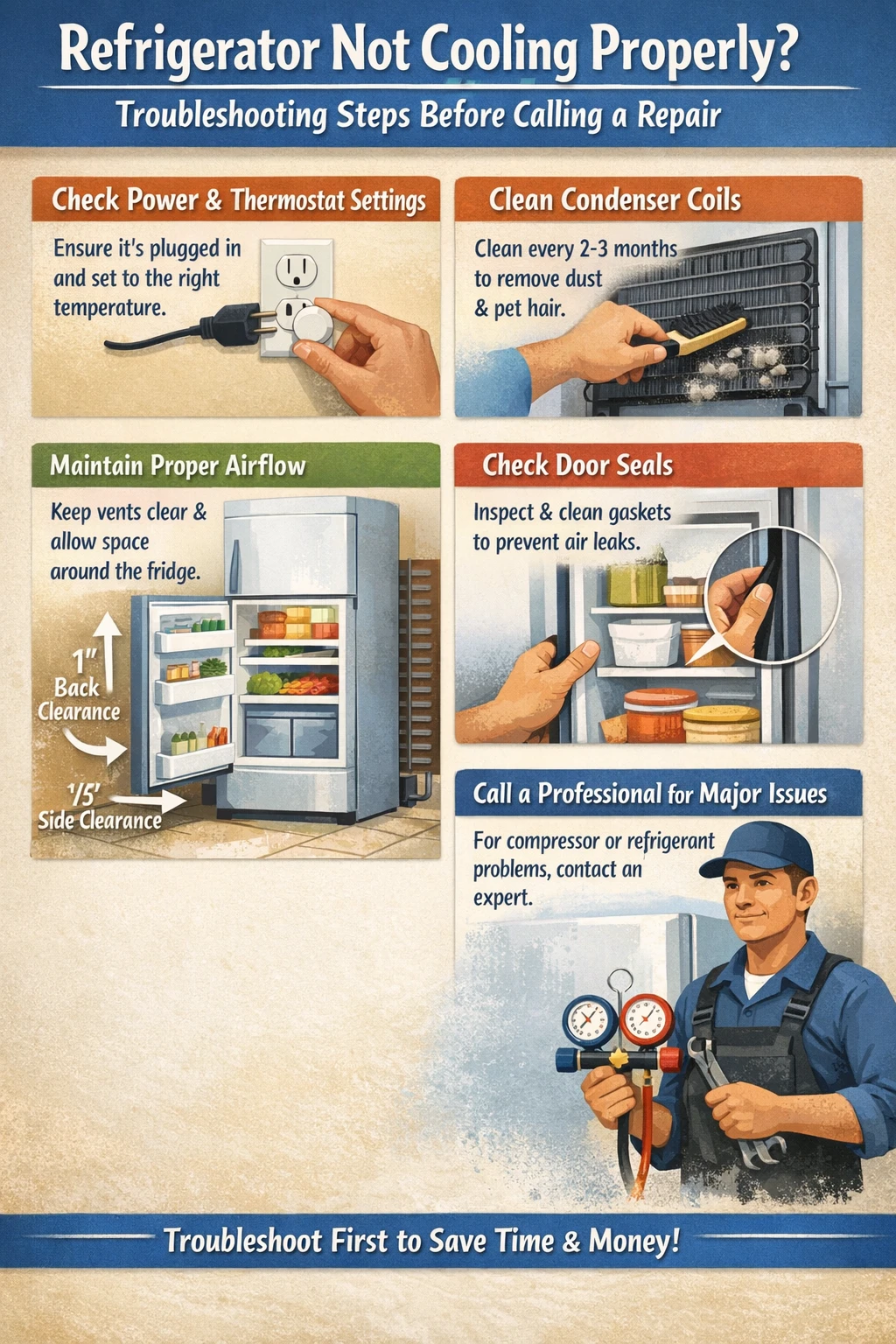
- Refrigerators need at least half an inch of clearance on the sides and one inch at the back to dissipate heat properly.
- If ice is building up on the back wall of the freezer compartment, the self-defrost system may have failed — and that usually needs a technician.
- Compressor problems, refrigerant leaks, and faulty circuit boards are worth diagnosing professionally before spending money on parts.
Why your refrigerator stopped cooling
A fridge stops cooling for one of two broad reasons: either something is preventing cold air from circulating properly, or the system that generates cold air in the first place has a problem. The first category you can usually fix yourself in an afternoon. The second category almost always needs a pro.
Start simple. Check that the fridge is actually plugged in and that the breaker hasn’t tripped. It sounds obvious, but a surprising number of “broken” fridges turn out to be unplugged after someone cleaned behind them or bumped the outlet. If the interior light comes on, power isn’t your problem. Next, check the thermostat setting. Food items or curious kids can accidentally nudge the dial, and a thermostat set too warm will make a perfectly functional fridge feel like it’s failing. The target range is 33°F to 40°F — anything above that and your food is in a grey zone.
In our experience, these first two checks alone resolve a good chunk of calls. But if the settings look right and the fridge is still warm, you need to dig a little deeper.
Check the condenser coils first
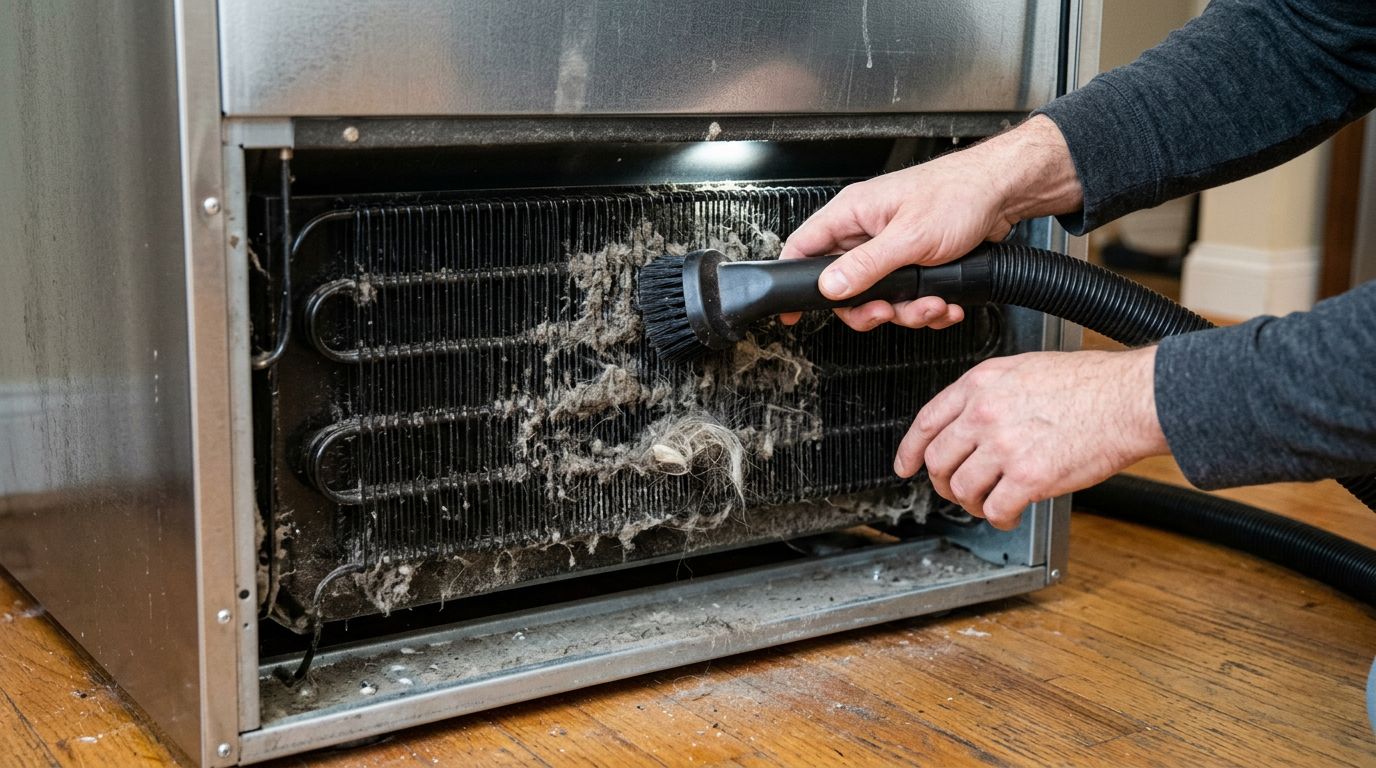
If there’s one maintenance task most homeowners never do, it’s cleaning the condenser coils. These coils — usually located along the bottom or back of the refrigerator — release the heat that gets pulled out of your fridge. When they’re coated in dust, pet hair, or kitchen grease, they can’t do that job efficiently. The compressor works harder, the fridge runs warmer, and eventually something gives.
Cleaning them isn’t complicated. Unplug the fridge, pull it away from the wall, and use a vacuum with a brush attachment to clear the buildup. If there’s significant pet traffic in your home, or if your kitchen tends to get greasy, do this every two to three months. Most people do it never, which is why it causes so many problems. The U.S. Department of Energy’s guidance on refrigerator efficiency specifically mentions coil maintenance as one of the simplest ways to keep the appliance running properly.
While you have the fridge pulled out, check the clearance. It needs at least half an inch on the sides and a full inch at the back. Press it too close to the wall and you’re trapping heat right where it needs to escape. This is especially common in older Kitsilano and East Vancouver homes where kitchens were designed before modern refrigerators and space is tight.
Look at airflow inside the fridge
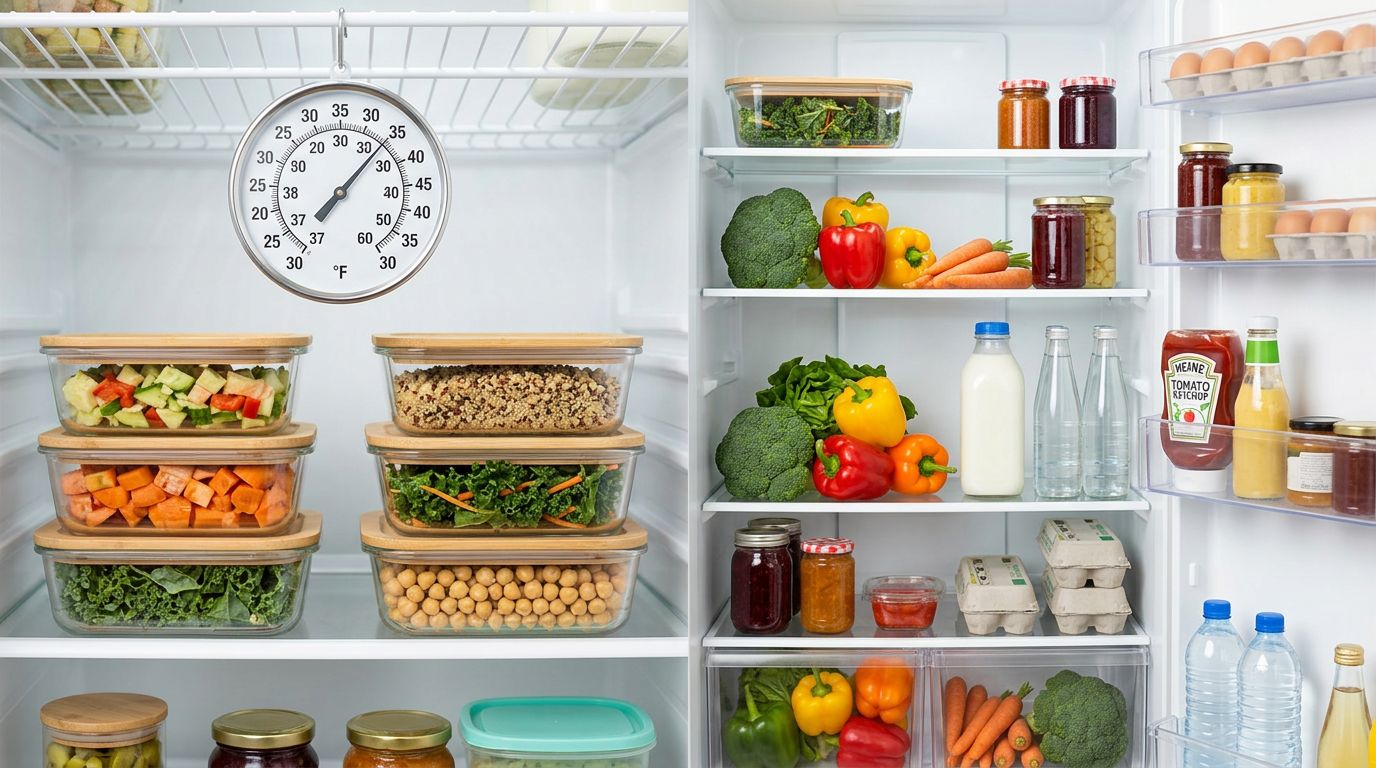
It’s easy to overstuff a refrigerator, especially after a big grocery run. But when food is crammed in front of the vents, cold air can’t circulate, and the result is exactly what you’d expect — warm spots, uneven cooling, and food spoiling faster than it should.
Open the fridge and look for the air vents, usually located at the back wall or between the fridge and freezer sections. If anything is blocking them, move it. This fix costs nothing and takes two minutes. While you’re in there, check the freezer compartment too. A vent that’s completely frosted over is a different issue — it means the self-defrost system may not be doing its job, and you’ll need to address that separately.
Overpacking also causes a subtler problem: the fridge has to work much harder to cool a dense load of warm groceries you just brought in from the car. After a big shop, give it a few hours before assuming something is wrong. Adding hot food makes the same thing happen — a pot of warm leftovers going straight into the fridge will raise the internal temperature noticeably and it can take time to recover.
Inspect the door gaskets
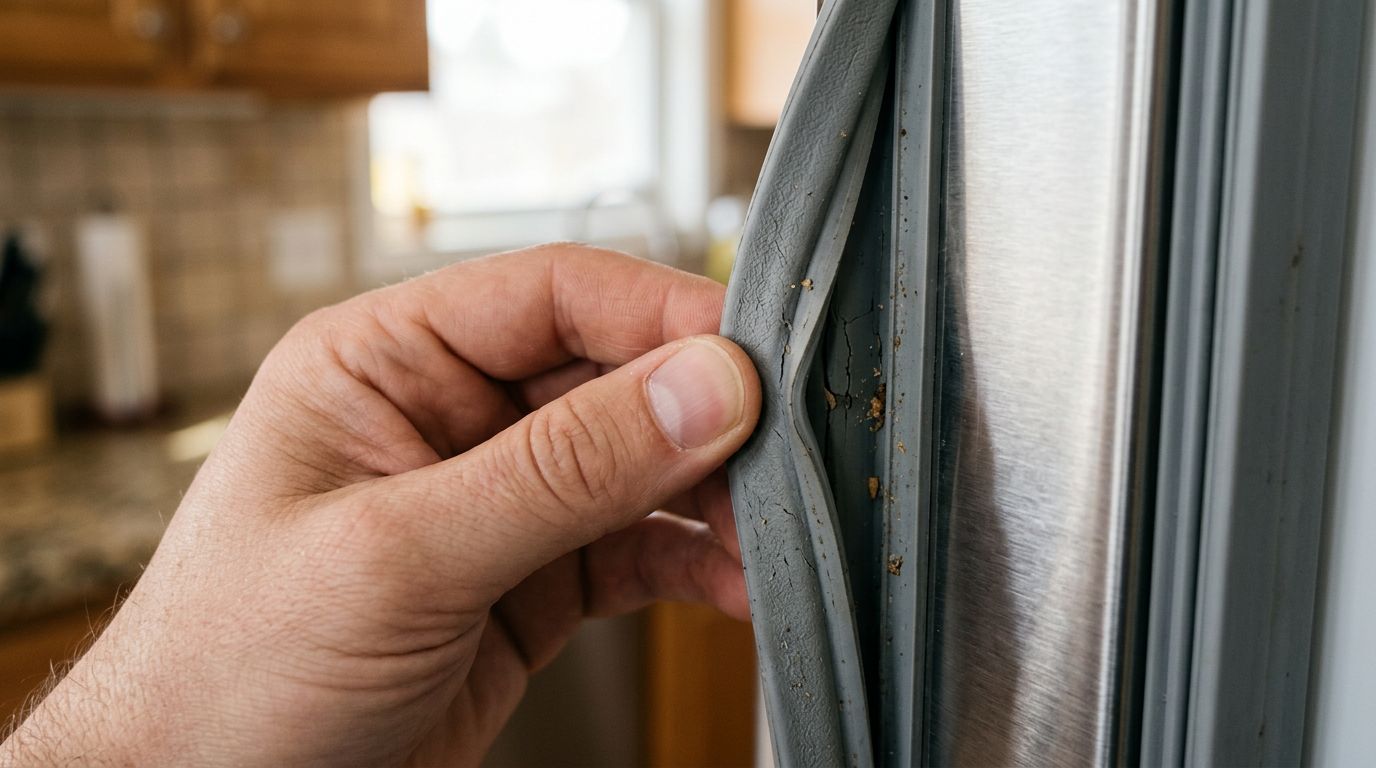
The rubber seal running around the edge of the door is what keeps cold air in and warm air out. Over time it gets dirty, compressed, or cracked — and when it stops sealing properly, cold air bleeds out constantly. The fridge never quite catches up.
Run your hand along the edge of the closed door. If you feel cool air escaping, the gasket is the likely culprit. Start by cleaning it with warm soapy water and a sponge. Grease, food residue, and mold can prevent a good seal even when the gasket itself is still in reasonable shape. If cleaning doesn’t help and you can still feel air escaping, the gasket may need replacing. That’s a relatively straightforward repair — more of a DIY-friendly job than most fridge repairs.
While you’re checking seals, make sure the fridge is level. Even a slight tilt can prevent the door from hanging and sealing correctly. Place a level on top of the fridge and check it front-to-back and side-to-side. If it’s off, adjusting the leveling feet (usually found at the base of the fridge) will fix it. Your owner’s manual will have the specific leveling procedure for your model.
When it’s the freezer causing the fridge problem
Here’s something that confuses a lot of people: sometimes the fridge is warm because of a problem in the freezer. The two compartments share a cooling system, and if the freezer develops a heavy frost buildup on its evaporator coils, cold air stops flowing down into the fridge section.
Look at the back wall inside the freezer. If you see a thick layer of ice or frost, that’s a sign the self-defrost system has failed. The refrigerator is supposed to run a defrost cycle roughly four times every 24 hours to prevent this. When the defrost heater, defrost thermostat, or defrost timer fails, ice builds up until the evaporator fan can’t pull air across the coils anymore. The freezer may still feel somewhat cold (the ice itself is cold), but the fridge section goes warm.
A quick way to test this: unplug the fridge, prop the freezer door open, and let everything thaw for 24 to 48 hours. Have towels ready — the meltwater can overflow the drip pan. Once it’s fully thawed, plug it back in. If the fridge cools normally for a week or two and then the same problem returns, you’ve confirmed a defrost system failure. We see this fairly often in fridges that are five or more years old. The fix requires replacing one of a few components, which a technician can diagnose quickly. The LG support page on refrigerator cooling issues has a good breakdown of how the defrost cycle works if you want to understand the mechanics before calling anyone.
Signs the problem is beyond a DIY fix
Some cooling problems are worth handing off. A compressor that runs non-stop without cooling anything, makes unusually loud noises, or causes the circuit breaker to trip repeatedly is telling you something serious. The compressor is the heart of the cooling system — it compresses refrigerant vapor and drives the whole cycle. When it fails, the fridge stops cooling entirely. Replacing a compressor is expensive and requires specialized equipment; in many cases the cost approaches or exceeds the value of an older fridge.
A refrigerant leak is similar. If a technician checks everything else and finds no mechanical issue, low refrigerant is often the answer. You can’t see or smell a refrigerant leak easily, and recharging the system without fixing the underlying leak is only a temporary patch. A proper diagnosis matters here before spending money on anything.
The condenser fan — usually at the back of the fridge near the compressor — can also fail or get jammed with debris. If the compressor is running but the fan isn’t spinning, the compressor overheats and cooling stops. And finally, a faulty circuit board can cause all sorts of erratic behavior. It’s essentially the fridge’s control system, and when it goes, diagnosis gets complex. The Whirlpool service documentation for various models outlines what components are involved in each failure mode, and it’s worth referencing if you have a Whirlpool unit and want to understand what you’re dealing with.
We get calls from homeowners in Burnaby and across the Lower Mainland who’ve already spent money on parts before calling us, only to find the real issue was something different. Getting a proper diagnosis first almost always saves money in the long run.
Frequently asked questions
How do I reset a refrigerator that’s not cooling?
Unplug the refrigerator or switch it off at the circuit breaker, leave it off for five to ten minutes, then restore power and check that the temperature is set correctly — aim for 37°F in the fridge and 0°F in the freezer. After a reset, it can take up to 24 hours for the temperature to fully stabilize, so don’t panic if it doesn’t feel cold immediately. If you’re doing this because of frost buildup, the fridge needs to be unplugged for a full 24 to 48 hours with the doors open to defrost completely.
Why is my freezer working but my fridge isn’t cold?
This usually comes down to restricted airflow between the two compartments. The most common culprits are a failed evaporator fan, a stuck or closed damper control that regulates air between the sections, or frost buildup blocking the vents. A faulty thermistor (the sensor that reads internal temperature) can also cause this by giving the control board inaccurate readings. Start by checking for ice buildup on the freezer’s back wall and listen for the evaporator fan running when you open the freezer door.
How often should condenser coils be cleaned?
Every six months is a reasonable baseline for most households. If you have pets, a dusty environment, or a kitchen that sees a lot of cooking, clean them every two to three months. It’s one of those maintenance tasks that takes ten minutes and prevents a lot of grief. Neglected coils make the compressor work harder, shortening its life and driving up your electricity bill in the process.
What are the signs that a refrigerator compressor is failing?
A failing compressor typically shows a few patterns: the fridge runs constantly but never gets cold, the compressor makes unusually loud clicking or rattling noises, or the circuit breaker trips when the fridge kicks on. You can also place your hand on the compressor (at the back bottom of the fridge) — it should be warm to the touch when running, but if it’s extremely hot or vibrating violently, that’s a bad sign. At that point, call a technician before putting more money into the appliance without a proper assessment.
Is it worth repairing an old refrigerator that’s not cooling?
It depends on the repair and the age of the fridge. A simple fix like a faulty gasket, a dirty coil, or a bad start relay is almost always worth doing — the parts are inexpensive and the repair is straightforward. A compressor replacement or refrigerant repair on a fridge that’s ten or more years old is a different calculation. If the repair cost approaches half the price of a comparable new unit, replacement is usually the smarter move. A good technician will give you an honest assessment before recommending expensive parts work.
Wrapping up
Most refrigerator cooling problems start with something simple: a blocked vent, a dirty coil, a thermostat that got bumped, a door seal that’s given up. Work through those checks before assuming the worst. If the fridge still isn’t cooling after going through the steps above, or if you’re seeing signs of compressor trouble or defrost system failure, that’s when it makes sense to bring in someone who can diagnose the problem accurately. At Vancouver Appliance Service Pros, we handle fridge repair, freezer repair, and all manner of appliance issues across Vancouver and the surrounding area. Give us a call and we’ll help you figure out what’s actually going on — and whether a repair makes sense before you spend anything.