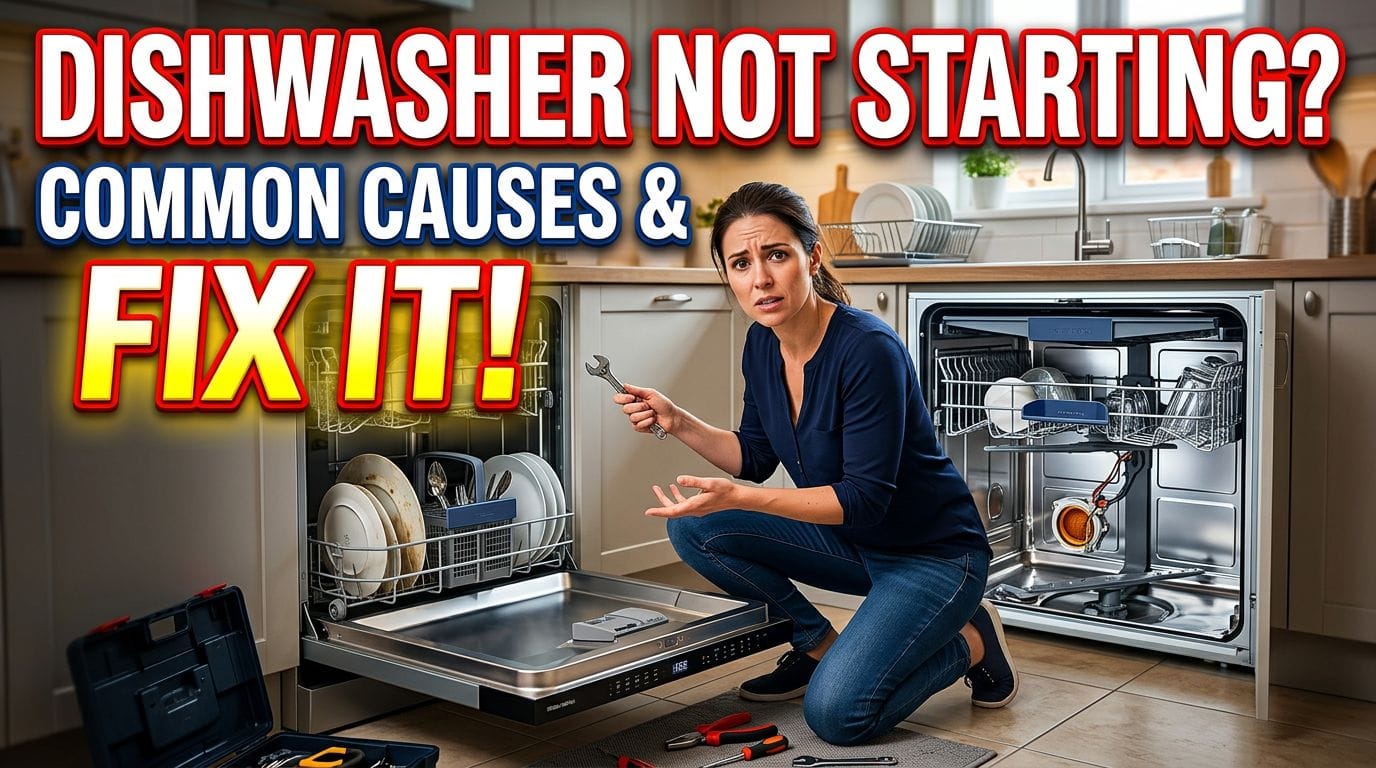
You load the dishwasher, hit start, close the door and nothing happens. This guide walks you through every likely cause, from the embarrassingly simple fixes to the ones that genuinely need a professional, so you can get your kitchen back on track fast.
A dishwasher that refuses to start is one of those problems that can range from a two-minute fix to a repair job that makes you question whether it’s worth it. Most of the time, though, it’s closer to the two-minute end of the spectrum. At Vancouver Appliance Service Pros, we field calls about this exact issue regularly, and more often than not, the culprit turns out to be something the homeowner could have caught themselves with a quick check.
Vancouver’s older housing stock think the ranchers and character homes in areas like Grandview-Woodland or Kitsilano sometimes means appliances that are overdue for attention, or kitchens where the dishwasher installation is a bit of a tight fit. But age and layout aside, the reasons a dishwasher won’t start are pretty consistent across brands and models. Let’s get into them.
Key takeaways
- A dishwasher that has power but won’t start is most often caused by a latched control lock, an improperly closed door, or a settings issue not a broken machine.
- Performing a hard reset by cutting power at the breaker for one full minute clears many electronic glitches without any parts or tools.
- If the problem is a faulty control board, expect repair costs in the range of $300 to $400 total, including parts and labor.
- The door latch must fully engage for the dishwasher to start even a slightly misaligned dish rack can prevent this.
- A delay start or sleep mode that was accidentally activated will make the machine appear broken when it is actually waiting.
- A blocked drain or debris in the filter can trigger a sensor that stops the cycle before it begins.
Why your dishwasher won’t start
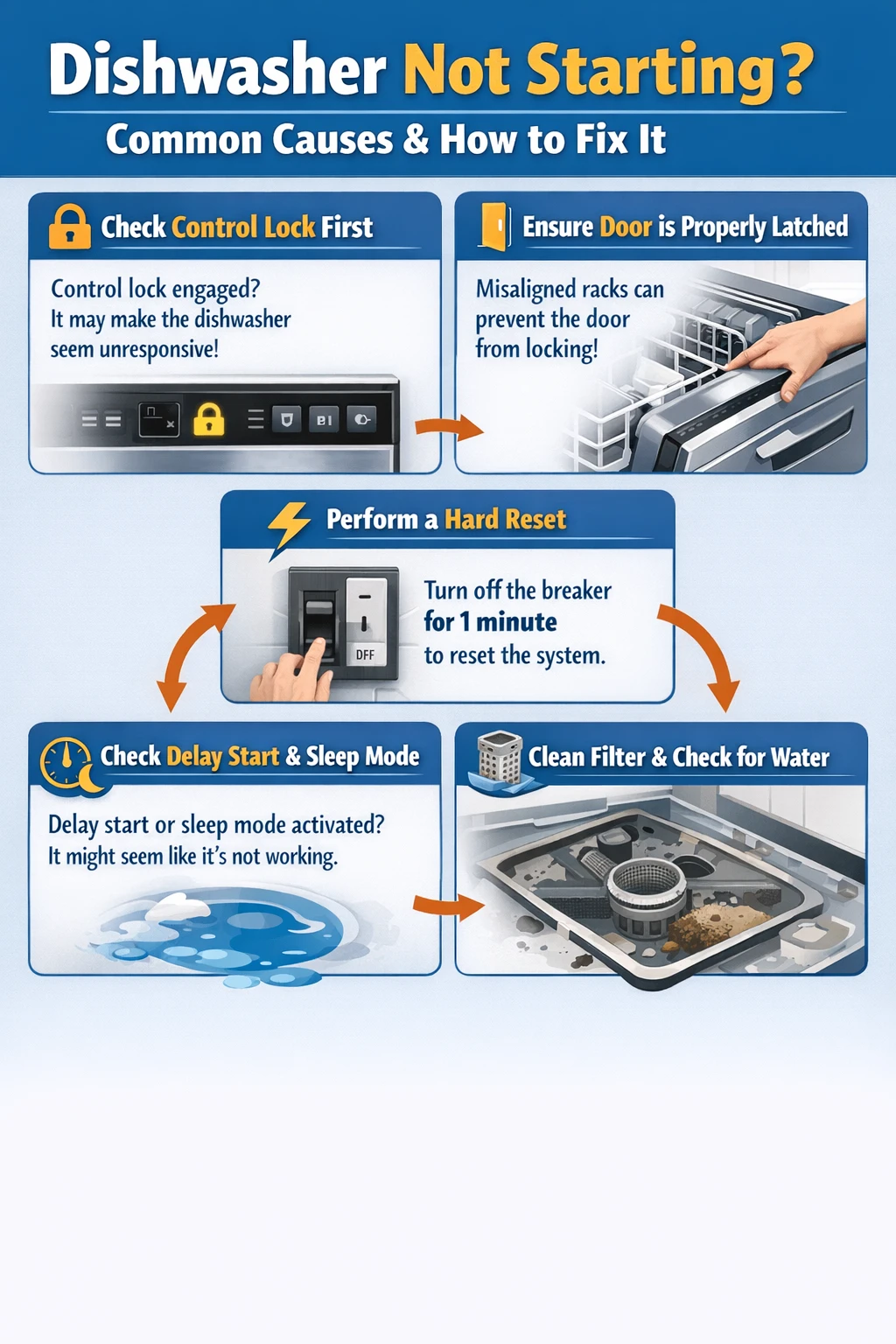
When a dishwasher won’t start, the issue is almost always one of five things: a power problem, a door that isn’t fully latched, a setting that’s preventing the cycle from running, a water supply issue, or a faulty component. That’s it. The good news is that the first four are usually things you can sort out yourself in under ten minutes.
Start with the obvious before you go further. Is the control panel lit up? Can you hear it beep when you press buttons? If yes, you have power, which rules out the most alarming possibility. If the display is completely dark and nothing responds, that’s a different situation check your breaker box first, and make sure the dishwasher’s circuit hasn’t tripped.
In our experience, the single most common call we get about a dishwasher not turning on comes down to the control lock feature being accidentally activated. It mimics a dead machine perfectly the lights are on, buttons beep, but nothing starts. We’ll cover that in detail next.
The control lock trap
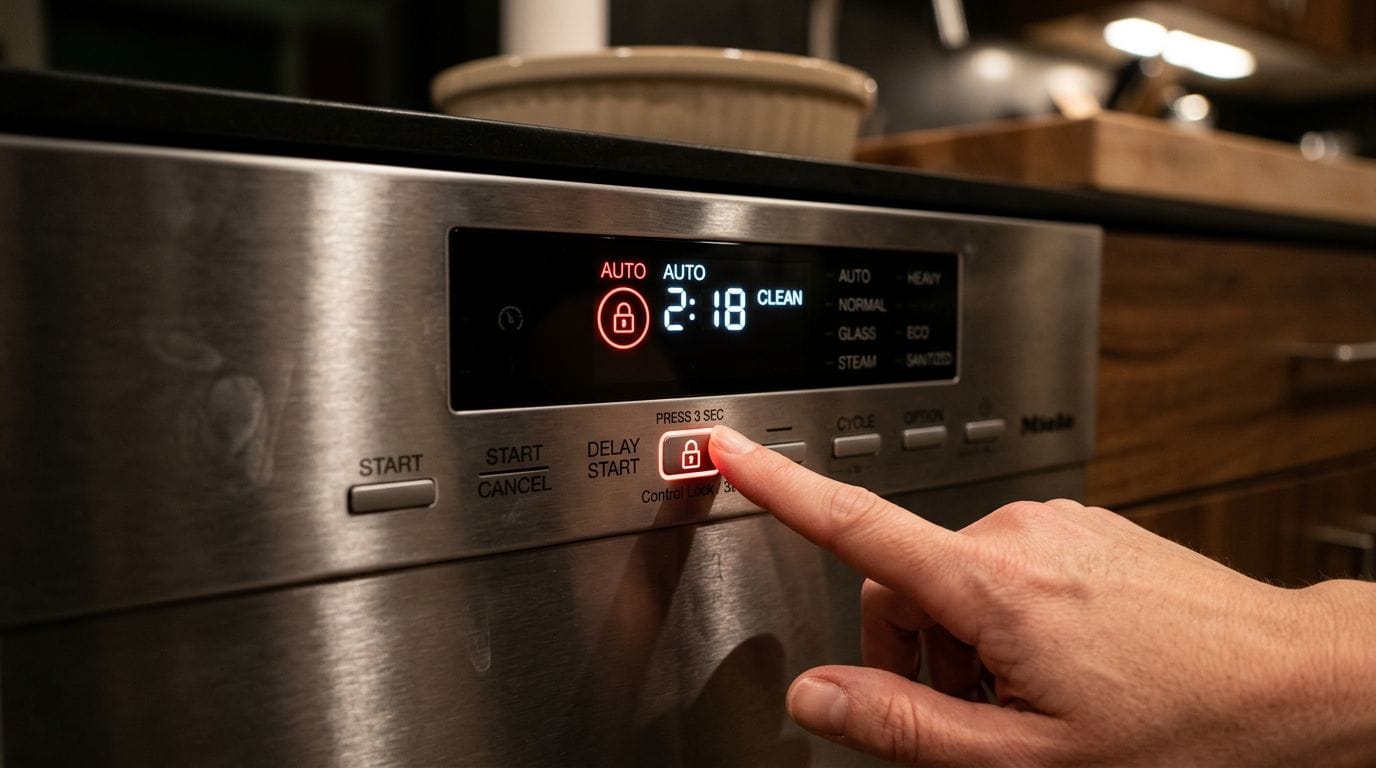
This one catches people off guard constantly, and honestly it’s designed to be easy to trigger accidentally. The control lock (sometimes labeled “child lock”) disables all the buttons on the control panel to prevent unintended changes to a running cycle or accidental starts. Hit the wrong button while unloading dishes, and suddenly your dishwasher seems broken.
How you know it’s engaged: the control panel lights up and buttons beep, but pressing start does nothing. On many models, a small padlock icon will be illuminated on the display. If you press a button while locked, the lock light will flash three times that’s the machine’s way of telling you it heard you but isn’t going to cooperate.
To disable it, press and hold the lock button for three to five seconds. The exact button varies by brand. On some GE models it’s labeled as a cycle button you hold down. On Bosch units, there’s typically a padlock or key icon near one of the buttons. On some Whirlpool and Maytag dishwashers, you hold the lock icon directly. If you’re not sure which button to hold, pull out the owner’s manual this is exactly the kind of thing it’s useful for. The Whirlpool support page on control lock is a good reference if your manual has gone missing.
The door latch – more finicky than you’d think
Every dishwasher has a safety switch tied to the door latch. If that switch doesn’t register the door as fully closed, the cycle won’t start. It’s a sensible safety feature. It’s also a source of genuine frustration when the door looks closed but isn’t triggering the switch.
The most common reason for this is a dish rack loaded incorrectly. If the lower rack is installed backward or pushed in at an angle, it can sit just far enough out to prevent the door from sealing completely. Pull the rack out, make sure it’s seated on the rails properly, and try again. This is one of those fixes that takes ten seconds and feels almost too simple.
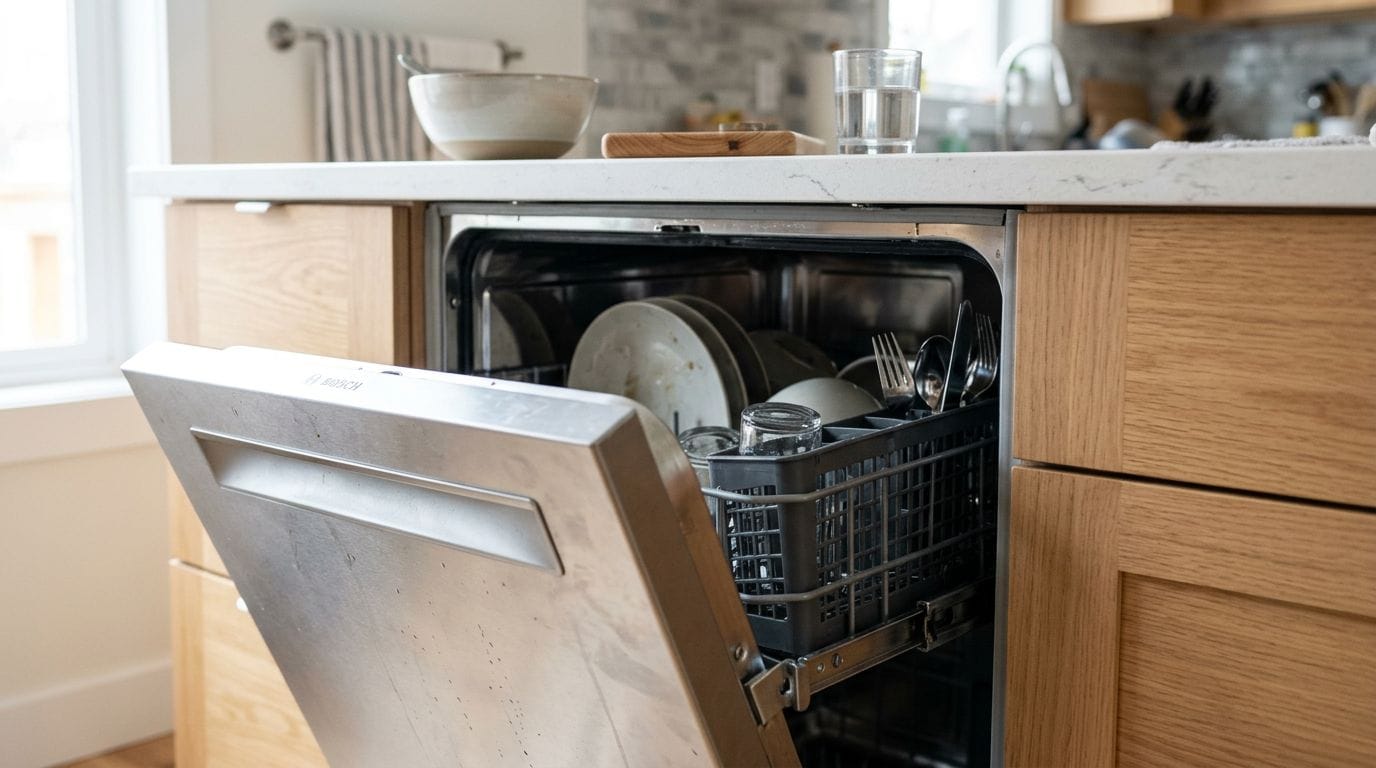
If your dishwasher is tightly fit into the cabinet something we see a lot in older homes around East Vancouver it’s worth checking that the cabinet sides or countertop trim aren’t pressing against the door and preventing it from closing with full force. A proper latch engagement needs a firm, deliberate push.
If the door closes and feels solid but the machine still won’t start, the door latch mechanism itself may be worn or broken. The latch is a relatively inexpensive part, but replacing it involves working around the door panel, and given that a faulty repair here could create safety issues, this is one job worth handing off to a technician.
Settings that look like faults
A handful of software features can make a perfectly working dishwasher appear to be broken. Before you get further into diagnostics, run through these quickly.
Delay start
The delay start option lets you set the dishwasher to begin a cycle hours later handy if you want it running overnight or during off-peak electrical hours. If you or someone in your household accidentally activated it, the machine won’t start immediately. Look for an “H” countdown on the display (like “2H” or “4H”) indicating how many hours remain. To cancel it, press the CANCEL/DRAIN button, then press START/RESUME to begin the cycle immediately.
Sleep mode
Some dishwasher models have a sleep mode that powers down the display and controls after a period of inactivity. It’s not broken it’s resting. Press START/RESUME or CANCEL to wake it up. On some models, you may need to open and close the door first.
Demo mode
This one is rare outside of appliances that have recently been set up or reset, but it does happen. Demo mode is intended for showroom displays it makes the panel respond and light up without actually running any cycles. If your dishwasher was recently installed or you’ve been troubleshooting by resetting it, it’s worth checking the owner’s manual to confirm demo mode isn’t on.
Power and the reset trick
If all the settings look correct and the door is latching properly, try a hard reset before assuming something is broken. Dishwasher control boards are essentially small computers, and like any computer, they occasionally get into a confused state that a restart clears right up.
Here’s how to do it properly. Locate your home’s electrical panel and find the breaker labeled for your dishwasher. Switch it off, then wait a full minute not ten seconds, a full minute.
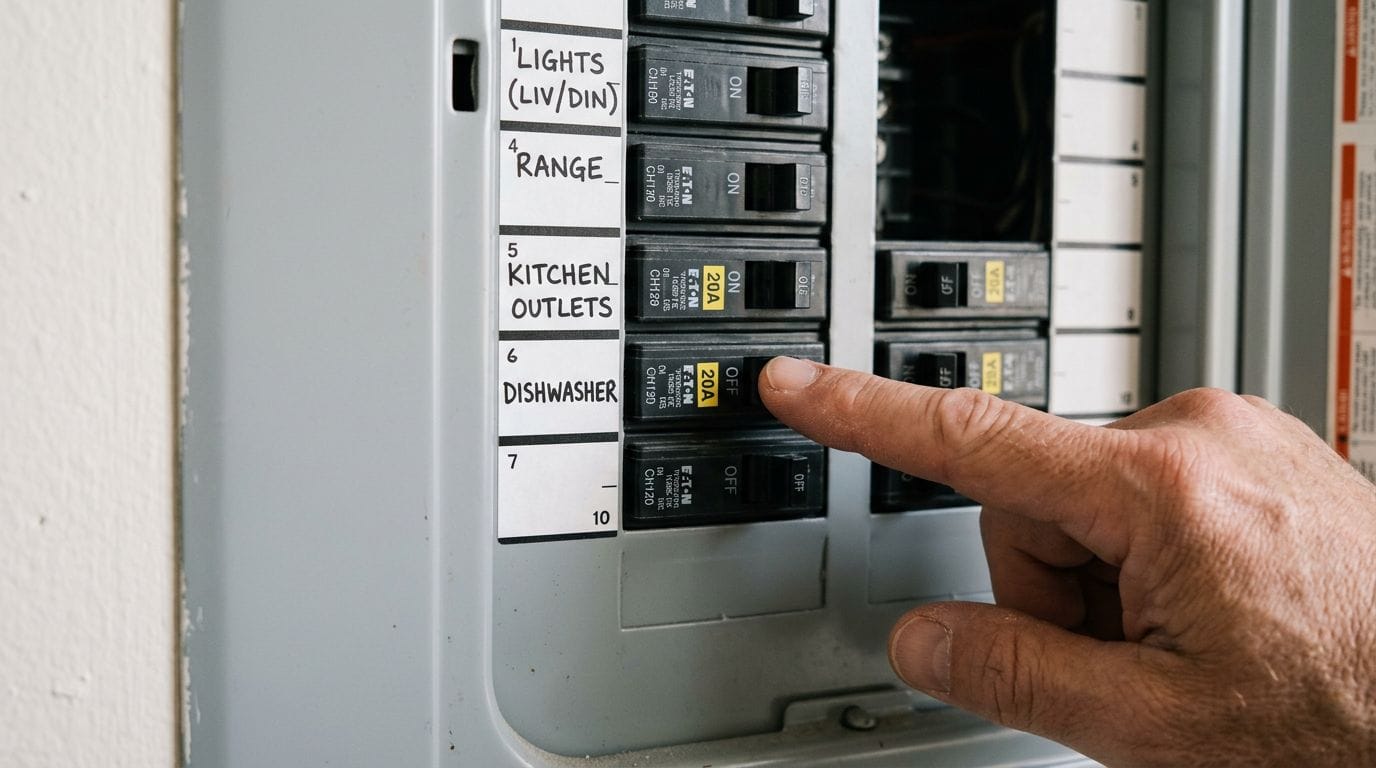
Then switch it back on. This gives the capacitors in the control board time to discharge completely, which a quick flip won’t always accomplish.
If your dishwasher is plugged into an outlet rather than hardwired (less common but it does happen), you can simply unplug it for a minute and plug it back in. After restoring power, try starting a cycle. On many models, you can also do a software reset by pressing and holding the start/power button for about three seconds.
This simple step resolves a surprising number of “dishwasher not turning on” calls. One thing worth checking while you’re at the panel make sure the circuit breaker isn’t tripped or a fuse isn’t blown. A partially tripped breaker might still supply enough power to light the panel but not enough to run the motor.
Water supply and drain issues
A dishwasher won’t cycle if it can’t confirm water is available or if it detects that existing water needs to drain first. Both are worth checking if the basic troubleshooting above hasn’t solved it.
The water supply valve is usually located under the kitchen sink. Make sure it’s fully open. It sounds elementary, but it sometimes gets bumped closed when someone is working under the sink. Also check the inlet hose for kinks a bent hose can restrict flow enough to prevent the cycle from starting.
Standing water in the bottom of the dishwasher is a separate red flag. Some models have a sensor that detects a drainage issue and refuses to start a new cycle until it’s resolved. If you see water pooling at the bottom, check the filter and drain area for debris. A stray piece of food can cause enough of a blockage to trigger this safety response. The filter on most modern dishwashers unscrews from the floor of the machine rinse it under warm water and replace it before trying again. For more detailed guidance on drain maintenance, Energy.gov’s appliance efficiency resources are worth bookmarking.
When it’s an actual component failure
If you’ve worked through everything above and the dishwasher control panel is not working or the machine still won’t start, it’s likely a hardware issue. There are three components that typically fail in this scenario.
The door switch is the most common. Even if the latch looks fine mechanically, the microswitch inside can fail and stop sending the “door closed” signal to the control board. You can sometimes test this by carefully pressing the switch manually (with the power off), but replacing it properly requires opening the door panel.
A blown thermal fuse will stop the dishwasher completely. The thermal fuse is a safety device that cuts power if the machine overheats once it blows, the dishwasher won’t run until it’s replaced. It’s not an expensive part, but diagnosing it requires a multimeter and some disassembly.
The control board itself is the last resort diagnosis. If the board has failed, nothing the buttons send gets processed. Control boards typically cost between $100 and $200, and with labor, you’re looking at $300 to $400 for the full repair. At that price point, it’s reasonable to weigh repair against replacement, especially on an older machine. A technician can confirm whether the board is actually the problem before you commit to that cost make sure you ask for the diagnosis before authorizing any work.
Frequently asked questions
These are the questions we hear most often when homeowners are troubleshooting a dishwasher that won’t cycle. If your situation is a bit different from the main causes above, one of these might cover it.
My dishwasher lights up and beeps but won’t start – what’s going on?
This is almost always either the control lock or a door latch issue. When the control panel responds but the cycle won’t begin, the machine has power and isn’t receiving a hardware fault signal it’s being held back by a setting or a safety switch. Start by checking for a lock icon on the display and holding the lock button for three to five seconds. If that doesn’t do it, make sure the door is latching with a firm click.
If both of those check out, try the breaker reset described above. In a smaller number of cases, the door switch inside the latch mechanism has failed even though the latch itself feels fine that’s when a technician becomes the right call.
Why does my dishwasher start and then stop after a few seconds?
A dishwasher that starts briefly and then shuts off is usually responding to something it doesn’t like often a drainage problem or a water supply issue. If there’s standing water from a previous cycle that didn’t drain, the machine may attempt to drain it first, then stop if it can’t clear it. Check the filter and the drain area for blockages.
It can also be a thermal fuse that’s intermittently cutting power, or a door switch that’s not maintaining contact throughout the cycle. If cleaning the filter doesn’t help and the issue repeats consistently, a service call is the practical next step.
How much does dishwasher repair typically cost in Vancouver?
For straightforward issues like a door latch or door switch replacement, you’re generally looking at a service call fee plus a modest part cost. For control board replacements, parts alone run $100 to $200, and total repair costs commonly land between $300 and $400 depending on the technician’s rates and whether they have the part on hand sometimes a second visit is needed if the board has to be ordered.
It’s always fair to ask for the diagnostic assessment before committing to the repair. A good technician will tell you what’s wrong and what it will cost before you say yes to anything.
Can I fix a dishwasher door latch myself?
You can, but it’s one of the trickier DIY repairs on a dishwasher. Replacing the latch assembly involves removing the inner door panel, which means dealing with several screws and some careful wire management. The part itself is inexpensive. The risk is in not reassembling it correctly, which could leave you with a door that doesn’t seal properly and a wet kitchen floor. If you’re comfortable with basic appliance repair and can follow a model-specific guide on a site like YouTube, it’s doable. If not, the labor cost for this repair is usually reasonable.
Wrapping up
Most of the time, a dishwasher that won’t start is a settings issue or a simple mechanical fix not a broken machine. Check the control lock first, confirm the door is latching properly, make sure no delay start or sleep mode is active, and try a full breaker reset before you do anything else. Those four steps alone solve the majority of cases. If you’ve worked through all of them and the machine still won’t cycle, you’re likely dealing with a door switch, thermal fuse, or control board and that’s where a technician pays for themselves by getting the diagnosis right the first time.
At Vancouver Appliance Service Pros, we handle dishwasher repair across Vancouver and the surrounding area, along with washer repair, dryer repair, fridge repair, and most other household appliances. If you’d rather not spend your weekend chasing down a fault code, give us a call and we’ll help you figure out what’s actually going on and whether it’s worth fixing.