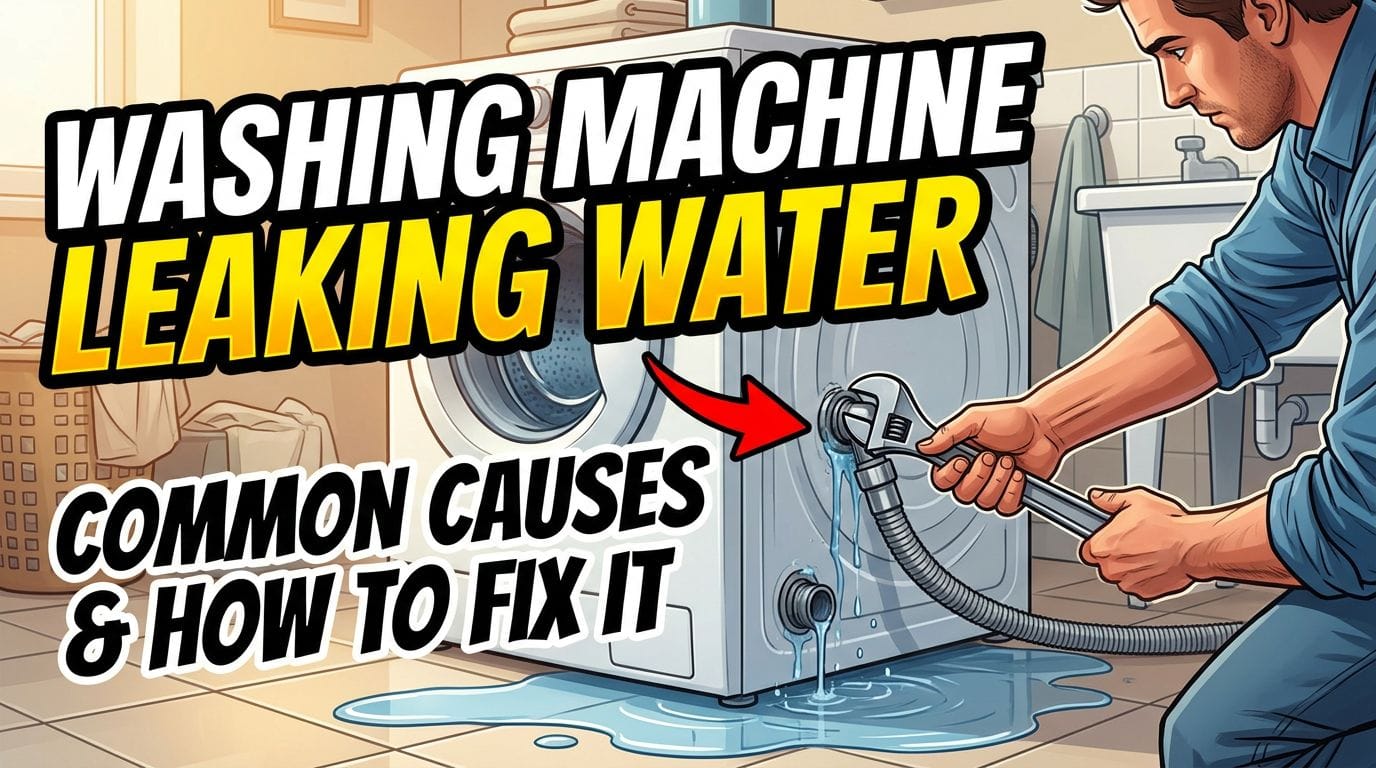
Nobody wants to walk into their laundry room and find a puddle spreading across the floor, especially when the washing machine was supposed to be handling things while you got on with your day. This guide breaks down the most common reasons a washing machine leaks water, how to track down the source, and what you can fix yourself versus when it’s time to call in some help.
A leaking washer is one of those problems that tends to get worse the longer you ignore it. What starts as a small drip can turn into warped flooring, mold behind the machine, or water damage to anything stored nearby. In Vancouver, where older housing stock is common and basements often do double duty as laundry rooms and storage, a slow leak can quietly cause a surprising amount of damage before anyone notices.
At Vancouver Appliance Service Pros, we field calls about washing machine leaks regularly. What we’ve found is that most leaks trace back to a handful of causes, and some of them are genuinely easy to sort out on your own. Others need a trained eye. This guide will help you figure out which situation you’re in.
Key takeaways
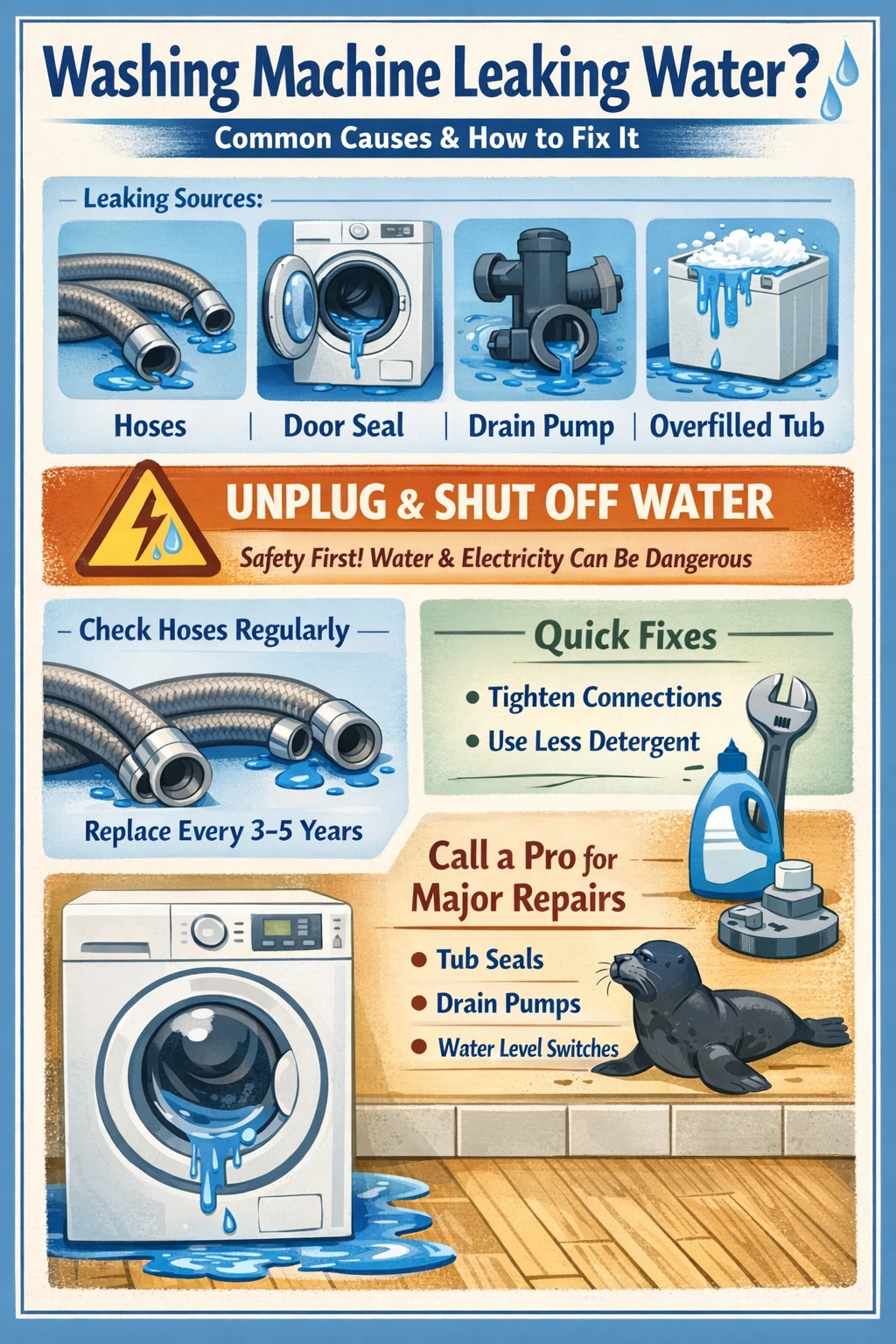
- Most washing machine leaks come from one of a few sources: hoses, door seals, drain pumps, or an overfilled tub, and each has a different fix.
- Before doing anything, unplug the machine and shut off the hot and cold water supply valves; working around water and live electricity is genuinely dangerous.
- Washing machine hoses should be inspected regularly and replaced every three to five years, even if they look fine from the outside.
- If your washer is less than seven to ten years old and the repair cost is under half the price of a new machine, repair is almost always the better call financially.
- Some fixes, like tightening a loose hose connection or reducing how much detergent you use, cost nothing and take five minutes.
- Leaks involving the tub seal, water pump, or water level switch are best handled by a professional, as they require disassembling the machine.
Why washing machines leak: the short answer
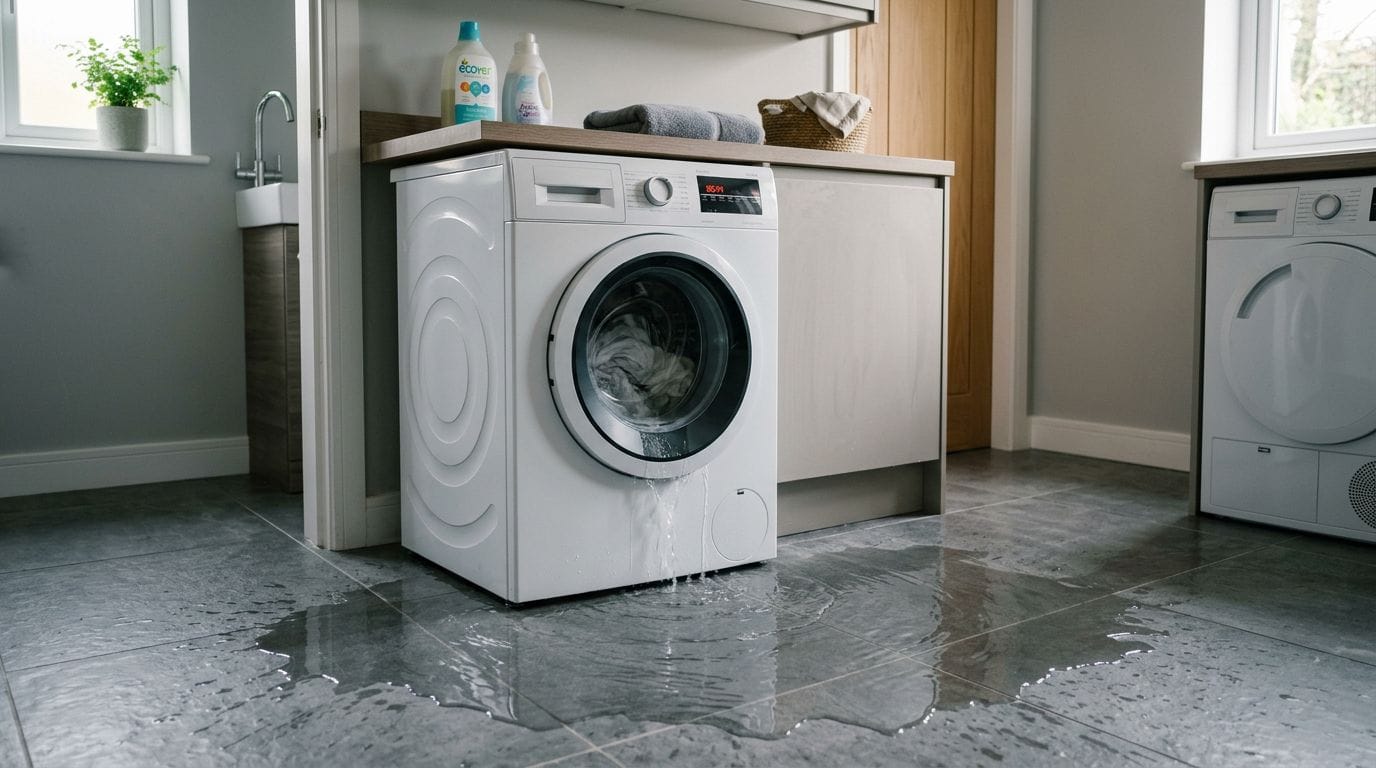
Washing machines leak when water escapes somewhere it isn’t supposed to. That can happen because a component has failed, a connection has come loose, something is clogged, or the machine is being asked to do more than it was designed to handle. The fix depends entirely on where the water is coming from, so the first job is always to find the source.
Run a short cycle and watch the machine carefully. Wipe the floor dry first so you can see clearly where new water appears. Pay attention to when during the cycle the leak happens, filling, washing, spinning, or draining, because that timing narrows things down considerably. A leak that only shows up during draining points somewhere different than one that happens the moment the machine starts filling.
In our experience, the most overlooked step is just watching. People find the puddle after the fact and start guessing. Sit with the machine through a cycle. You’ll usually see exactly where it’s coming from within a few minutes.
Leaking from the bottom
A puddle forming directly under the machine has a few possible sources, and they vary depending on when it appears. The drain pump is a common culprit. Its job is to push water out of the tub after each cycle, and when it cracks, wears out, or develops a loose fitting, water drips or flows from the bottom of the machine during the drain phase. You may also hear unusual sounds, gurgling or a labored hum, when the pump is struggling.
The tub seal is another possibility. Most people don’t realize a washing machine actually has two tubs: an inner tub where the clothes go, and an outer tub that holds the water. The seal between them can wear down over time, especially in machines that get heavy use. When it fails, water works its way down and out through the bottom of the machine. This is one of those repairs that requires taking the machine apart, so it’s not a quick DIY job for most people.
A cracked or loose drain pipe, which sits near the pump and moves dirty water out of the tub, can also be the source. If you can see the bottom of the machine and notice water dripping from the pump area or a nearby pipe, that’s your starting point. Tightening a loose clamp is sometimes all it takes. A cracked component needs replacing.
Hose problems: the most fixable leaks
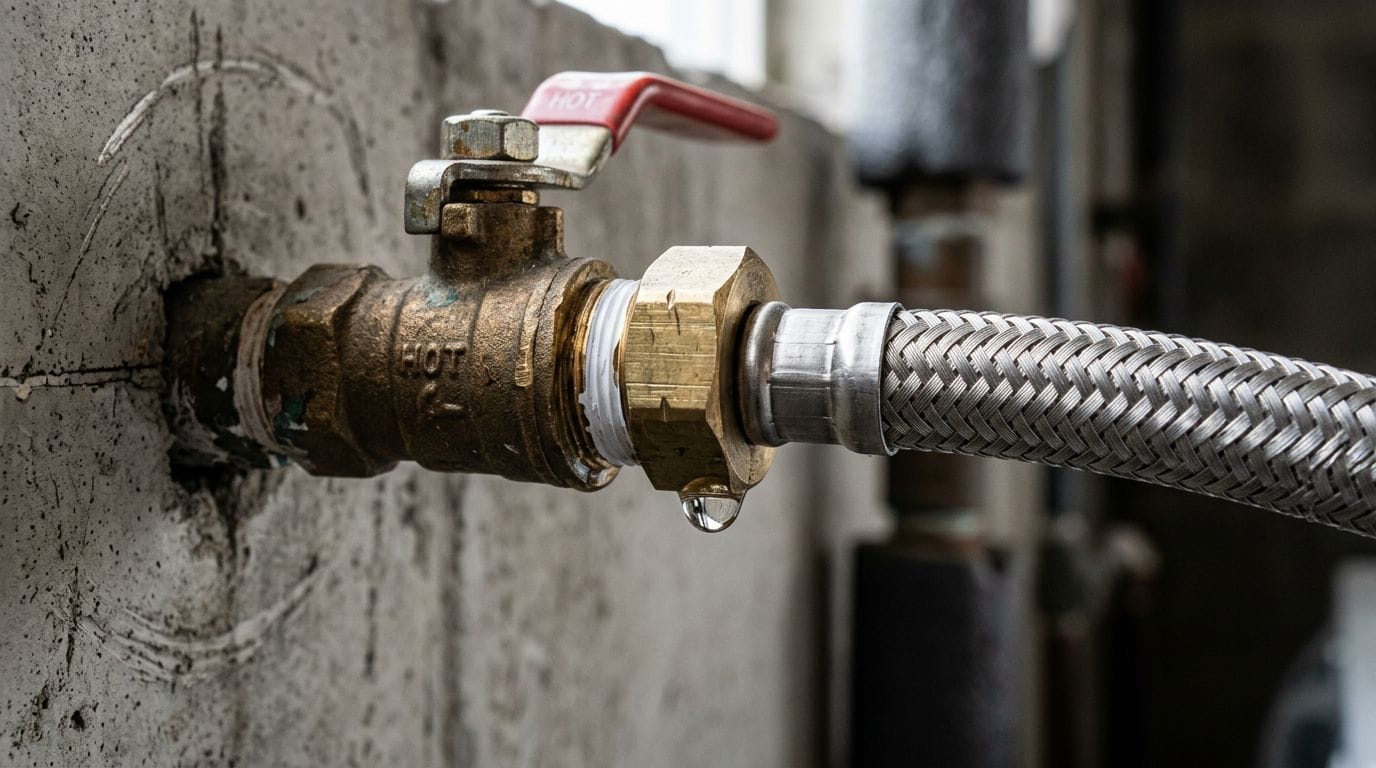
Hose issues are genuinely the most common cause of washing machine leaks, and they’re also the most approachable to fix. There are two types: the fill hoses that bring hot and cold water into the machine, and the drain hose that carries used water out. Both can cause trouble in different ways.
Fill hoses run from the water supply valves on the wall to the back of the washer. Over time, the rubber degrades, connections loosen, or the small rubber washers inside the fittings wear out. A tiny drip at a fitting can look like a leak from the bottom of the machine because the water runs down the back and collects underneath. Check both hoses along their full length and feel for moisture at the connection points at both ends. Tightening any loose fittings and replace the rubber washers if they look flattened or cracked. If a hose is bulging or shows any corrosion, replace the whole thing. Stainless steel braided hoses are worth the modest extra cost, they hold up much better than standard rubber.
The drain hose carries used water from the machine into your household drain pipe. If it’s kinked, clogged, or has a small crack or hole in it, water will back up or spray out during the drain cycle. Pull the machine away from the wall and check the hose for kinks and visible damage. Make sure it’s properly seated in the standpipe, it should be inserted a few inches but not pushed in so far that it creates an airtight seal, which can cause siphoning issues. The U.S. Department of Energy has useful guidance on washer installation and efficiency that covers proper hose setup as part of overall machine care.
One more thing worth checking on the fill hoses: replace them every three to five years whether you see damage or not. Rubber hoses can fail from the inside without looking bad on the outside. It’s cheap insurance against a flooded laundry room.
Front-load washer door seal issues
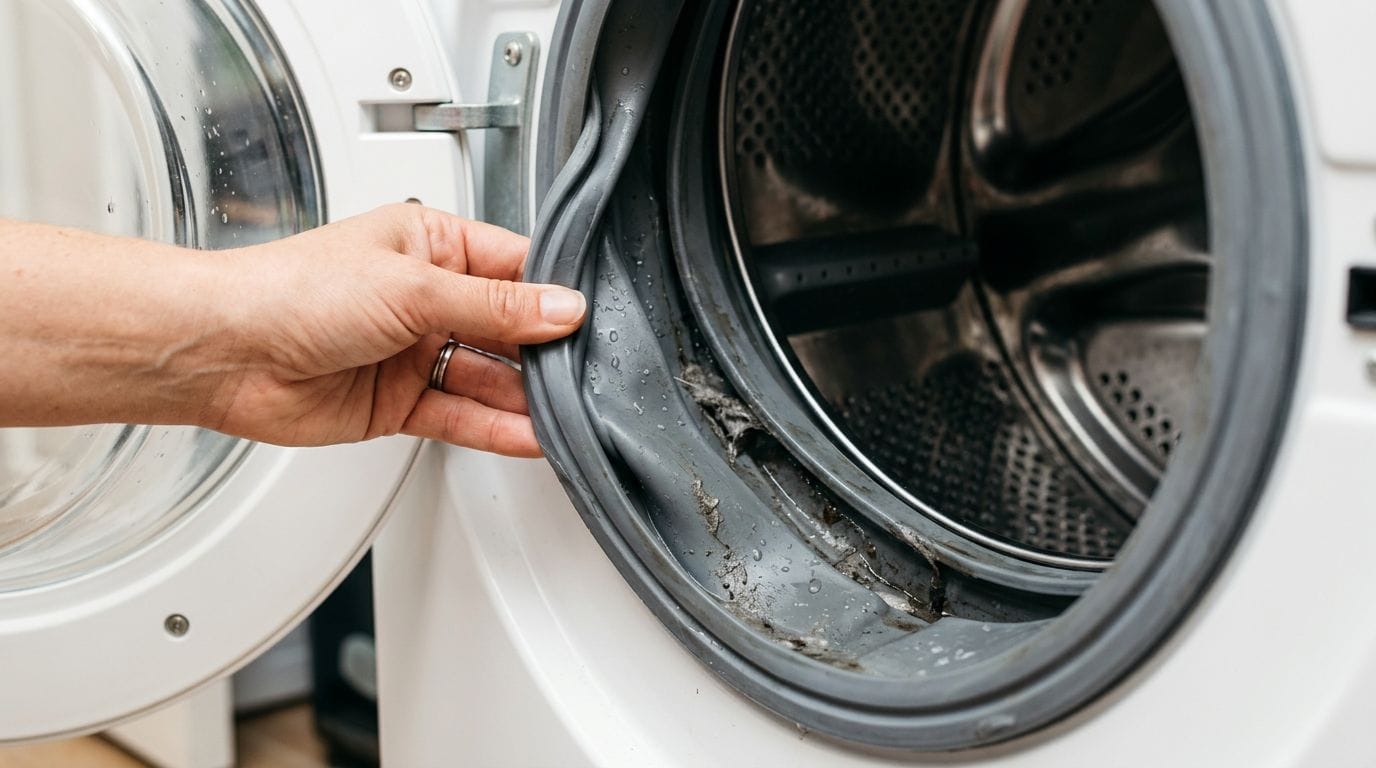
If you have a front-loading machine and water is appearing at the front of the washer, the door gasket is the first place to look. This large rubber seal runs around the inside of the door opening and keeps water from escaping during the cycle. It takes a lot of abuse, constant wetting and drying, mold and soap buildup, and occasional contact with buttons, zippers, and whatever was left in a pocket.
Pull the gasket back slightly and look for tears, cracks, or hardened sections. Even a small tear is enough to let water through. Also check whether debris or a small item is stuck under the seal, a forgotten sock or a twist tie sitting in the wrong spot can break the watertight contact and cause a drip. Clean the gasket regularly with a damp cloth and a mild mildew cleaner; buildup on the surface can prevent a proper seal just as effectively as a tear.
If the gasket is torn or permanently deformed, it needs to be replaced. This is a job a competent DIYer can handle with the right part and a tutorial specific to their machine model, but it does involve pulling the door trim and potentially the front panel. If that sounds like more than you want to take on, a technician can swap it out fairly quickly.
Oversudsing is another front-load-specific issue worth mentioning. Using too much detergent, or regular detergent in a high-efficiency machine, creates excessive foam that has nowhere to go and can push out around the door. If you see soapy residue on the door glass after a cycle, cut back on detergent and switch to an HE-rated formula. More suds genuinely does not mean cleaner clothes.
Overfilling and overloading
Two of the most common reasons for washing machine leaks have nothing to do with a broken part. Overloading the drum and using too much detergent both cause water to end up somewhere it shouldn’t, and both are completely preventable.
When a top-loader is packed too full, the clothes can pile up close to the water inlet and cause water to splash over the rim of the inner tub during the fill cycle. The machine looks fine, all the fittings are dry, and there’s a puddle on the floor. This is exactly the kind of scenario that leaves people scratching their heads. The fix is simple: wash smaller loads. Follow the fill line in your owner’s manual. A general rule is to leave a hand’s width of space at the top of the tub.
Overloading also affects drainage. A drum that’s too full may not spin properly, which means water doesn’t extract the way it should. This can lead to standing water pooling under the drum. If clothes are consistently coming out wetter than they should be, overloading is often the reason.
Too much detergent creates foam that can clog the overflow tube and force water out in unexpected places. To check whether you’re using too much, take a freshly washed item and submerge it in a bowl of clean water. If the water turns soapy, your machine is carrying excess detergent residue, and you should reduce the amount you’re using per load.
We get calls from older homes in neighbourhoods like Hastings-Sunrise and Renfrew-Collingwood where basement laundry setups have been running the same way for years, same amount of detergent, same oversized loads, and it’s only when a puddle appears that anyone thinks to question the routine.
Water level switch and inlet valve problems
If your machine seems to be overfilling on its own, or if you notice water dripping into the tub when the machine isn’t running, there are two components worth understanding: the water level switch and the inlet valve.
The water level switch (also called a pressure switch) is what tells the machine when to stop filling. It reads the water pressure in the tub and signals the inlet valve to close. When it fails, the machine doesn’t know when to stop, and water keeps rising until it spills over. You might see water coming out of the drawer, around the door, or from the bottom, the overflow can show up in several places depending on the machine. This is a component best replaced by a professional because testing it properly requires some familiarity with the machine’s control system.
The inlet valve is a different issue. It controls the flow of hot and cold water into the machine. If the valve develops a fault, it can allow water to trickle in even when the machine is switched off. Check for this by unplugging the machine and coming back an hour later, if there’s new water in the tub, the inlet valve is likely the problem. Replacing it is a moderately involved repair that requires turning off the water supply and accessing the back of the machine.
When the drain line is the problem, not the machine
Here’s one that catches a lot of people off guard: sometimes the washing machine itself is working perfectly, and the leak is coming from the household drain pipe the machine empties into. If that pipe is partially blocked with lint, soap residue, or debris, the water the washer is trying to expel has nowhere to go fast enough, and it backs up and overflows at the standpipe.
The telltale sign is that the leak happens specifically during the drain cycle and seems to come from where the drain hose meets the wall, rather than from the machine itself. Run a short cycle and watch that connection point closely. If water bubbles up around the hose during draining, the clog is downstream. A drain cleaning product may clear a mild blockage; a more stubborn one may need a hand auger or a call to a plumber.
This is also worth keeping in mind in older homes, the kind of pre-war and post-war housing stock you find in parts of East Vancouver and the Commercial Drive area, where original drain lines may be narrower or more prone to buildup than modern plumbing.
Frequently asked questions
Washing machine leaks tend to raise a lot of questions, partly because the water can show up in unexpected places and partly because the fix can range from free to fairly expensive. Here are the questions we hear most often.
Why is my washing machine leaking from the bottom but all the hoses look fine?
If the external hoses check out, the leak is likely coming from inside the machine. The drain pump, tub seal, or internal hoses and clamps are the usual suspects. A drain pump that’s cracking or has a loose fitting will drip from the bottom of the machine during the drain cycle. The tub seal, which sits where the transmission enters the outer tub, can also fail and let water work its way down and out. Run the machine with the front or back panel removed if you’re comfortable doing so, and watch where the water appears, that usually points you to the source quickly.
Can using too much detergent really cause a leak?
Yes, and it’s more common than people expect. Excess detergent creates foam that can clog the overflow tube and push water out around the door, drawer, or even through the bottom of some machines. High-efficiency washers are especially susceptible because they use less water, so the suds-to-water ratio gets out of balance faster. Use less detergent than you think you need, always use HE detergent in HE machines, and if you have a water softener, reduce your detergent amount further, soft water needs less soap to do the same job.
Is it worth repairing a leaking washing machine, or should I replace it?
The general rule is: if the machine is less than seven to ten years old and the repair cost is less than half the price of a comparable new machine, repair makes sense. A hose replacement or pump swap is usually well within that range. Where it gets harder to justify is when you’re looking at a tub defect or transmission issue on an older machine, at that point, the repair cost can approach or exceed what a new entry-level washer would cost. Be honest about the machine’s overall condition. If it’s been repaired multiple times already or is consistently giving you trouble, replacement is the more practical path.
What should I do if my washer is leaking when it’s not running?
Water appearing in or around the machine when it’s off points to a faulty inlet valve. This valve controls water flow into the machine, and when it fails, it can allow a slow trickle to pass through even with the machine unplugged. Unplug the machine and turn off both water supply valves at the wall. Check whether the water stops, if it does, the inlet valve is the likely cause. Replacing it is a repair most homeowners can do with basic tools, but if you’re not confident pulling the back panel and working around the water connections, a technician can handle it cleanly.
My front-load washer smells bad and has been leaking slightly. Are these related?
Often, yes. Mold and mildew buildup on the door gasket can both cause the seal to fail and produce that sour smell that front-loaders are sometimes known for. The gasket sits in a position where water and detergent residue collect and don’t dry out quickly. Clean it thoroughly with a mildew cleaner or a diluted white vinegar solution, and check for any tears while you’re at it. Leaving the door slightly open between cycles helps it dry out and dramatically reduces mold growth. The CDC has straightforward guidance on household mold if you’re concerned about exposure from a heavily affected machine.
Wrapping up
Most washing machine leaks trace back to a manageable list of causes: worn or loose hoses, a failing door seal, a drain pump on its way out, an overfilled drum, or too much detergent. Start by finding the source before spending anything on repairs. Watch a full cycle, check the obvious connections, and rule out the simple stuff first. A lot of leaks get fixed for nothing more than the cost of a pair of rubber hose washers or a change in laundry habits.
When the problem is internal, a pump, a tub seal, or a water level switch, that’s where it makes sense to call someone in. At Vancouver Appliance Service Pros, we handle washer repair across Vancouver and the surrounding area, along with dryer repair, dishwasher repair, fridge and freezer repair, stove and oven repair, and other home appliance work. If you’ve tracked down the leak but aren’t sure of the best fix, or if the machine has been giving you trouble in more ways than one, give us a call and we’ll help you figure out what makes sense, repair, part replacement, or something else entirely.