That rattling, banging, or grinding coming from your laundry room isn’t something to ignore. It’s your washing machine telling you something is wrong. This guide walks you through the most common reasons a washing machine makes loud noises, what each sound actually means, and when it’s time to stop troubleshooting and call a professional. Vancouver homes run their washing machines hard. Between the rainy seasons that mean more muddy clothes, the older housing stock in neighbourhoods throughout the city, and the fact that most households are doing laundry several times a week, washers here get a real workout. At Vancouver Appliance Service Pros, we hear from homeowners regularly who’ve been putting up with a noisy washer for months, hoping it would sort itself out. It rarely does. The good news? A lot of these noises have straightforward explanations. Some you can fix yourself in ten minutes. Others need a technician. Knowing which is which saves you time, money, and the stress of wondering whether your machine is about to flood your laundry room.
Key takeaways
- A washing machine making loud noises during the spin cycle most often points to worn drum bearings, an unbalanced load, or failing suspension components.
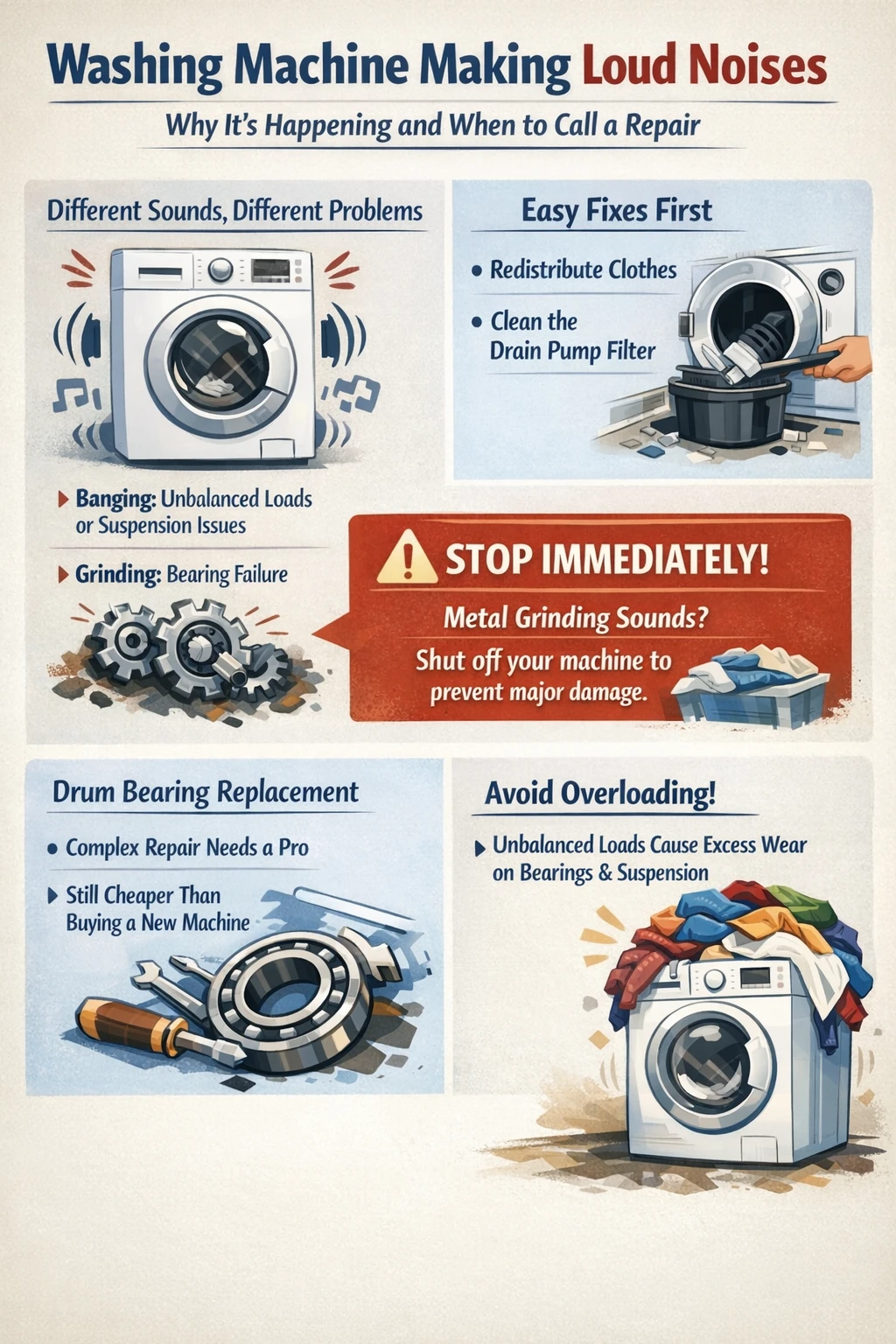
- Different sounds mean different problems. Banging usually signals an imbalanced load or broken suspension, while grinding or rumbling points to bearing failure.
- Some fixes, like redistributing a load or cleaning a clogged drain pump filter, take just a few minutes and cost nothing.
- Drum bearing replacement is one of the more labor-intensive repairs and is generally best left to a professional. It requires disassembling the tub assembly and resealing it afterward.
- Most washing machine repairs cost significantly less than a third of the price of a new machine, making repair the smarter first option in most cases.
- Running overloaded or consistently unbalanced loads is one of the leading causes of premature wear on bearings and suspension parts. Smaller, balanced loads genuinely extend the life of your machine.
What’s actually causing the noise
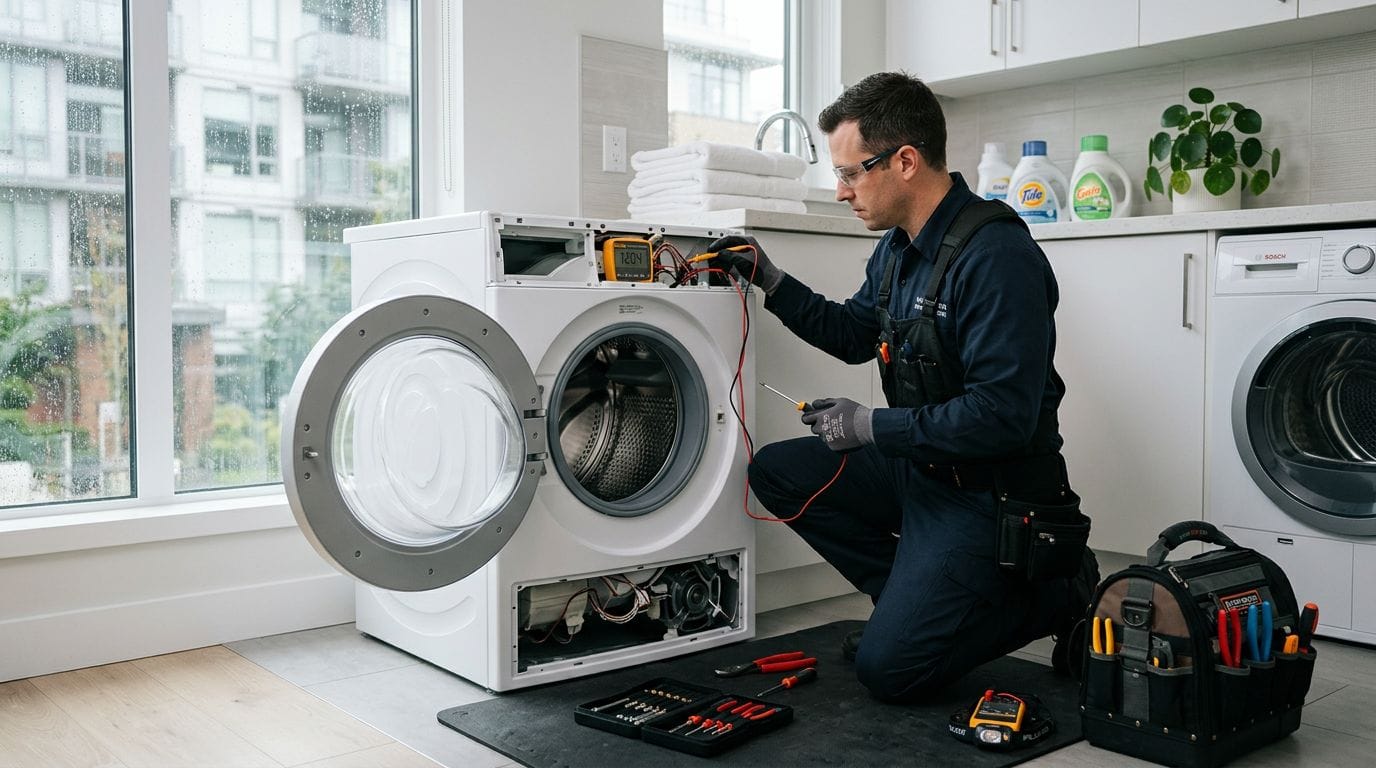 Most washing machine noise problems come down to one of a handful of causes: something is worn out, something is loose, or something got in there that shouldn’t be. The specific sound your machine makes is usually a pretty reliable clue about which category you’re dealing with. A rhythmic banging during spin almost always means something mechanical is off-balance or broken. A grinding or rumbling sound that gets worse over time almost always points to bearings. A high-pitched squeal during agitation or spin usually means the drive belt is going. In our experience, the most common call we get is about a washer that’s gotten progressively louder during the spin cycle over several months. Homeowners often assume it’s just how the machine sounds now. Usually, it’s a bearing that’s been failing slowly. The longer it runs that way, the more damage it can do to the outer tub seal, which turns a bearing job into a much bigger repair. One thing worth saying upfront: if your washer is making any kind of metal-on-metal grinding sound, stop running it until you’ve figured out what’s wrong. Continuing to use it risks turning a manageable repair into a write-off.
Banging and thumping: load balance and suspension
The first thing to check when you hear loud banging or thumping is the simplest: how did you load the machine? An unbalanced drum is responsible for more noise complaints than any other single cause. When heavier items like towels or bedding bunch together on one side, the drum spins unevenly and slams against the cabinet walls. It sounds alarming. It’s usually not serious yet. Pause the cycle, open the lid or door, and redistribute the clothes evenly around the drum. If you’re washing one large item like a duvet by itself, add a few towels to balance the weight. Restart the cycle and see if the noise stops. If it does, you’ve solved it. Going forward, mixing heavy and light items in each load and avoiding overfilling the drum will keep this from happening again. If the banging continues even with a balanced load, the issue is more likely mechanical. Suspension rods and springs hold the drum centered inside the cabinet and absorb vibration during spin. When one breaks or loses tension, the drum becomes unstable and starts hitting the machine’s frame. You can often spot a broken suspension rod by opening the machine and gently pressing on the drum. If it drops noticeably or feels loose in one direction, a rod or spring has likely failed. Front-load washers use shock absorbers instead of rods and springs, but the symptom is similar: loud banging or thumping during high-speed spin, often accompanied by the machine “walking” across the floor. Replacing these parts requires removing the front or rear panel, but it’s a manageable DIY job for someone comfortable with basic disassembly. If you’re not, it’s a straightforward repair for a technician.
Check the machine is level
While you’re investigating, take a moment to check whether the washer is sitting level on the floor. An unlevel machine vibrates more, wears components faster, and sounds worse during every cycle. Place a level on top of the machine in both directions. Most washers have adjustable feet at the bottom. Turn them to raise or lower each corner until the bubble is centered, then tighten the locking nuts to hold them in place. This takes about five minutes and costs nothing. 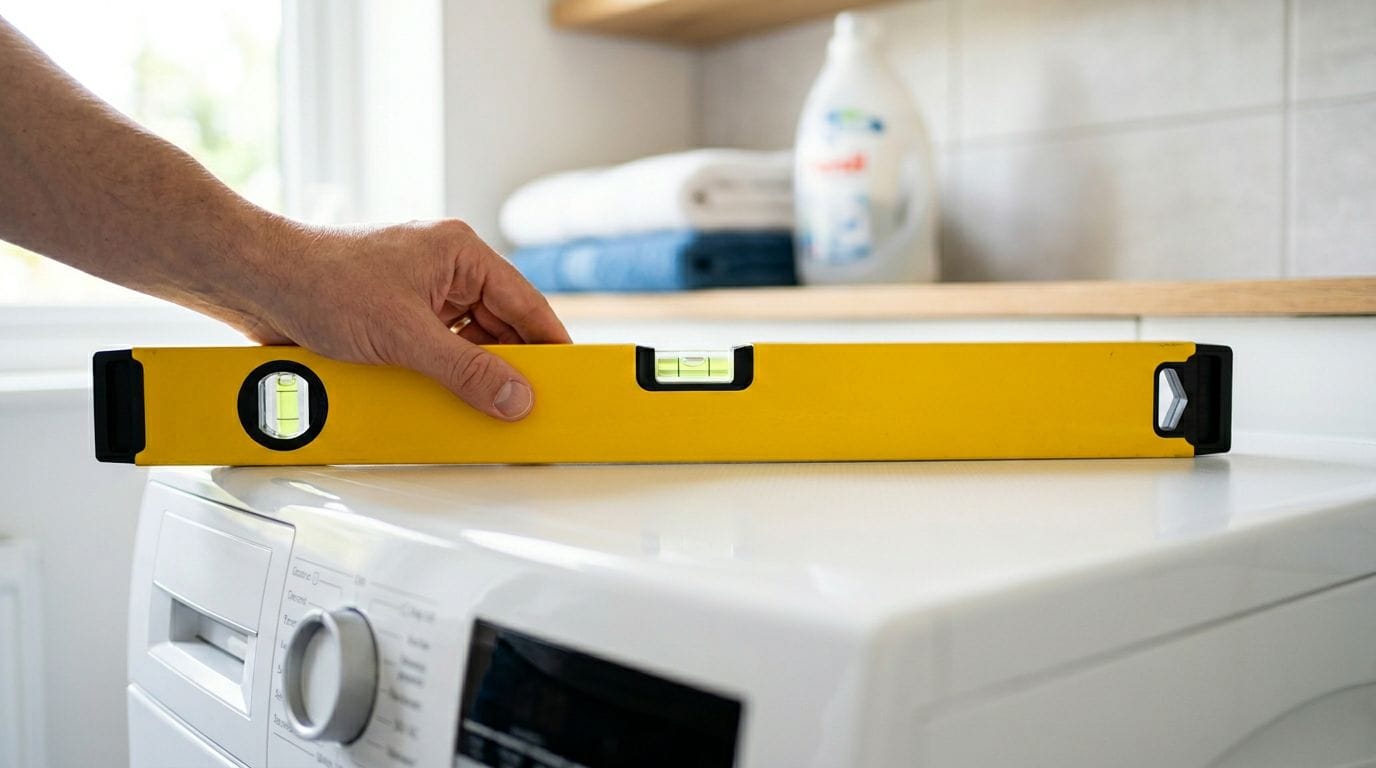 Older floors in some of Vancouver’s heritage homes, particularly in areas like Strathcona and Hastings-Sunrise, can be uneven or have some give to them. If the floor itself flexes during the spin cycle, placing a thick, rigid board under the machine can help dampen the movement.
Grinding and rumbling: drum bearing failure
A deep, rumbling or grinding sound that gets gradually louder over weeks or months is the signature of failing drum bearings. These bearings support the inner tub and allow it to spin smoothly inside the outer tub. Over time, accelerated by overloading, hard water, and normal wear, they corrode and begin to deteriorate. You can do a quick test yourself: open the machine door and spin the drum by hand. If you hear a scraping or grinding sound, or if the drum feels rough and uneven as it turns, the bearings are almost certainly the problem. On a front-load washer, also check whether the drum has more side-to-side play than it should. Significant movement when you push and pull the drum is a sign the bearing is well past its service life. Here’s the honest part: bearing replacement is one of the more involved washing machine repairs. It requires removing the drum assembly, pressing out the old bearing, pressing in a new one, and resealing the tub. If you’ve done it before, it’s doable. If you haven’t, it’s the kind of job where a mistake means water leaking from the back of your machine. Most people are better off having a technician handle this one. 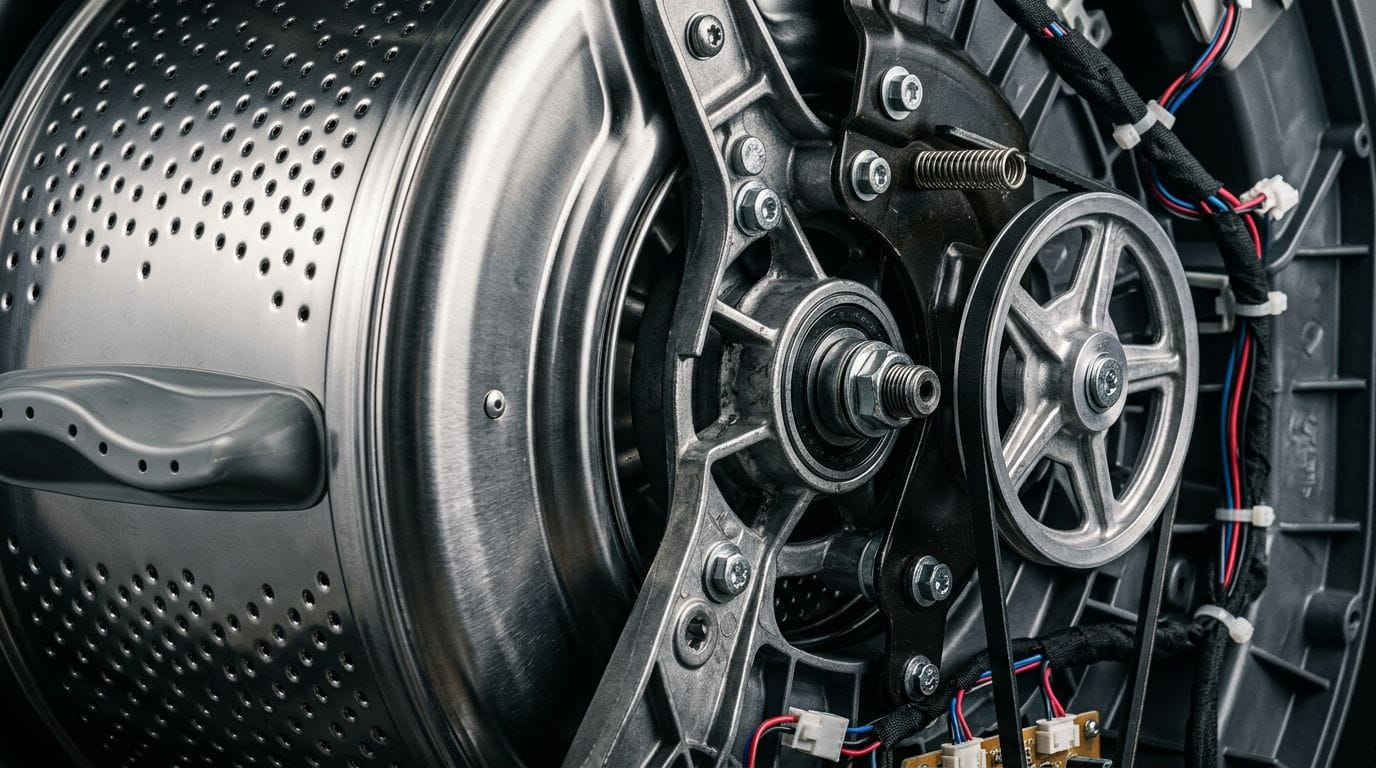 The cost is typically still well below what a new machine would run you, especially if the washer is otherwise in good shape. A note on when not to repair: if the bearing failure has been running for a long time and has damaged the outer tub itself, the calculus changes. At that point, the repair cost can approach or exceed the value of the machine, and replacement starts to make more sense.
Squealing: the drive belt and pulley
A high-pitched squealing sound, especially during spin or agitation, usually means the drive belt is worn, frayed, or slipping. The drive belt connects the motor to the drum and takes a lot of stress over years of use. As it ages, it can glaze over or develop cracks, causing it to slip on the pulleys and produce that distinctive squeal. In some cases, you’ll also notice a faint rubber-burning smell. If the drum has stopped spinning consistently, or stops mid-cycle, that’s a sign the belt may have broken entirely rather than just worn down. Before you open anything up, unplug the machine. Accessing the belt typically means removing the rear panel. Once you can see it, look for visible cracking, fraying, glazing, or looseness. A worn belt is not expensive to replace, and the part itself can usually be ordered online for a reasonable amount. The job is manageable for a confident DIYer. While you have the panel off, inspect the drive pulley as well. If the pulley is cracked, wobbling, or has debris caught in it, it can cause the same squealing or rattling symptoms. Replace both at the same time if either looks questionable. It saves you from doing the job twice.
Humming and grinding during drain: the drain pump
If the loud noise happens specifically during the drain portion of the cycle, the drain pump is the likely culprit. The pump works hard to push water out of the machine, and it’s also the place where coins, hair clips, buttons, and lint tend to end up. When debris gets caught in the pump impeller, you’ll hear a grinding or buzzing sound as the impeller strains against it. Other signs of a pump problem: water sitting in the drum after the cycle finishes, or the machine stopping mid-cycle because it can’t drain fast enough. Clearing the pump filter is something most homeowners can do themselves. On front-load washers, there’s usually a small access panel near the bottom front of the machine. Behind it is a filter cap. Have a towel ready, because water will come out when you open it. Remove any debris you find, rinse the filter, and reinstall it. Running your machine efficiently with clean filters also helps with energy use over time. If you clear the filter and the noise persists, the pump itself may be damaged or worn out. Pump replacement is a moderate-difficulty repair. It is doable for a handy homeowner, but not as straightforward as clearing a clog.
Other things worth checking
Before you assume something major is wrong, run through this quick list. We’ve seen all of these cause real noise problems. Check pockets before every load. Coins, keys, and screws that slip through into the drum or pump are responsible for a surprising amount of metallic rattling and grinding noise. It’s a ten-second habit that prevents a real headache. Check the drain hose. If it’s vibrating against the wall or cabinet during the spin cycle, you’ve got a rhythmic knocking or rattling that sounds worse than it is. Secure it with a clip or reposition it so it’s not in contact with anything it can rattle against. If you have a front-load washer on a pedestal, check the pedestal drawer. Items stored in the drawer can shift and rattle during spin. Empty it out and see if the noise changes. For homeowners in areas like Kitsilano with older plumbing and harder water, mineral buildup on drum components can occasionally contribute to rough operation over time. Following the manufacturer’s maintenance schedule and using the correct detergent, specifically HE detergent in high-efficiency machines, helps keep the inside of your machine cleaner and running more smoothly.
Frequently asked questions
These are the questions we hear most often from homeowners dealing with a noisy washer. If your situation isn’t covered here, the answer is usually: describe the sound as specifically as you can and when in the cycle it happens, and that will point you toward the right section above.
Is it safe to keep using a washing machine that’s making loud noises?
It depends on the noise and the cause. If it’s an unbalanced load, yes. Fix it and carry on. If it’s a grinding or rumbling noise that points to bearing failure, continuing to run the machine risks damaging the tub seal, which can lead to leaks. A machine making metal-on-metal grinding sounds should be checked before you run another load. When in doubt, stop using it until you know what you’re dealing with.
How much does washing machine repair typically cost compared to replacement?
Most repairs cost significantly less than a replacement. Simple fixes like clearing a clogged drain pump or replacing a worn drive belt are on the lower end of the cost range. Bearing replacement is more labor-intensive and therefore more expensive, but still generally well below the cost of a new machine. The only time replacement clearly wins is when the machine is very old, the repair involves multiple failed components at once, or the outer tub has been damaged by a long-running bearing problem. Get a diagnosis and quote first, then compare it to what a comparable new machine would cost including delivery and installation.
Why does my washing machine get louder over time?
Gradual increase in noise almost always points to a worn bearing. Bearings deteriorate slowly, and the noise starts subtle before becoming impossible to ignore. Overloading the machine regularly accelerates bearing wear significantly. If your machine has been getting steadily louder over several months, have the bearings checked sooner rather than later. Catching it before the tub seal is damaged keeps the repair scope manageable.
Can I fix drum bearing problems myself?
Technically, yes. But it’s one of the more difficult washing machine repairs. It requires disassembling the tub, pressing out the old bearing with the right tools, installing the new one, and resealing the outer tub properly. If the seal isn’t done right, you’ll have a leak. Most homeowners without prior experience doing this repair are better served by a professional. You can find general guidance on appliance repair procedures through resources like appliance repair communities or manufacturer support documentation, but honest assessment of your skill level matters here.
What’s the difference in noise problems between front-load and top-load washers?
Both types share some common issues, including unbalanced loads, worn bearings, and drive belt problems. But there are some differences. Front-loaders use shock absorbers to stabilize the drum; top-loaders use suspension rods or springs. A broken shock absorber in a front-loader and a broken suspension rod in a top-loader produce similar banging symptoms, but the repair approach is different. Front-loaders are also generally more prone to bearing issues over their lifespan, partly due to how the drum is mounted. If you have a front-load washer making noise, the drum and bearing area is often the first place worth checking.
Wrapping up
A washing machine making loud noises is almost always telling you something specific. The sound and the timing are your clues. Banging during spin usually means balance or suspension, grinding that worsens over time almost always means bearings, squealing points to the belt and pulleys, and noise during draining points to the pump. Start with the free fixes first: check the load balance, level the machine, clean the pump filter, empty the pockets. A lot of noise problems resolve at that stage. If they don’t, you’re looking at a mechanical component that needs inspection and likely replacement. At Vancouver Appliance Service Pros, we handle washing machine repairs across Vancouver and the surrounding area regularly. Whether it’s a bearing replacement, a worn belt, or something that needs a proper diagnosis before you commit to a repair, give us a call and we’ll help you figure out the right path forward. Repair, or if it genuinely makes more sense, replacement.