You open the lid after a full wash cycle and find a drum full of murky, standing water, not exactly how you planned to spend your evening. This guide walks you through the most common reasons a washing machine won’t drain water, what you can do about each one, and when it makes sense to call for backup.
A washing machine that stops draining is one of those problems that feels worse than it usually is. In most cases, the culprit is something straightforward, a clogged filter, a kinked hose, or a pump that’s picked up some debris. That said, Vancouver’s older housing stock, particularly the character homes and mid-century builds you’ll find throughout the city, often means appliances that have seen years of hard use without much attention paid to routine maintenance. At Vancouver Appliance Service Pros, we see washing machine drain problems regularly, and the good news is that a fair number of them can be resolved without a service call.
That said, some issues do need a professional eye. Knowing how to tell the difference saves you time, money, and the frustration of making things worse. Let’s get into it.
Key takeaways
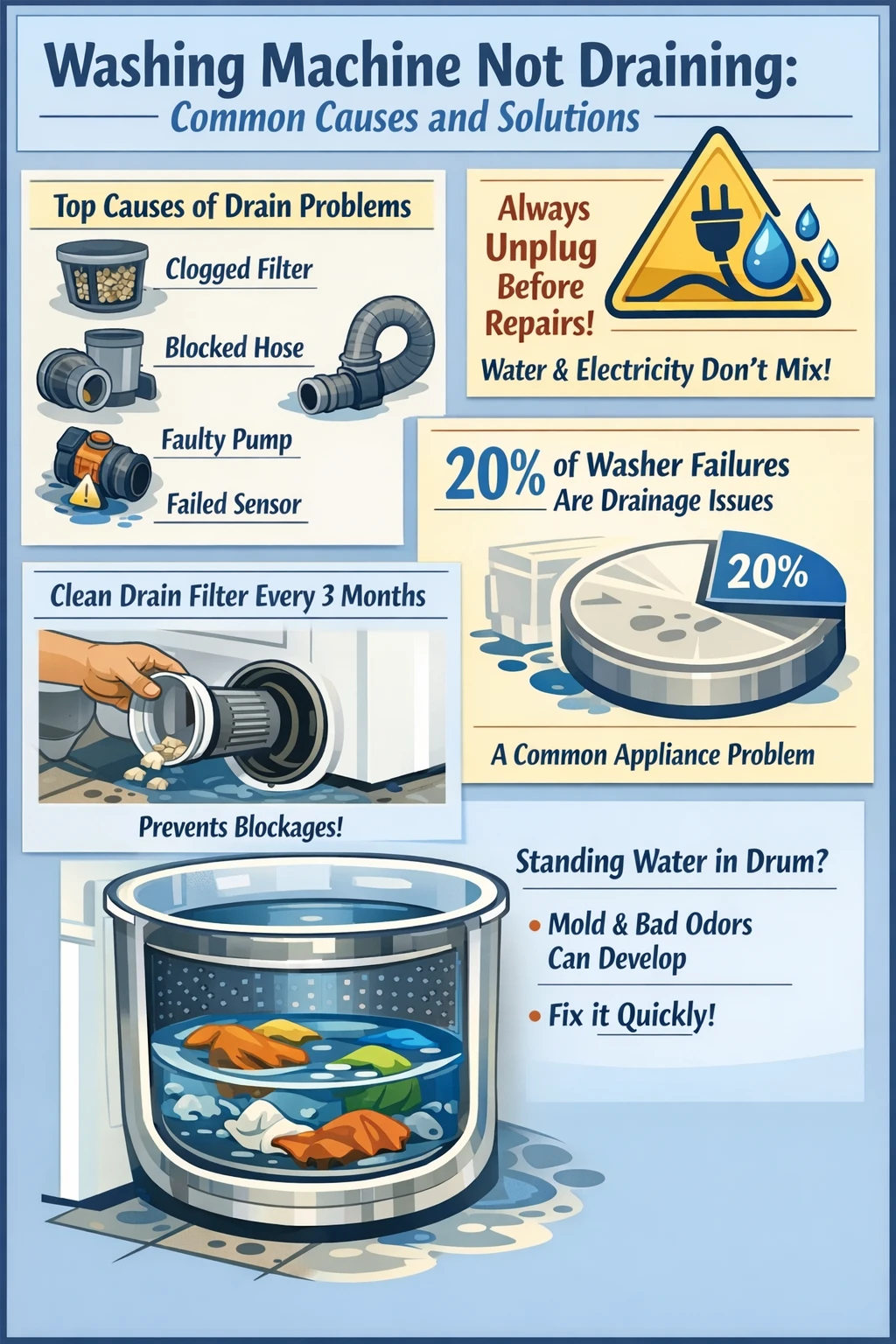
- The most common causes of a washing machine not draining are a clogged drain filter, a blocked or kinked drain hose, a faulty drain pump, or a failed lid switch sensor.
- Drain filters should be cleaned every three months, a neglected filter is one of the easiest problems to fix and one of the most frequently overlooked.
- About 20% of washing machine failures involve drainage issues, making it one of the more common appliance problems homeowners deal with.
- Before attempting any repair, always unplug the machine, water and electricity together are not something to be casual about.
- If your machine is still under the manufacturer’s warranty, check the terms before opening anything up, since unauthorized repairs can void coverage.
- Standing water left sitting in a drum encourages mold growth and unpleasant odors, so the sooner you address it, the better.
Why your washing machine isn’t draining
When a washing machine won’t drain water, it almost always comes down to one of four things: the drain filter is clogged, the drain hose is blocked or kinked, the drain pump has failed, or a sensor is preventing the cycle from completing. Those four causes account for the overwhelming majority of cases. Most are things you can check yourself in under an hour, with basic tools and a few towels on standby for the inevitable drips.
The trickier part is knowing where to start. We usually recommend working from the simplest fix outward. Check the filter first. Then the hose. If both of those look fine, you’re likely dealing with the pump or a sensor issue, which gets a little more involved.
One thing worth knowing: if you’ve recently moved the machine or had someone in to look at something else, a kinked drain hose is surprisingly common and embarrassingly easy to miss. A quick look behind the unit takes thirty seconds and sometimes that’s all it takes.
The clogged drain filter
This is where we’d start every time. Many washing machines, especially older front-loaders, have a drain filter designed to catch lint, hair, coins, and the miscellaneous debris that comes off your laundry. It works well right up until it gets too full to let water through. Manufacturers generally recommend cleaning these every three months, but in our experience, most people have never cleaned theirs at all.
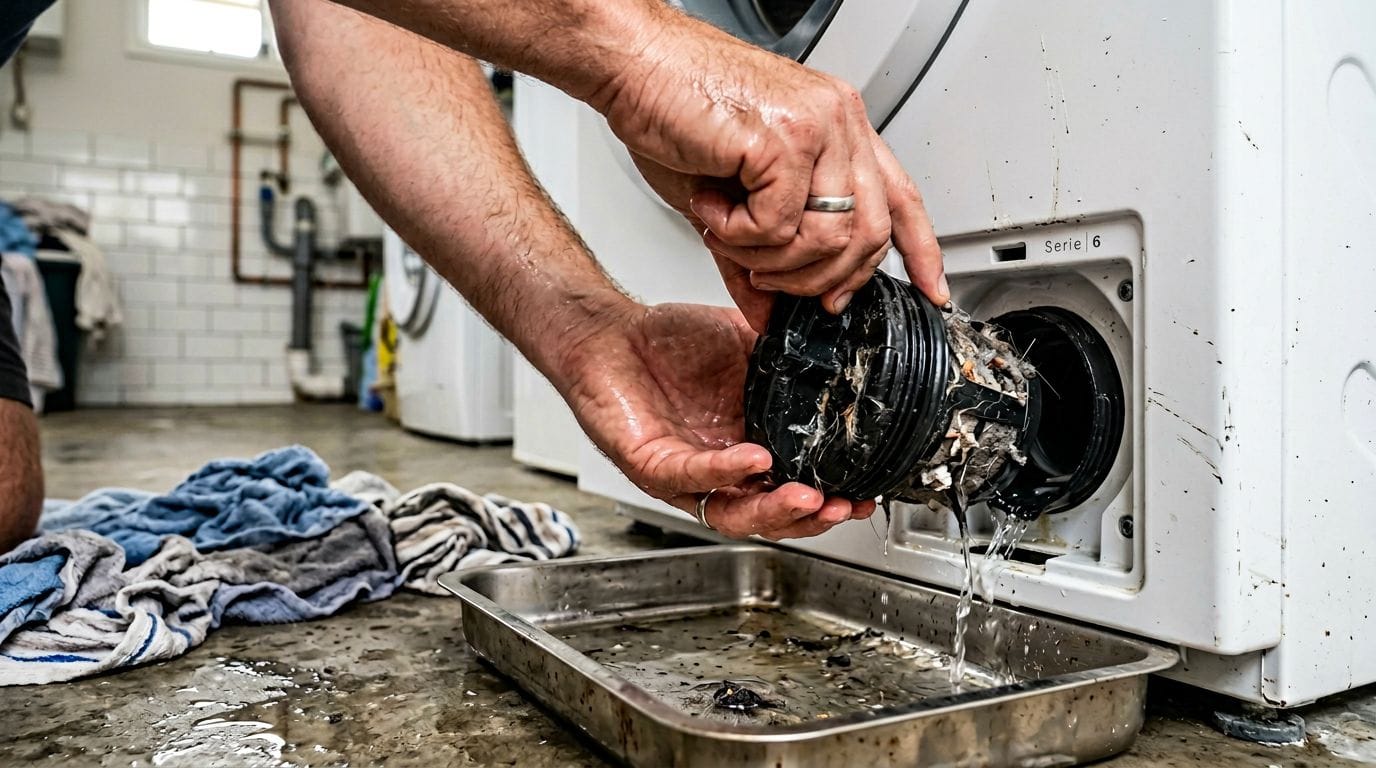
The filter location varies by model. On many front-loaders, there’s a small access panel near the bottom front of the machine. Pop it open and you’ll find the filter behind it, usually a round cap you turn counterclockwise to unscrew. Have a shallow pan and some old towels ready before you do, water will come out. On top-loaders, the filter may be at the end of a drainage hose inside the machine, or occasionally under the central agitator. When in doubt, check your manufacturer’s documentation or look up your model number online.
Once you’ve got it out, clean off the debris, rinse it under a tap, and check for cracks or damage. If it’s cracked, the filter needs replacing, not just cleaning. Reinstall it firmly so it seats properly, a loose filter can cause leaks. It’s one of those jobs that looks scarier than it is, and the payoff is immediate.
The blocked or kinked drain hose
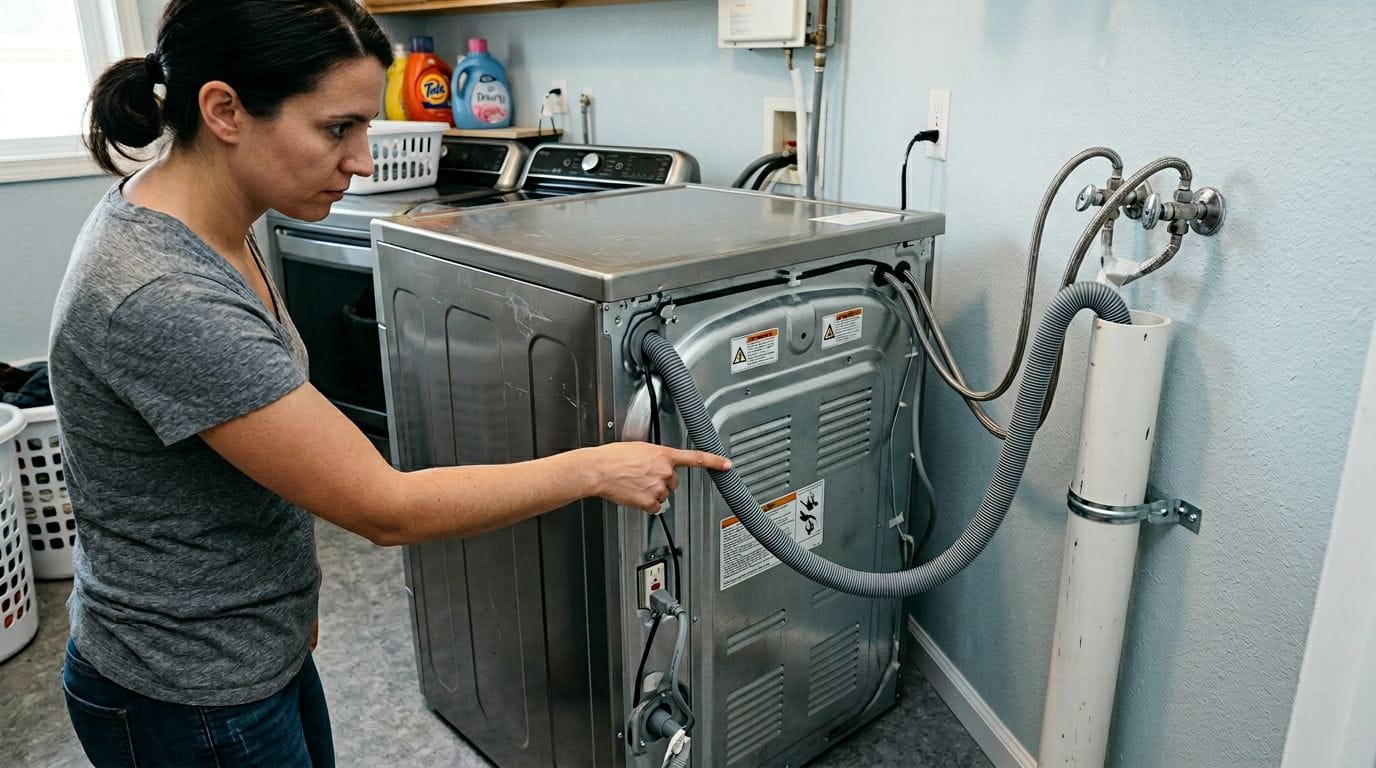
Moving on to the next likely culprit. The drain hose is the corrugated plastic tube that carries wastewater out of your machine and into the standpipe or laundry tub drain in the wall. Any obstruction in that hose means the water has nowhere to go.
Start by unplugging the machine and pulling it away from the wall. Look at the hose carefully. Is it bent sharply at any point? Is it compressed against the wall? A tight kink is enough to restrict drainage significantly. Straighten it out and try running a drain cycle before doing anything else.
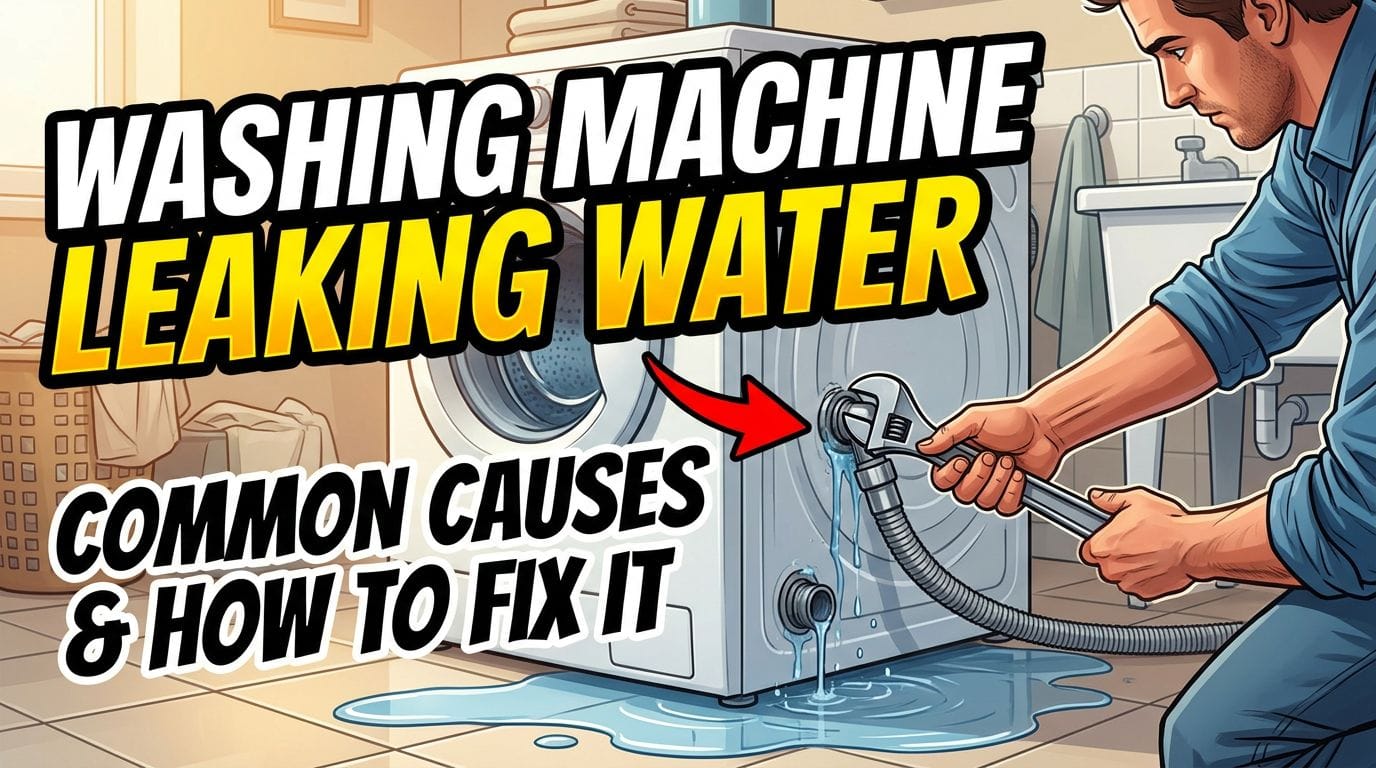
If the hose looks fine physically, detach it from the wall drain, hold the end over a bucket, and check whether water flows out freely. If nothing comes out despite water sitting in the drum, there may be a clog in the hose itself. A plumber’s snake or even a straightened wire coat hanger can clear most blockages. Common culprits are balls of lint, clumps of hair, or a small item that escaped from a pocket. We see this a fair amount in older homes around Kitsilano, where original laundry hookups weren’t always designed with great hose routing in mind.
Once the obstruction is out, flush clean water through the hose before reattaching it. Then reconnect everything and make sure the hose isn’t kinked or resting in a position where it’ll get pinched again when you push the machine back.
A failing drain pump
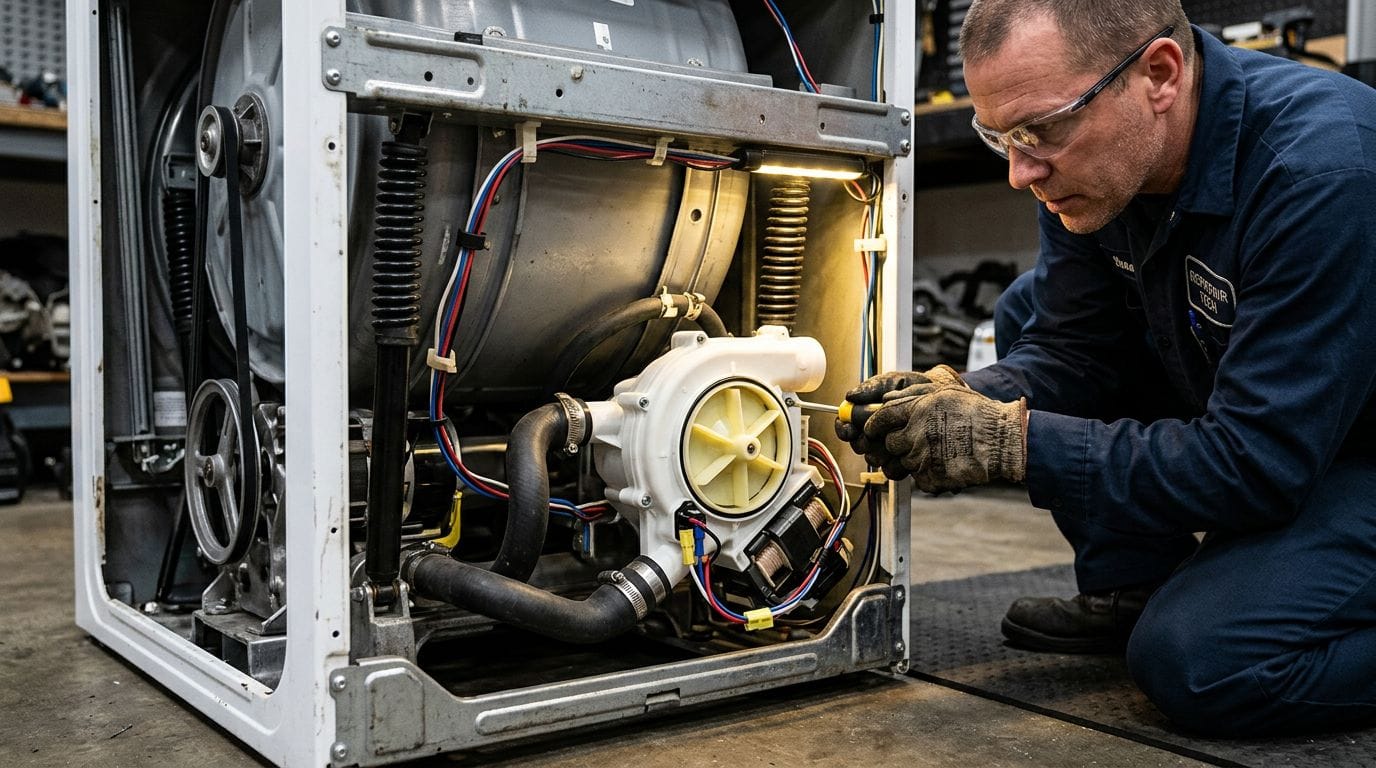
If the hose is clear and water still won’t drain, the drain pump is the next thing to look at. The pump is what forces wastewater up through the hose and out of the machine. Without a working pump, the water just sits there.
Drain pumps fail in two ways. The first is a physical clog, a coin, a hair clip, a sock fragment, or built-up debris gets into the pump and prevents the impeller (the fan-like component that moves the water) from spinning. The second is a mechanical failure of the pump motor itself, which just wears out over time like any moving part.
Signs your pump may be the problem include a humming or buzzing noise during the drain phase, water leaking from the bottom of the machine, the machine stopping mid-cycle, or a faint burning smell. Any of those should get your attention.
Accessing the pump usually means removing a rear or bottom access panel, depending on the model. Unplug the machine first. Once you can see the pump, inspect it for visible obstructions. If it looks clear but still isn’t working, the motor has likely failed. Replacement pumps are available online for most brands and are generally not expensive, but the installation does require comfort with basic appliance disassembly. If that’s not your thing, this is a reasonable point to call in washer repair Vancouver residents can count on for a straightforward diagnosis.
The lid switch or door sensor
Top-loading washers have a lid switch that tells the machine the lid is closed and it’s safe to spin. If that switch fails, the machine may stop mid-cycle and leave water sitting in the drum. It’s a safety feature working against you.
You can test it easily. Start a cycle, leave the lid open, and use your finger to manually press down the switch. If the machine starts running, the switch itself is fine and the problem is likely elsewhere. If pressing it doesn’t change anything, the switch may have failed.
Replacement lid switches are widely available and are usually straightforward to install once you locate the part number for your model. Unplug the machine, disconnect the old switch’s wires, and connect the new one according to the manufacturer’s instructions. It’s one of the cheaper fixes on this list, often under $20 for the part.
Front-loaders use a door latch sensor instead of a lid switch, and a damaged door gasket (the rubber seal around the door) can also prevent proper draining. Inspect the seal for tears, mold buildup, or deformation. A compromised seal can interfere with how the door closes and triggers the machine’s sensor. You can find appliance care guidance from Natural Resources Canada useful for understanding how regular maintenance of seals and hoses extends the life of your machine.
When the problem isn’t the washing machine at all
Sometimes everything on the machine checks out and the drain issue is actually in your home’s plumbing. The standpipe, which is the vertical pipe your drain hose empties into, can become clogged with lint and soap residue buildup over time. Older homes sometimes have standpipes that are too narrow by modern standards.
A quick way to check: remove the drain hose and pour a bucket of water directly into the standpipe. If it drains slowly or backs up, the problem is the pipe, not the washer. Also listen for gurgling sounds from nearby drains when the washer tries to drain. That gurgling can point to a venting issue in the drain system rather than a clog.
If other drains in the house are also slow, you’re likely looking at a main line blockage. That calls for a plumber, not an appliance technician. In areas like East Vancouver and the Mount Pleasant neighbourhood, we occasionally get calls that turn out to be exactly this, plumbing issues that got blamed on the washer because that’s where the standing water showed up.
How to drain the drum manually while you troubleshoot
Before you can get into any of the repairs above, you may need to clear the standing water out of the machine first. There are a few ways to do this depending on what’s accessible.
If the machine is still partially responsive, try running a “Drain and Spin” cycle. Some machines have this as a dedicated setting. It bypasses the wash phase and goes straight to draining.
If that doesn’t work, unplug the machine and use the drain hose itself. Detach it from the wall standpipe and lower the end into a bucket placed on the floor below the machine. Gravity will do the work. You may need to empty the bucket several times depending on how much water is in the drum.
Front-loaders with an accessible filter panel offer another option. Put towels down, place a shallow pan under the filter, and open the filter cover slowly. Water will trickle out as you loosen it. Empty the pan repeatedly until the drum is empty, then proceed with inspecting the filter.
Keeping it from happening again
Proper preparation is key, and when it comes to washing machine maintenance, a little attention goes a long way. Clean the drain filter every three months. That single habit prevents a large portion of the drainage calls we see. Check the hoses quarterly for kinks, cracks, or wear. Run a cleaning cycle monthly with a washing machine cleaner or a hot water and white vinegar combination to reduce soap residue buildup inside the drum and hoses.
Empty pockets before every load. Coins are a surprisingly common cause of pump damage. The impeller inside the pump isn’t designed to deal with hard objects, and a single coin can cause enough damage to require a full pump replacement. Use mesh laundry bags for small items and delicates that might otherwise find their way into the drain system.
Also worth checking: is your machine level? An unlevel machine can cause unbalanced loads that stop the spin cycle before it completes, leaving water in the drum. Most machines have adjustable feet at the base. A quick check with a spirit level every year or so takes two minutes and can prevent repeated mid-cycle stops. For more detail on manufacturer-specific maintenance schedules, LG’s washing machine care guide is a good reference for front-loader owners.
Frequently asked questions
Drainage questions come in a few common variations, and the answers depend on specifics most people don’t think to check first. Here are the ones we hear most often.
How do I know if the drain pump is broken or just clogged?
A clogged pump and a broken pump can look similar from the outside, but there are some useful clues. If the pump is clogged, you may hear it humming or buzzing as it tries to work but can’t move the water. If it’s mechanically failed, you often hear nothing at all during the drain phase. Remove the pump and inspect it, if you find debris blocking the impeller and clear it, try running the machine again. If the pump is clean but still won’t run, the motor has likely failed and needs replacement.
My washing machine drains slowly but doesn’t leave standing water. Is that a problem?
Slow drainage is a warning sign worth taking seriously. It usually means a partial clog somewhere in the filter, hose, or pump. Left alone, slow drainage tends to get worse until the machine stops draining altogether. It can also strain the pump motor over time as it works harder than it should. Start with the filter, since that’s the easiest fix, and work through the hose and pump if cleaning the filter doesn’t improve things.
Can I use my washing machine while it has a drainage problem?
It depends on how bad the issue is. A machine that drains slowly but eventually completes the cycle is technically functional, though we wouldn’t recommend running load after load with a known issue. A machine with standing water after every cycle shouldn’t be used until the problem is diagnosed. Running it repeatedly with a faulty pump can burn out the motor completely, turning a relatively modest repair into a much more expensive one.
What if I’ve checked everything and still can’t figure out why the washing machine isn’t draining?
At that point, the issue may be with the control board or a wiring fault, both of which are harder to diagnose without proper tools and training. Electrical problems inside appliances are worth leaving to someone who knows what they’re doing. If you’ve ruled out the filter, hose, pump, and lid switch, a professional technician can run through the electrical side systematically and pin down the cause without guesswork.
Is it worth repairing an older washing machine, or should I replace it?
The general guidance most appliance technicians use is the 50% rule: if the repair cost is more than half the price of a comparable new machine, replacement starts to make sense. For common issues like a clogged pump or a failed lid switch, repair is almost always the more economical path. For older machines with a failing motor or control board, the math sometimes tips toward replacement. A quick consultation with a technician can give you a straight answer based on what the machine actually needs.
Wrapping up
A washing machine that stops draining is annoying, but it’s rarely a disaster. Start with the filter, check the hose, and listen for what the pump is doing. Those three steps will resolve the problem in a majority of cases. Regular maintenance, particularly cleaning that filter every three months and keeping pockets empty before loading, will keep the issue from recurring. If you’ve worked through the basics and the machine is still holding water, or if you’d rather not dig into it yourself, Vancouver Appliance Service Pros handles washer repair across Vancouver and the surrounding area. Give us a call and we’ll help you figure out what’s going on and what it’ll actually take to fix it.