Your refrigerator is supposed to cycle on and off throughout the day – so when it runs without stopping for hours on end, something is off, and your electricity bill will tell the story before long. This guide walks you through every common reason a fridge won’t stop running, what you can check yourself, and when it makes sense to call in a professional.Refrigerators are one of those appliances we completely ignore until something goes wrong. And a fridge running constantly is one of the more confusing problems – because the food stays cold, the freezer still makes ice, and nothing seems obviously broken. So is it even a problem? Sometimes yes, sometimes no. But you do want to know the difference.At Vancouver Appliance Service Pros, we get calls about this fairly regularly. Homeowners in Vancouver notice a spike in their hydro bill, or they start paying closer attention after the fridge sounds louder than usual, and suddenly they realize the compressor hasn’t stopped in days. In our experience, most of the time there’s a straightforward explanation – and often a fix you can handle yourself before picking up the phone.
Key takeaways
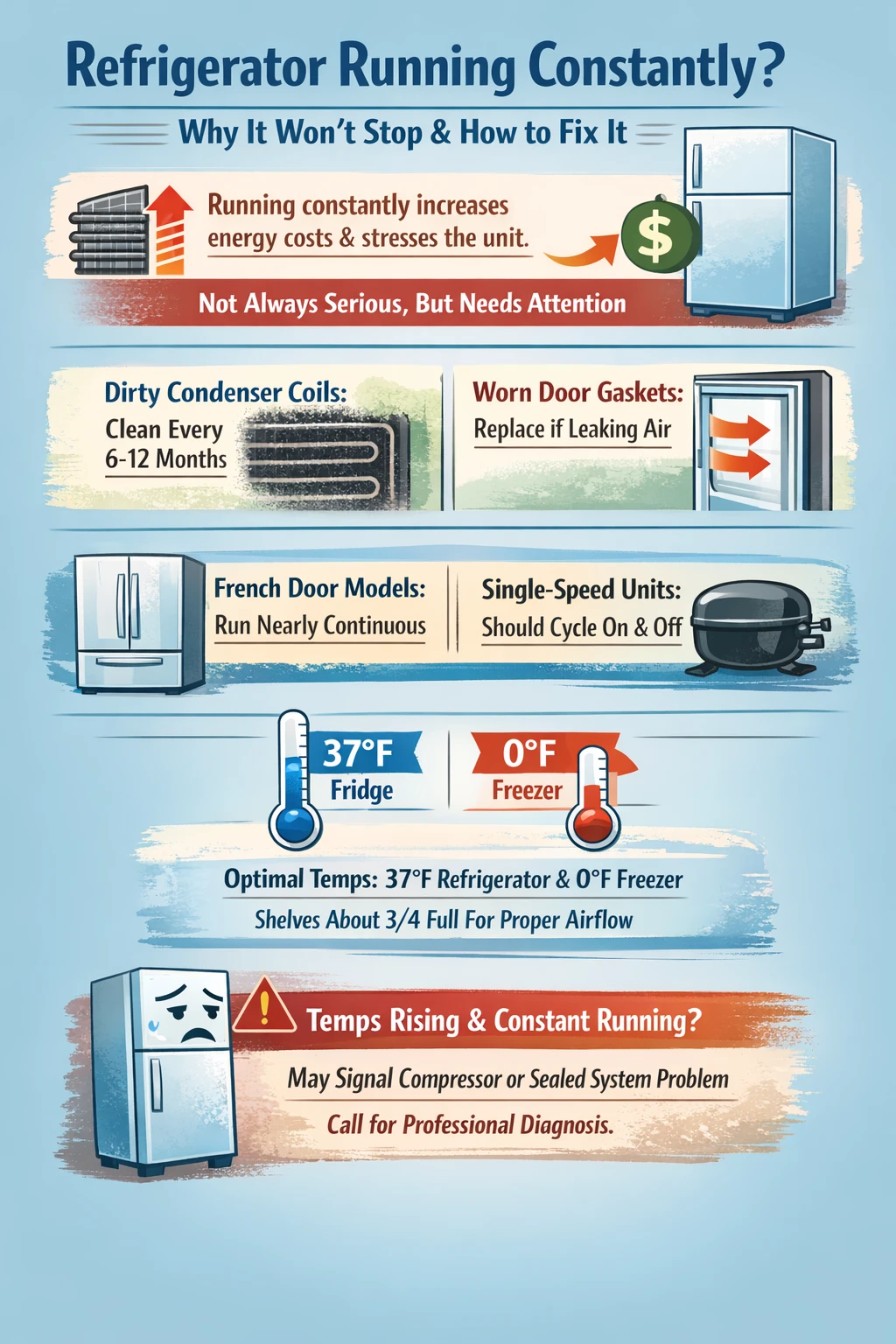
- A refrigerator running constantly is not always a sign of a serious problem, but it does mean the unit is working harder than it should, which raises your energy costs over time.
- The most common causes are dirty condenser coils, worn door gaskets, blocked internal vents, and temperature settings that are colder than necessary.
- French door and multi-door refrigerators with variable-speed compressors are designed to run nearly all the time, so constant running on those models is often normal.
- LG recommends a refrigerator temperature of 37°F and a freezer temperature of 0°F – running colder than this forces the compressor to work longer for no real benefit.
- Condenser coils should be cleaned every 6 to 12 months as part of routine maintenance to keep the compressor running efficiently.
- If the fridge is running constantly and temperatures inside are climbing, that points to a sealed system problem – a repair that requires a licensed technician.
Why your refrigerator won’t stop running
A refrigerator runs constantly when it can’t reach or hold its target temperature. The compressor kicks on to cool things down, and if something is preventing it from getting there – warm air sneaking in, poor heat transfer at the coils, blocked airflow inside – it just keeps going. That’s the short answer.The longer answer depends on what type of fridge you have. Single-speed compressors, found in most top-freezer and side-by-side models, cycle on and off throughout the day. You’ll notice quiet periods between cycles. Variable-speed compressors, common in French door and multi-door models, are designed to run almost continuously – slowing down or speeding up based on demand rather than stopping and starting. If you recently upgraded from an older top-freezer to a newer French door model and the compressor never seems to shut off, that may actually be normal operation. It doesn’t feel that way, but it is.The real question is whether your food is staying cold. If your freezer is holding temperature and nothing in the fridge is warming up, you may just have a minor efficiency issue rather than a breakdown. But if temperatures are creeping up while the compressor runs non-stop, that’s a more serious situation that warrants attention.
Dirty condenser coils – a common and fixable problem
This is where we usually start. Condenser coils release the heat that the refrigerator pulls out of its interior, and when they get coated in dust, pet hair, and kitchen grime, they can’t do that job well. The compressor has to run longer to compensate. On most modern refrigerators, the coils are tucked behind a kick plate at the front bottom or behind a rear panel – not the old-style exposed coils on the back wall that you might remember from fridges of a few decades ago.Cleaning them is genuinely straightforward. Unplug the refrigerator first. Pull off the toe kick at the bottom front or pull the unit away from the wall to access the rear panel. Use an appliance brush – the long, flexible kind made specifically for coils – to loosen the debris. Then vacuum it up. The whole job takes maybe twenty minutes. 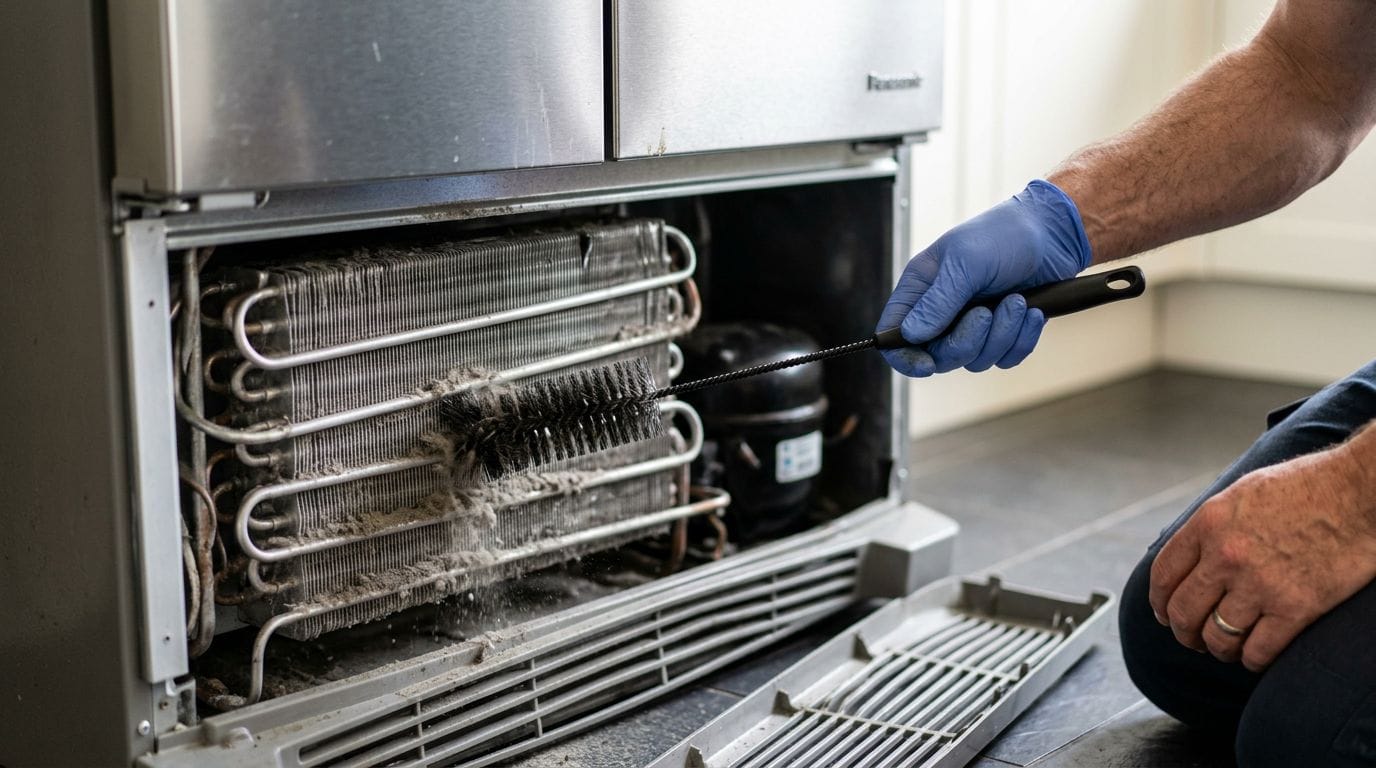 LG and other manufacturers recommend doing this every 6 to 12 months, and honestly, most people never think about it until something goes wrong.Will cleaning the coils magically fix a fridge that’s been running non-stop? Not always. But it’s the easiest thing to rule out, and in many cases it does help. We’ve seen units in older homes around Kitsilano that hadn’t had their coils touched in years – the buildup alone was enough to cause problems.
Door gaskets – the silent culprit
The rubber seal around your refrigerator door is doing one job: keeping warm air out. When it fails, warm air leaks in continuously, and the compressor has to run longer to remove that heat. It’s a surprisingly common cause of a fridge that won’t stop running.Gaskets wear out gradually. They crack, harden, lose their grip, or get pushed out of alignment by years of daily use. Sometimes food residue and crumbs build up along the seal and prevent it from sitting flush against the cabinet. The fix for a dirty gasket is simple – wipe it down with a damp cloth and make sure nothing is blocking it. A damaged or cracked gasket needs to be replaced, which is a straightforward repair for a technician and not an especially expensive one.Here’s a quick test: close the fridge door on a piece of paper or a dollar bill. Pull it out. If it slides out easily with no resistance, the seal isn’t tight enough at that spot. Work your way around the entire perimeter of the door. 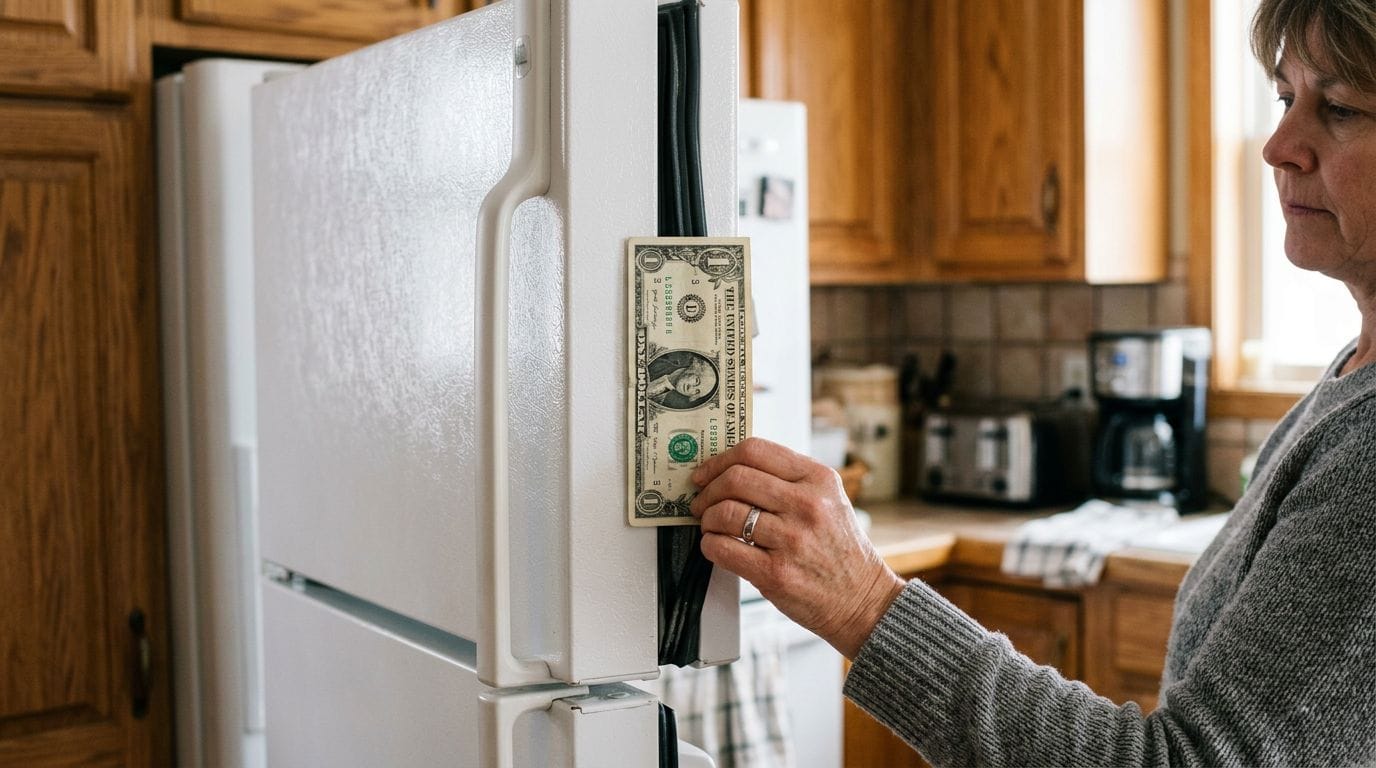 Pay particular attention to the freezer gasket if you have a top-freezer model – freezer door seals often develop a leak before the fridge door does. Warm, moist air entering through a bad freezer gasket is one of the more underappreciated causes of constant running, and it can also lead to frost buildup inside the freezer compartment.
Frost buildup and defrost problems
Ice forming on the back panel inside the freezer is a sign the defrost system isn’t keeping up. Modern refrigerators run a defrost cycle a couple of times per day to melt any frost that accumulates on the evaporator coils. When that system fails – whether it’s a faulty defrost timer, heater, or thermostat – frost builds up over time and restricts airflow. The refrigerator struggles to circulate cold air and runs constantly trying to compensate.If you pull out the contents of your freezer and remove the back panel, you may find a solid wall of ice where there should be clear coils and a fan. This is exactly what happened to the homeowner in the repair thread we came across – they found an incredible amount of ice behind the freezer panel that had stopped the fan from running. Once they manually defrosted it (several hours of work with towels and patience), the fridge returned to normal.Manual defrosting can get the fridge working again temporarily, but if the underlying defrost component has failed, the frost will return. A technician can diagnose which part has failed – the timer, the heater, or the thermostat – and replace it. The parts are generally inexpensive. The labor is the main cost.
Temperature settings, airflow, and room conditions
Sometimes the fix is simpler than anyone expects. If the freezer or fridge is set colder than it needs to be, the compressor works harder to hit that target. LG recommends 37°F for the refrigerator section and 0°F for the freezer. If your settings are colder than that, try adjusting them and give the unit 24 hours to stabilize before you draw any conclusions. One temperature dial change is a five-second fix worth trying.Airflow inside the refrigerator matters more than most people realize. Pack the shelves too tightly and cold air can’t circulate – the fridge keeps running because the temperature sensors in certain spots never drop to the target. But an almost empty fridge has the opposite problem: there aren’t enough items to hold the cold, so temperatures rise quickly every time the door opens. Aim for roughly three-quarters full, leaving space between items for air to move.  Room conditions matter too. A refrigerator sitting in a hot garage or pressed tightly against a cabinet wall with no ventilation clearance will run more than one sitting in a cool, well-ventilated kitchen. Vancouver’s mild climate helps here compared to places that get extreme summer heat, but a poorly positioned fridge still pays a penalty. Check that there’s at least an inch or two of clearance at the back and sides for heat to dissipate. Older homes in areas like East Van sometimes have kitchen configurations where the fridge is tucked into a tight alcove – worth checking if yours is one of them.
When it’s a bigger problem – compressor and sealed system issues
If you’ve checked the coils, inspected the gaskets, cleared the vents, adjusted the temperature, and the fridge is still running without stopping – and the temperatures inside are starting to drift upward – you’re likely looking at a problem with the compressor or the sealed refrigerant system.A weak compressor will run constantly because it can’t build up enough pressure to cool the refrigerant efficiently. The temperatures in the freezer and fridge will read higher than they should. In the repair thread we referenced, a technician walked through exactly this diagnosis – the freezer was reading 20°F and the fridge 44°F, both too warm, while the compressor ran without stopping. Once the temperatures started dropping toward normal (0°F in the freezer, 35-37°F in the fridge), the unit returned to a normal cycling pattern.A refrigerant leak is a different and more serious issue. If the refrigerant that carries heat out of the fridge has leaked, the compressor runs constantly trying to do a job it can’t complete. The fridge won’t cool properly, no matter how long the compressor runs. This is a sealed system repair – it requires specialized equipment and a certified technician. It’s also one of the more expensive repairs a refrigerator can need, and on an older unit, it may not be worth the cost. If your fridge is more than 10-15 years old and you’re looking at a sealed system repair, ask the technician honestly whether repair or replacement makes more sense. A good tech will give you a straight answer.You can get more background on refrigerator energy use and efficiency at the U.S. Department of Energy’s appliance efficiency page, which covers recommended settings and what drives compressor run time. For manufacturer-specific guidance, LG’s support site has documentation on how their variable-speed compressors are designed to behave, which is useful if you have an LG unit and are unsure whether constant running is normal for your model.
Frequently asked questions
These are the questions we hear most often from homeowners dealing with a fridge that won’t stop running. If your situation is covered here, you may be able to sort it out without a service call.
Is it normal for a refrigerator to run all the time?
It depends entirely on which type of compressor your refrigerator has. French door and multi-door models with variable-speed compressors are designed to run nearly continuously – that’s by design, because it’s more energy-efficient for them to idle at low speed than to stop and start repeatedly. Single-speed compressors, found in most top-freezer and side-by-side models, should cycle on and off throughout the day with noticeable quiet periods between cycles. If yours used to have quiet periods and now runs without stopping, something has changed.
Can a bad door gasket really cause constant running?
Yes, and it’s one of the most underappreciated causes. A leaking gasket lets a steady stream of warm air into the refrigerator, increasing the heat load the compressor has to deal with. Even a small gap can cause noticeably longer run times. Do the paper test described above, and check the full perimeter of both the fridge and freezer doors. Gasket replacement is one of the more cost-effective repairs available – usually far cheaper than diagnosing a compressor problem.
Why is my fridge running constantly after I put a lot of food in?
Loading a large amount of room-temperature or warm food into the refrigerator – say, after a big grocery run or after putting two watermelons in – forces the compressor to run longer while it brings everything down to temperature. This is completely normal and temporary. The fridge should return to its regular cycling pattern within a few hours once the contents have cooled. The same thing happens if you leave the door open for an extended period while cleaning shelves.
Should I worry if my fridge is running constantly but still staying cold?
It’s worth investigating, even if temperatures seem fine. Constant running means the unit is working harder than it should, which increases your electricity costs and puts more wear on the compressor over time. It’s also often an early warning sign of something that will get worse – a gasket that’s failing, coils that need cleaning, or frost buildup that’s just starting. Catching these things early is almost always cheaper than dealing with them after the fridge stops cooling entirely.
What does it mean if the fridge is running constantly and not cooling properly?
This combination – constant running plus poor cooling – points to a more serious problem. Either the compressor is weak and can’t build adequate pressure, or there’s a refrigerant leak, or frost has built up to the point where the evaporator fan is blocked. Check the freezer first: remove the back panel and look for excessive frost or ice buildup. If the coils are encased in ice, you have a defrost system problem. If the coils look clear but temperatures are still rising, you likely need a technician to assess the compressor and sealed system. At that point, don’t wait – a refrigerator that isn’t cooling properly is a food safety issue.
How much does it cost to fix a refrigerator running constantly?
It depends entirely on the cause. Cleaning condenser coils yourself costs nothing but your time. A replacement door gasket typically runs between $50 and $150 for the part, plus labor if you hire it out. Defrost system components – heaters, timers, thermostats – are generally inexpensive parts, with repair costs usually in the $150 to $300 range depending on the model and labor. Compressor replacement is significantly more expensive, often $400 to $700 or more, which is why it’s worth having an honest conversation about the age and condition of the unit before committing to that repair. For localized estimates, getting a diagnostic visit from an appliance repair service in Vancouver gives you actual numbers based on your specific unit.
Wrapping up
A refrigerator running without stopping is worth paying attention to, but it doesn’t automatically mean a costly repair. Start with the basics: check the door gaskets, clean the condenser coils, clear any blocked vents, and confirm the temperature settings are reasonable. Many times, one of those steps is all it takes. If the fridge is running constantly and temperatures are drifting upward, that’s when you need professional help – specifically to rule out compressor weakness or a refrigerant issue.If you’d rather not work through the diagnosis yourself, or if you’ve already done the basics and nothing has changed, reach out to Vancouver Appliance Service Pros. We handle fridge repair across Vancouver and the surrounding area – whether it’s a door gasket swap, a defrost system repair, or a full compressor assessment. We also handle washer repair, dryer repair, dishwasher repair, and stove and oven repair, so if you’ve got more than one appliance giving you trouble, we can sort through it in one visit. Give us a call and we’ll help you figure out what’s actually going on and what it’s going to take to fix it.