
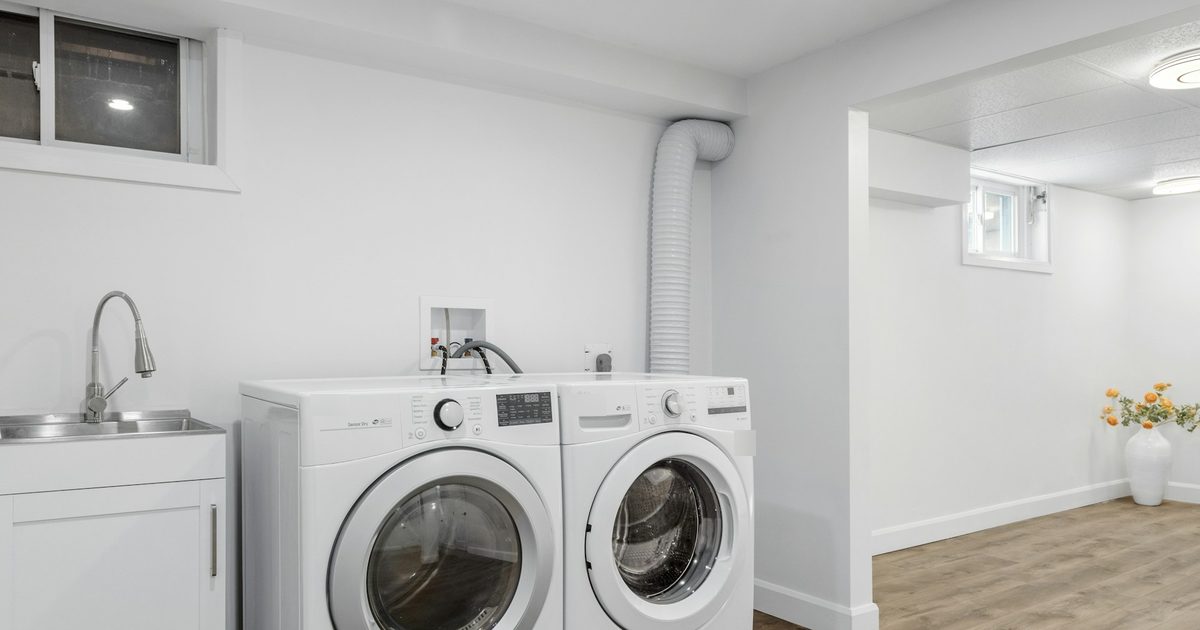
A dryer not drying clothes, when the drum still gets warm, usually has an airflow problem: a full lint screen, a crushed or blocked vent hose, or an overloaded drum. Samsung puts it plainly: "If your dryer is heating but the clothes are still damp, then your vent is probably blocked." Settings like Eco Dry and dirty moisture sensors come next. If the air inside is cold, that's a different fault; see our guide to a dryer not heating. If the checks below don't fix it, our dryer repair technicians can find the cause.
Key Takeaways
- First, check for heat. Warm air plus damp clothes points to airflow, not a broken heater.
- Clean the lint screen every load and wash it if dryer sheets leave a film.
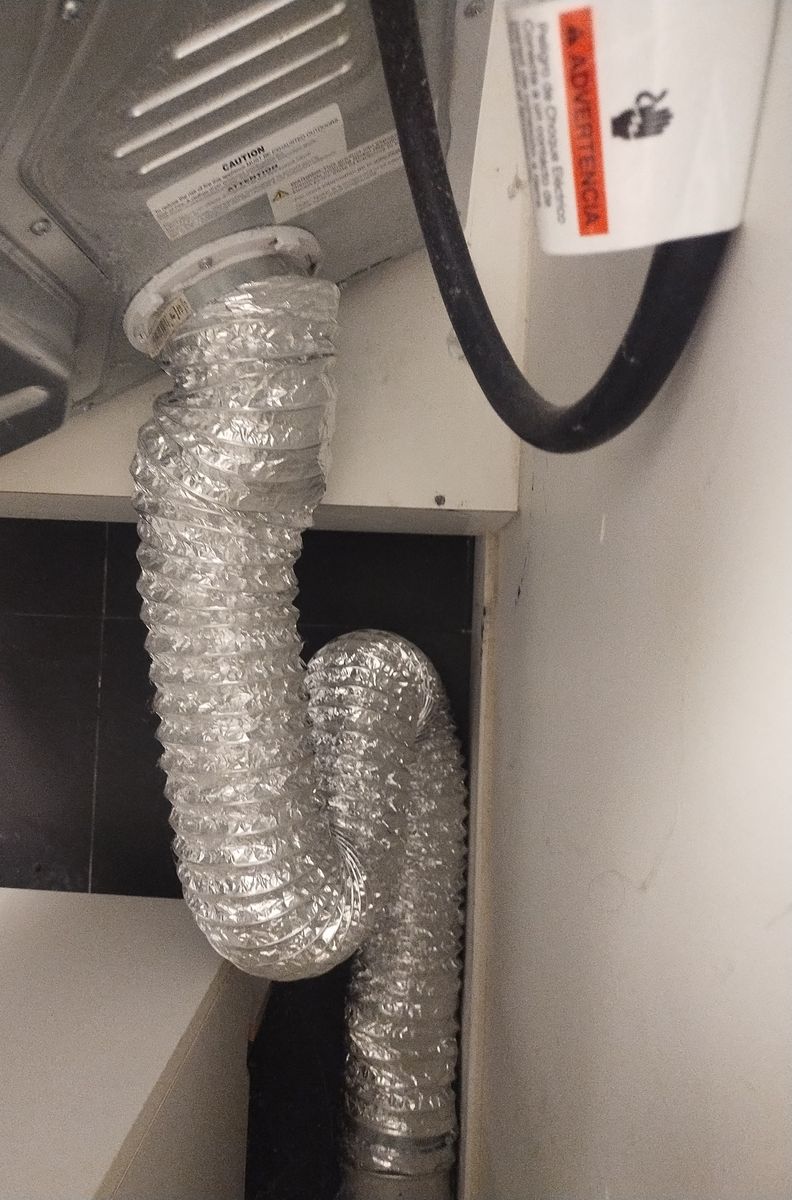
- A crushed, kinked or foil vent hose behind the dryer is one of the most common causes of long drying times.
- Eco Dry, EcoBoost and Energy Saver lengthen cycles by design. Whirlpool says EcoBoost adds about 40 minutes.
- In condos, a slow dryer is often the building's booster fan or shared duct, not the dryer.
Is your dryer heating? Check that first
Whirlpool's test: run a heated cycle on an empty drum "for 5 minutes", then open the door and feel inside. If it's warm, keep reading. Samsung says that "If there is any warmth, service is almost never required." If it's cold, the heater circuit has failed and you need the no-heat checks instead.
Why your clothes are still damp
Match what you see to the likely cause.
| What happens | Likely cause | Fix |
|---|---|---|
| Drum warm, clothes damp after a full cycle | Clogged lint screen or restricted vent hose | Steps 1 and 5 |
| Cycle ends in a few minutes, clothes wet | Dirty moisture sensor bars | Step 4 |
| Cycle runs much longer than it used to | Vent filling with lint, or Eco Dry on | Steps 3 and 5 |
| Clothes dripping when they come out of the washer | Washer spin too low or washer fault | Step 6 |
| Big loads stay damp, small loads dry | Overloaded drum | Step 2 |
| Condo dryer slow, vent hose clear | Building booster fan or shared duct | Tell your strata |
How to fix a dryer not drying clothes properly
Unplug the dryer before you clean anything inside it or pull it from the wall.
- Clean the lint screen every load. GE says the filter "can be washed with warm soapy water to remove fabric softener residue from the screen." Natural Resources Canada says a full screen "can cause your dryer to consume up to 30 percent more energy."
- Load it right. Whirlpool says to "Aim for the drum to be about one-half to three-quarters full so items can tumble freely." GE adds: "Only dry one wash load at a time." Too few items is a problem too; for under 5 items, GE suggests a timed cycle.
- Check the cycle and energy options. On Air Fluff, Electrolux says "the dryer will tumble without heat." Samsung says Eco Dry "will automatically turn on for certain common cycles (like Normal or Time Dry)." See our guide to the Samsung Eco Dry setting. LG says "Energy Saver is on by default for the Cotton/Normal cycle." GE warns that with Eco Dry, clothes "may still be slightly damp when the cycle is finished."
- Clean the moisture sensor bars. These two metal strips inside the drum tell the dryer when to stop. Electrolux says dryer sheets "can leave a residue on the moisture sensor bars" and recommends wiping them with rubbing alcohol. Our dryer sensor guide shows where they are.
- Check the vent hose and the outside flap. Pull the dryer out and look at the vent hose for kinks, crushing or extra length. GE recommends "a solid metal vent pipe 4" in diameter" and says to clean the ductwork at least once a year. Run the dryer and check that air pushes the outside flap open. Our guide on how to clean a dryer vent has the full steps.
- Check the washer and the power. If clothes come out of the washer dripping, check the spin setting. GE notes that "If a lower spin speed is selected for a normal or heavy wash load, the washer may not spin the water out adequately." If they still drip on a full spin, our washer repair technicians can check it. On an electric dryer, GE says a 120-volt supply instead of 240 makes drying "as much as three times longer."
Condo, stacked and ventless dryers
On our Vancouver-area calls, "takes forever to dry" in an apartment building often turns out to be the building's booster fan. The dryer heats normally, but the shared exhaust fan isn't running, and that's for the building to fix. We also find roof-level vents and shared ducts that need cleaning, which the strata has to arrange. Closets matter too: Electrolux says a dryer installed "in a closet or under a counter" may not get enough air. Electrolux also says "Drying times will be longer in areas where humidity is high." Stacked sets have to come off the wall before anyone can reach the vent connection, and that can need a second technician ($125).
Ventless condenser dryers work differently, and we see a lot of them in the compact 24-inch sets in condos. Bosch's instructions say to "Clean the fluff filter after each drying operation" and the protective filter "5 - 6 times a year," and to keep the room ventilated. Bosch also notes that "warm laundry feels damper than it actually is" at the end of a cycle. Electrolux says heat pump dryers can take slightly longer than vented ones. On condenser dryers we've seen wax from dryer sheets coat the moisture sensor so the cycle ends early; wiping the bars fixed one "shuts off after 5 minutes" call.
When it's a repair, and what it costs in Vancouver
Book a technician if the vent is clear, the screen is clean and loads still come out damp, or if the cycle stops early after you've cleaned the sensors. Whirlpool's rule is to arrange service if "long dry times persist after cleaning, the dryer does not heat, error codes display, or unusual noises." When it is a part, it is usually the moisture sensor bars or a thermistor on a dryer that stops early, or a blower wheel packed with lint. If the heat is weak or missing, see our guide to a dryer not heating instead.
Many not-drying calls need no parts. In our recent dryer job notes, vent, duct or lint restriction comes up about 58 times, and 7 calls traced to a building booster fan that wasn't running. We clear lint from the cabinet, blower and exhaust, or straighten a crushed hose. Our diagnostic is $100 flat and comes off the labour if you go ahead. Most dryer repairs run $225 to $300 in labour with the diagnostic included, and parts are quoted before we order them. A typical dryer repair comes to about $250 to $400 all in. See our appliance repair cost guide for the full list.
Questions about a dryer not drying clothes
How do you fix a dryer that is not drying clothes?
Confirm it heats, then clean the lint screen, cut the load to half or three-quarters full, turn off Eco Dry, wipe the sensor bars and clear the vent hose. If clothes are still damp after that, have it checked.
Why are my clothes still wet after being dried in the dryer?
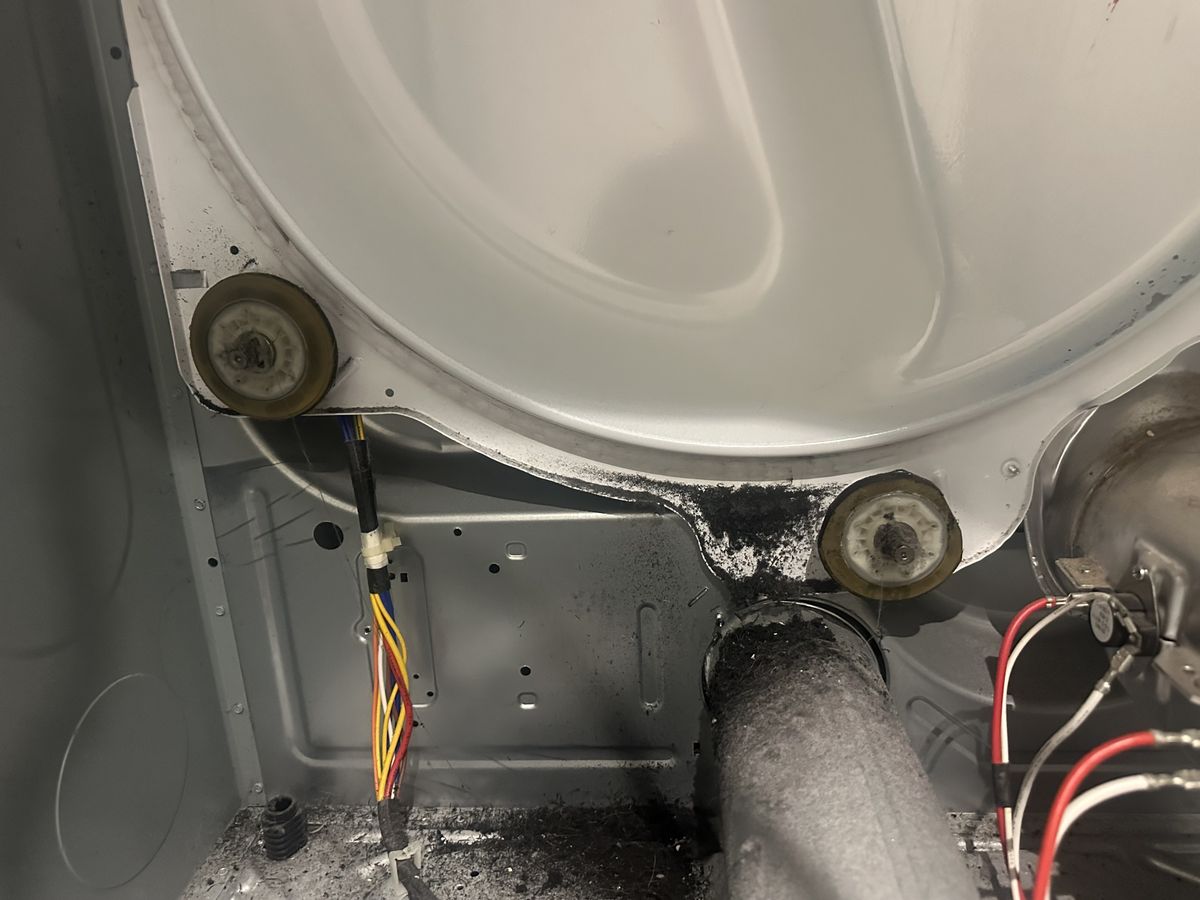
Usually because damp air can't get out. The CPSC says damp clothing at the end of a normal cycle "may be a sign that the lint screen or the exhaust duct is blocked." A low washer spin speed or an overloaded drum does the same.
What is the most common dryer failure?
In our job records, noise is the most common reason people book: worn drum rollers, an idler pulley or a belt. For drying problems, lint and vent restriction come up more often in our notes than a failed part.
What are the signs of a dying dryer?
Loud grinding, a burning smell, repeated blown fuses, or a motor failure on an older machine. Long dry times on their own are usually the vent, not the dryer wearing out.
How many years do dryers typically last?
About 12 to 15 years for gas and electric models, in our experience. Under 10 years, a worn part is normally worth fixing.
Is it worth fixing a dryer that doesn't heat?
Usually, yes, if it's under 10 years old; a new mid-range dryer costs $600 to $1,200. Our dryer not heating guide covers the parts and checks.
Call 604-265-3852 or book a dryer repair online, 8AM to 8PM, seven days a week. We cover Vancouver and the Lower Mainland, and you can contact us with questions first. More about our technicians.