
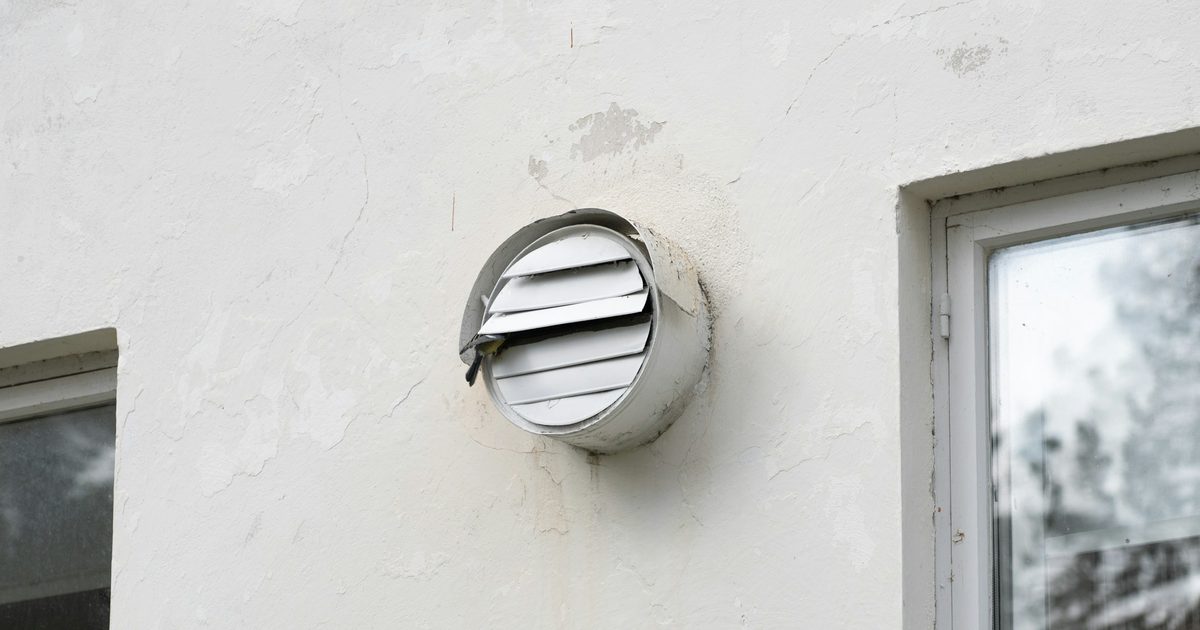
How to clean a dryer vent: unplug the dryer and shut off the gas if it has one. Pull it out, disconnect the duct, then brush and vacuum the duct, the wall pipe and the outside hood. Reconnect it and check that air blows out outside. Do it once a year, or sooner if clothes start taking longer to dry. If the dryer still runs cold or shuts off after the vent is clean, our dryer repair service can test the parts that a blocked vent damages.
Key Takeaways
- The NFPA says the leading cause of home clothes dryer fires is "failure to clean them."
- Clean the lint screen every load and the vent pipe at least once a year. GE, NFPA and Natural Resources Canada all give that yearly figure.
- Swap foil or plastic accordion hose for rigid or semi-rigid metal duct.
- In condos, a slow dryer can be the building's duct or booster fan, which is for the strata to fix.
- A blocked vent can blow the dryer's thermal fuse. Clean the vent before you replace the fuse.
How often should you clean your dryer vent?
Clean the lint screen every load and the full vent run once a year. The NFPA's dryer tip sheet says "Once a year, or more often if you notice that it is taking longer than normal for your clothes to dry, clean lint out of the vent pipe or have a dryer lint removal service do it for you." GE recommends "inspecting and cleaning the exhaust ducting on a Dryer at least once a year", and Samsung says to clean it "once or twice per year". Natural Resources Canada says to inspect and clean the exhaust duct and outside vent "at least once a year".
Clean it sooner if you see the warning signs. The US Consumer Product Safety Commission says that damp clothes at the end of a normal cycle, or longer drying times, "may be a sign that the lint screen or the exhaust duct is blocked." Whirlpool adds a hot, humid laundry room and lint building up around the door seal.
How to clean a dryer vent, step by step
What you need:
- a vent brush kit with extension rods, and a drill to turn it
- a vacuum with a hose attachment
- a screwdriver for the clamps
- foil tape
- 4-inch rigid or semi-rigid metal duct, if the old hose needs replacing
- Shut it down. Samsung's first step: "if you have a gas dryer, turn off the gas and unplug the dryer from its power source." If you ever smell gas, leave and call FortisBC's emergency line, 1-800-663-9911, from outside.
- Clean the lint screen and its slot. Pull the screen, wipe it, and vacuum the slot it sits in. The NFPA also says to "Remove lint that has collected around the drum."
- Disconnect the duct. Slide the dryer out and loosen the clamp at the back. Samsung says this "is usually accomplished by removing the clamp." Vacuum the dryer's exhaust outlet while it's open.
- Brush the duct. Feed the brush into the wall pipe and turn it with the drill. Samsung says to set the drill to clockwise, because otherwise "the attachments may disconnect from the drill." Add rods until you reach the outside, then vacuum out the loose lint. Samsung suggests taping the rod joints "so that they do not get lost or stuck inside the vent."
- Check the hose. Replace foil or plastic accordion hose. The CPSC says it "can more easily trap lint and is more susceptible to kinks or crushing, which can greatly reduce the airflow." Use rigid or semi-rigid metal, 4 inches across, and keep it short. Health Canada says to "Seal the joints in the dryer duct with foil tape."
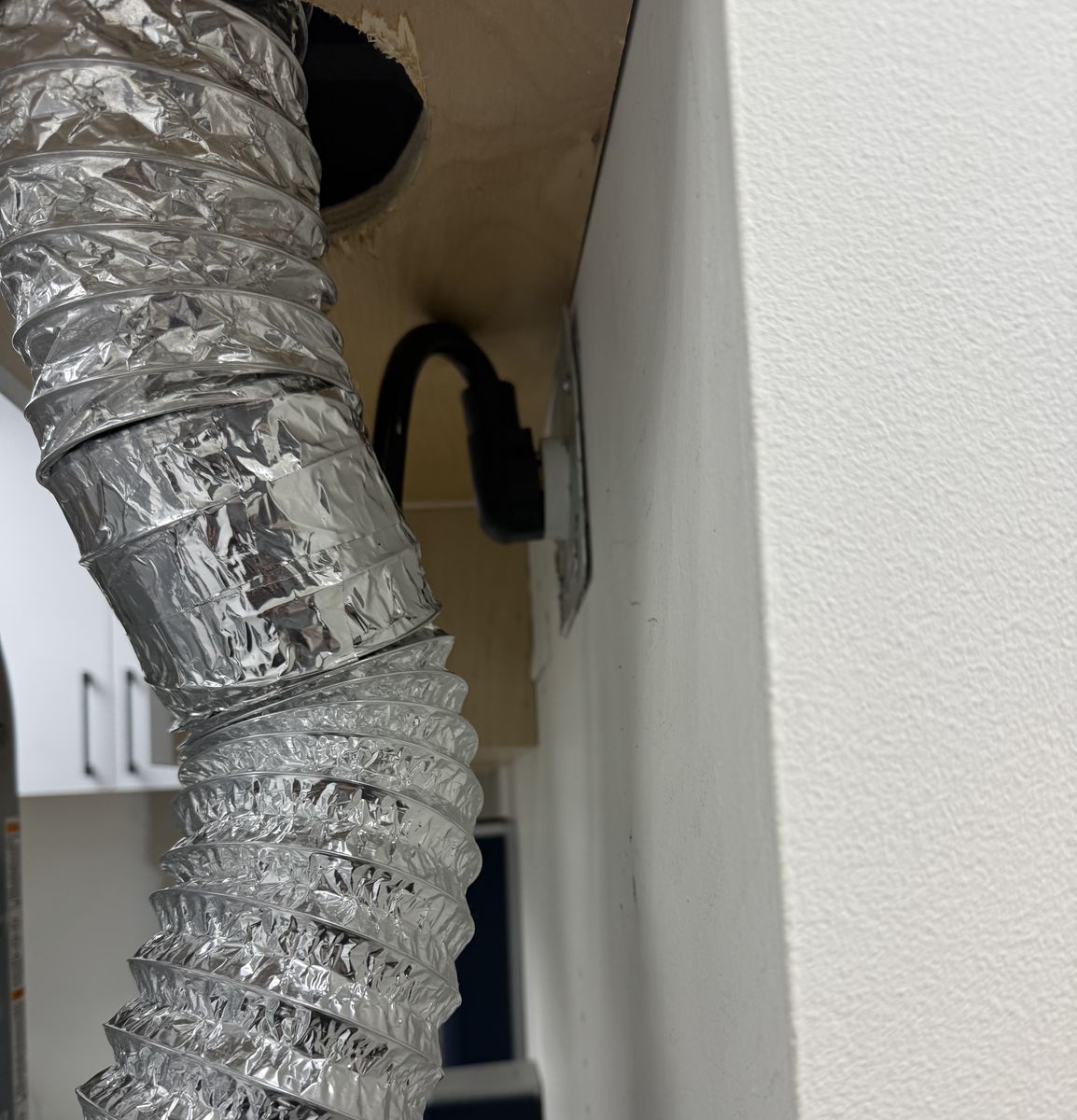
Photo from one of our service calls in Delta: foil accordion duct running from an Electrolux dryer up into the ceiling. We replaced parts in the dryer on that job and flagged to the customer that the venting had a lint build-up problem. - Clear the outside hood. Pull lint from the flap and, as GE advises, check "that there is not wildlife such as birds, mice or insects nesting inside the duct or hood." Don't fit a screen over it; Electrolux warns against that. Keep snow and plants clear.
- Reconnect and test. Refit the duct, push the dryer back without crushing it, plug it in and turn the gas back on. Run the dryer and go outside. The CPSC test is to "make sure exhaust air is escaping." On some Samsung dryers, a C90 code means "Over 90% of the vent is clogged."
Condo and strata dryer vents: long or shared runs
In apartments and condos the vent often runs through the ceiling to a roof cap, or into a shared duct with a booster fan. You can clean the hose behind your dryer, but you can't brush a duct that runs up to the roof. LG's advice for vents inside the walls is to "Contact a professional vent cleaning specialist to inspect the home ventilation."
On our Vancouver-area calls, a pattern repeats. When a condo dryer "takes forever to dry," it is often heating normally and the building's booster fan isn't running. That fan belongs to the building, so the strata or property manager has to fix it. On one Electrolux, the dryer ran cleanly with the rear duct off and threw an F1 fault with it on; the outside vent was on the roof. On other jobs we've found a flexible hose bent 180 degrees twice, which overheated the dryer until it shut off, and a run we cut about 15 feet shorter into a straight line.
Length matters. Whirlpool says "Many dryers perform best with total equivalent vent lengths under 35 feet", and Samsung says "Every 90 degree turn reduces the maximum length by 6 feet." Your installation manual gives the exact limit for your model.
When a blocked vent turns into a dryer repair
A dryer that can't push its exhaust out gets hot inside, and its safety parts cut the heat. Samsung's HC and hE codes mean "the dryer is getting too hot". LG's d80, d90 and d95 codes mean the airflow "is restricted somewhere between the dryer and the outside exhaust exit". Leave it long enough and the thermal fuse or high-limit thermostat opens. Whirlpool's service sheet tells technicians to "replace the failed thermal cut-off and high limit thermostat" and check for a "blocked or improper exhaust system." The dryer then tumbles cold; see our guide to a dryer not heating. On one LG dryer, the fuse kept blowing until the strata dealt with the building vent. GE warns that collapsed plastic vent pipe causes lint build-up inside the dryer that "could cause the heaters to fail prematurely."
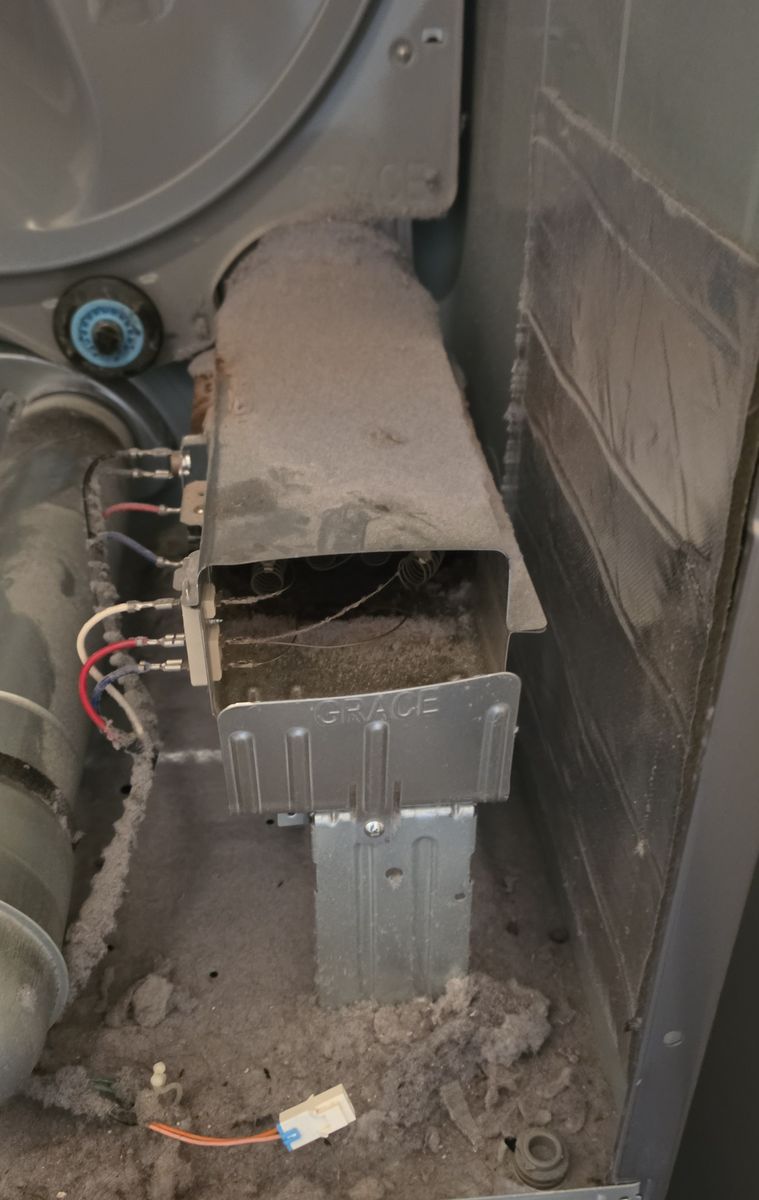
The CPSC also advises that you "Have a qualified service person clean the interior of the dryer chassis periodically", since lint gets past the screen. On our repair visits we often clear lint out of the cabinet and blower. In Vancouver, our diagnostic is $100 flat (before GST) and comes off the labour if you go ahead, and most repairs come to $225 to $300 in labour with the diagnostic included. Parts are quoted before they're ordered. A thermal fuse part is $15 to $30. See our repair price list for the rest. If the vent is clean and clothes are still damp, read our guide to a dryer not drying clothes. For marks or smells inside the drum, see cleaning a dryer drum.
Dryer vent cleaning questions
How long can a dryer vent hose be? It depends on the dryer. Whirlpool gives under 35 equivalent feet as a guide, and Samsung takes 6 feet off the limit for every 90-degree turn. Keep the hose behind the dryer as short as it can be, and check the installation manual.
How do you clean vent covers without removing them? With the dryer off, pull lint out of the flaps by hand, then brush and vacuum the opening. Then run the dryer and check that the flap opens. LG says to "Verify flappers are opening all the way."
How do you disconnect a dryer vent? Unplug the dryer, shut the gas off on a gas model, slide it out and loosen the clamp holding the hose to the dryer outlet or the wall pipe.
Can I use a leaf blower to clean my dryer vent? None of the manufacturer or safety guides we checked mention one; they call for a brush and a vacuum. We'd stick with the brush. Blowing air through won't show you a crushed section or a loose joint, and it won't clean lint stuck to the duct walls the way a brush does.
What is the easiest way to clean a dryer vent? Once a year, disconnect the hose, vacuum it and the dryer outlet, and clear the outside flap. A brush kit handles the longer wall run.
Can I clean out my dryer vent myself? Yes, for the hose and a short run to an outside wall. Samsung recommends a professional vent cleaning service but gives the do-it-yourself steps above. For a roof vent or a shared building duct, hire a duct cleaner or ask your strata.
What happens if you never clean your dryer vent? Drying takes longer. GE says "A partially clogged exhaust vent can lengthen the drying time." The CPSC says lint "can block the flow of air, cause excessive heat build-up, and result in a fire in some dryers." Health Canada warns that lint in the screen and exhaust piping "can ignite in high temperatures and cause fires."
If your dryer still won't heat or keeps shutting off after a vent cleaning, call 604-265-3852 or book a dryer repair. We're open 8AM to 8PM, seven days a week. An annual appliance maintenance plan is $150 a year and covers the dryer along with your other appliances. More about our technicians, or contact us about your dryer. We cover Vancouver and the Lower Mainland.