
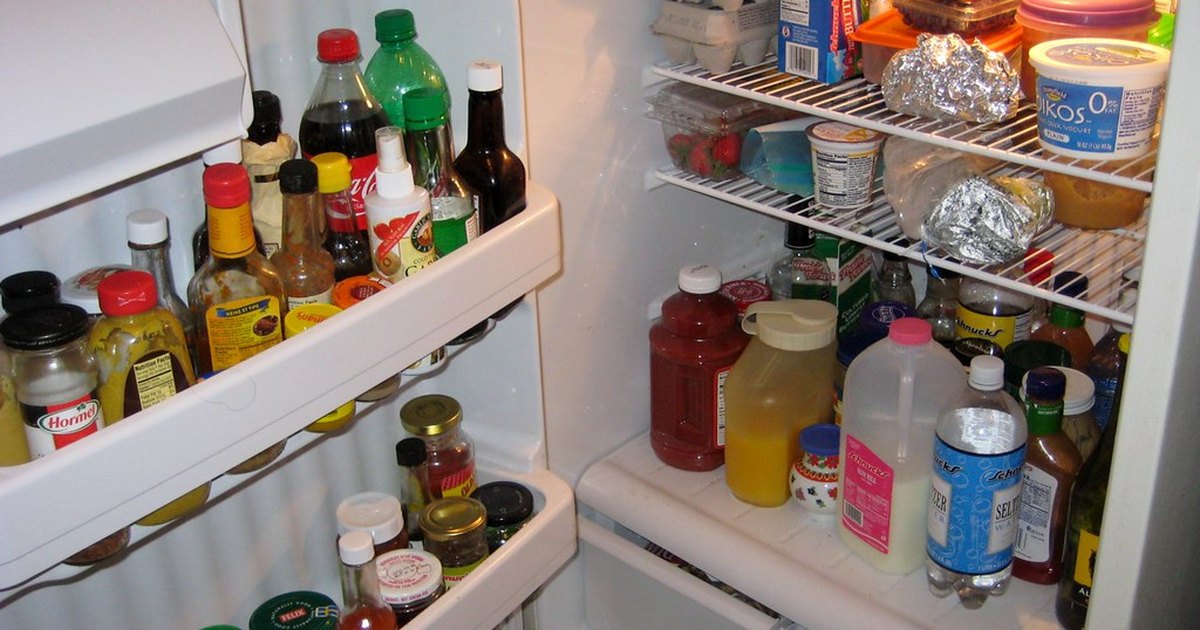
If your fridge isn't cooling but the freezer is fine, that is better news than it looks. In most household refrigerators there is only one cooling coil, it lives on the frozen side, and a blower moves it from there into the refrigerator compartment. GE puts it in one line: "The freezer supplies cold air to both compartments." So on those machines a top half that is still frozen almost always means your compressor and refrigerant are doing their job. What has failed is the delivery, not the making of it.
That distinction matters because it separates the cheap faults from the expensive one. A blocked vent, a tired gasket, dirty condenser coils, a frosted-over coil or a stalled blower produce the symptom, and the first three cost nothing to eliminate. A sealed circuit job, the one homeowners dread, would usually have hit both compartments at once.
Your food, though, is on a clock. Deal with that first, then work through the checks below.
Key Takeaways
- A frozen top compartment with a tepid fridge makes the most expensive failure unlikely: the chill is being made and not delivered. See the twin evaporator exception below.
- Move perishables up into the freezer now. Health Canada says part-frozen items can be safely re-frozen, so a working one is a rescue, not a write-off.
- Health Canada's discard rule is two hours on the counter. Island Health, a BC health authority, goes further and treats the contents as compromised if the fridge rose above 4°C.
- An error code often means frost rather than a dead part. LG's own fix is melting it, not buying a blade.
- Wait 24 hours after changing a setting before you judge it. Samsung says it can take up to 28 hours.
- In the US owner support libraries, checked September 2026, only Samsung and LG publish fridge airflow and defrost codes.
First, save your food
Your freezer still works, which makes the next bit easy. Move everything perishable up from the shelves into it: dairy, meat, leftovers, anything cooked. You are not committing to freezing any of it forever, only parking it somewhere safe while you diagnose, or while you wait on a technician.
That works because of how Health Canada treats part-frozen stock. Its emergency guidance says "Food that still contains ice crystals or feels refrigerator-cold can be re-frozen. It will still be safe to eat if cooked to safe internal temperatures." Anything parked upstairs and pulled back later has not been through worse.
The clock you are racing is short. Health Canada's rule is blunt: "Throw away all food that has been at room temperature for 2 or more hours." Those two hours are cumulative, counted across the whole time it has been sitting above 4°C, not reset each time you open up.
Island Health, the health authority for Vancouver Island, is stricter still. Its power outage sheet, written for wildfire recovery but built on the same logic, tells residents to treat the contents as compromised if the refrigerator rose above 4°C at any point, and heads the page with "WHEN IN DOUBT, THROW IT OUT". That is a conservative standard written for a situation where nobody knows how bad it got. It is the right standard for an appliance that has been quietly failing since sometime yesterday.
The target you are working back toward is Health Canada's 4°C ceiling. It asks you to "Set your refrigerator at 4°C (40°F) or lower" and warns that "The temperature danger zone for food is between 4°C (40°F) to 60°C (140°F)". Above 4°C you are in it.
One detail worth holding onto for later: Island Health also advises waiting until the cabinet has returned to 4°C before restocking it. When the work is done, cool the empty cabinet first and load it after.
Why your fridge is not cooling but the freezer is fine
How cold air is supposed to get in
The chill has to travel, and knowing the path makes the rest of the guide obvious, because each stage fails in its own way.
Whirlpool describes the same arrangement in its own words: "In most Whirlpool models, a fan pushes air through supply vents into the fresh food section, while return vents route air back to the evaporator." It is a loop, not a one-way trip, which is why blocking the returns hurts as much as blocking the supply.
A flap sits at the junction of the two compartments. GE calls the part a damper and says "Cold air is circulated from the freezer to the fresh food compartment via a damper." Whirlpool calls the same part an airflow control. When you turn the dial on most models you aren't changing the coil at all, you are changing how far that flap opens.
One important exception. Some refrigerators have two evaporators, one per compartment. Samsung sells it as Twin Cooling, and LG's fault codes include a separate refrigerator compartment fan, which points to a machine with its own upper coil. On a twin machine, a tepid fridge with a solid frozen section can genuinely mean the upper evaporator or its heater has failed. The checks below still apply; the part, if it comes to one, is a different one.
Before opening anything, match your symptom against the table.
| What you see | Most likely cause | Start with |
|---|---|---|
| Fridge above 4°C, frozen section fine, blower audible | A blocked vent, or a stuck damper | Vent check, then airflow |
| No noise at all from the top compartment | Blower stalled, or seized | Frost, then airflow |
| Frost visible on the back wall upstairs | Defrost fault | Frost |
| Items at the back freezing, items at the front tepid | Arriving but not spreading, or a flap stuck open | Vent check, then airflow |
| Went tepid after the cabinet sat open | Icing around the blades | Frost, then airflow |
| Error code on the display | Depends on the code | Error codes |
| Both compartments above 4°C | Not this article. Sealed circuit or power | Call a technician |
In order, the six checks below are:
- Measure what it is actually doing, then wait 24 hours.
- Clear the vent openings, then the condenser coils.
- Test the gasket.
- Look for frost on the back wall.
- Listen for the evaporator fan, then feel for airflow.
- Read the error code.
Step 1: Measure it, and then wait
The number on the control panel is a setting, not a measurement. Put a cheap thermometer on a middle shelf and give it a few hours before you trust anything it says.
Set the refrigerator to the proper temperature
Aim for the low end. Health Canada's ceiling is 4°C, and BC Hydro advises that you "Make sure the temperature inside your fridge is between 2°C and 3°C". Running there sits below Health Canada's ceiling, so it satisfies both, and gives you a buffer before you touch the danger zone rather than sitting right on the line.
BC Hydro's figures are energy efficiency advice rather than safety limits, and on the frozen side that distinction matters. It also asks owners to make sure "the temperature in your freezer is set between -15° and -18°C", and the upper end of that range sits above Health Canada's floor of "-18°C (0°F) or lower". Dial it to -18°C and you satisfy both.
Why you need to wait a full day
Then leave it alone. Four manufacturers say the same thing, and it is the easiest instruction to ignore. GE: "Wait 24 hours for the temperature to stabilize after initial start-up or after making an adjustment." Whirlpool: "If you need to adjust the temperature, wait at least 24 hours between adjustments, then recheck it." Frigidaire says "The unit will need 24 hours for the temperature to stabilize". Samsung goes furthest, warning that "It can take up to 4 hours for the control panel to display the temperature you set and up to 28 hours for the refrigerator to achieve that temperature (if the doors are not opened)."
Turning the dial colder and checking an hour later tells you nothing. It is also how a working refrigerator is written off as broken.
Step 2: Unpack the vents
Here is the free one, and on a machine that got gradually worse after a big grocery run, begin here.
Clear the vent openings inside
Look for the openings on the back wall of the refrigerator compartment and clear a gap around them. Samsung gives a figure worth remembering: "Keep food 2 inches clear of the interior vents."
Then look for the returns, usually lower down, and clear those too. Whirlpool connects a blocked return directly to your symptom: "If the return air vents are blocked by bulky items, the cycle is broken, which could lead to a warm refrigerator compartment." The same page notes that crowding items "directly against the back and side walls" obstructs the vents "leading to 'warm spots'", and advises leaving "small gaps between containers" so air can move.
There is a balance here that trips people up. A reasonably full cabinet rides out openings better than an empty one, because the contents act as thermal mass. One packed flush against its own outlets cannot cool properly. Full is fine. Sealed off is not.
Dirty condenser coils outside
The second free one is at the back, or underneath. Condenser coils shed the heat the compressor draws from the cabinet, and when they are furred with dust and pet hair they cannot do it. The machine loses the capacity it needs to cool the box down, and because the frozen side is fed first on a single-evaporator layout, the shelves are what suffer.
On most machines the coils sit behind a toe-grille at floor level or behind a panel at the back. Unplug the appliance, pull the grille off, and run a brush and a vacuum along the fins to get the mat of dust off. Dirty condenser coils are one of the few faults on this list an owner can fix without tools, and it takes about ten minutes.
Do it even if they look fine at a glance. A thin grey film reads as clean and still cuts airflow badly. If they were dirty and the shelves are back down to 4°C a day later, that was your problem.
Step 3: Test the door seal
Two tests for worn seals
A gasket that has stopped sealing lets a slow leak of room heat into the refrigerator compartment. The frozen side, sealed separately, carries on unaffected. Frigidaire is direct about the consequence: "A non-sealing door will cause an unstable temperature."
Two tests, both free. Frigidaire's: "Check the seal with a dollar bill by opening your refrigerator door and then closing it on the bill. Give it a little tug to see how easily it comes out." You want resistance. A bill that slides free without friction marks a dead spot, so test around the whole perimeter rather than trusting one point.
BC Hydro's version uses paper and adds a second method: "Place a piece of paper between the door and the refrigerator as you close it. If you can move the paper freely in the door, the fridge is not sealed tightly." Then, using BC Hydro's second gasket test in a dark kitchen, "place a flashlight inside the fridge or freezer and turn it on, then close the door. If you can see light around the door gasket, it's not sealing properly."
Before replacing anything, wash the gasket. Samsung notes simply that "The door seals keep warm air out." Sticky residue in the folds holds the rubber open, and hot soapy water revives seals that look finished. If the rubber is torn, hardened or permanently deformed, our guide to a loose fridge door seal covers replacement.
Step 4: Look for frost
Frost on the back wall is a sign, not the cause
Empty the top compartment and look at its back wall. On many models there is a panel you can see behind or around; on others you will need to remove a few screws. You are looking for frost where there should be bare fins and clear space.
A layer of frost over the evaporator does two things at once. It insulates the coil so it cannot absorb heat properly, and it obstructs the blower trying to push anything past it. Refrigeration engineers treat it as a standard trap. Writing in ACHR News, John Tomczyk notes that "Frost on an evaporator coil will prevent the correct amount of airflow across the coil", and that technicians often mistake a frosted coil for a refrigerant overcharge. His subject is commercial refrigeration, but the physics is the same in your kitchen.
Samsung is more direct about what to do: "If the vents (the openings) on the back wall of the refrigerator are covered in ice or frost, it will need to be cleared away."
When the defrost system isn't working
Every frost-free refrigerator has a defrost system, normally a heater and a sensor, that melts the buildup on a schedule. Frost you can see means it isn't keeping up. You can confirm the diagnosis and buy yourself a few days by thawing it manually. LG's instruction for that error is the clearest published version: "Unplug the power cord of the product, open the freezer/refrigerator compartment door wide and wait for one day during summer and for three days during winter to melt the ice (frost) around the fan motor."
Put towels down, because it has to go somewhere. If it runs normally afterwards and then fails again weeks later, you have proved the fault: the cooling is fine and that circuit is not. That is a technician's job, and knowing it in advance makes for a much shorter visit.
A note on timing before you panic mid-inspection. A refrigerator in its defrost cycle looks broken. GE notes that "the compressor and fans do not run during the defrost cycle", and that the cycle can last "as long as 30 to 45 minutes and can occur once or twice a day". Silence for half an hour is normal.
Step 5: Listen for the fan, then feel for airflow
Is the evaporator fan motor working?
In a quiet kitchen you can usually hear the blower running behind the back wall upstairs. Open up and it stops, because a switch cuts power so it is not pulling room heat across the coil. That is the switch you are about to use.
Here is where our technicians begin, once the no-tools checks are behind you, and it is a field method rather than anything a manufacturer publishes. Find the small plunger in the freezer's frame and hold it in while the cabinet is open. Not every machine has one, since plenty of newer French-style models use a magnetic reed switch with nothing to press. Where there is a plunger, holding it in tells the machine it is shut, and the blades should spin up within a few seconds. Keep your fingers clear of the grille once it does.
On a magnetic switch, a household magnet held against the frame, where the plunger would sit on an older machine, will sometimes stand in; failing that, shut everything, wait a minute and put your ear to the liner from outside the cabinet, where it is audible in a quiet room.
One that stays silent, chirps, squeals or grinds is the fault. A blower that runs properly while the shelves sit at, say, 12°C sends you back to the flap.
How the damper control should work
If it runs, check whether anything is arriving. Hold the back of your hand to the supply outlets with the switch held in, or open up and feel immediately, before it has wound down. Moving parts and nothing arriving points at the flap described earlier. One stuck shut starves the shelves while the top stays frozen solid; one stuck open overcools them and freezes whatever sits nearest the vent. Neither is a DIY job on most machines, because the assembly sits behind the rear liner, but knowing which way it has failed saves a technician the first half hour.
Step 6: Read the code
In the US owner support libraries, checked September 2026, only Samsung and LG publish fridge airflow codes. Whirlpool, GE and Frigidaire, checked the same day, document error codes for other appliance categories but not for refrigerator cooling faults, so an absent code means nothing on those machines.
| Brand | Code | What the manufacturer says it means |
|---|---|---|
| Samsung | 22E, 22C | "Fridge Fan Error". Samsung adds that it "can potentially be caused by running the refrigerator with the door left open too long." |
| Samsung | 21E | "Freezer Fan Error", sensed from a lack of rotational feedback. |
| Samsung | 5E | "Fridge Defrost Sensor Error". |
| LG | E rF | "This error occurs when the refrigerator compartment fan motor does not operate normally." On a twin machine this points at the upper evaporator rather than the main coil. |
| LG | E FF | "This error occurs when the freezer fan motor does not operate normally." |
Samsung's 22E is worth reading twice, because the manufacturer names a cause that is easy to miss: a cabinet left open long enough ices the blades, and that throws a fault. If yours stopped cooling after a party, a grocery unload or a toddler, that is your answer.
Those codes cover the fridge side only. If you have a Samsung and both compartments have stopped cooling, that is a different fault path, and our guide to a Samsung fridge not cooling covers the brand-specific sequence.
Before acting on any code, power cycle the machine. Samsung's instruction is to unplug the refrigerator or turn off power at the circuit breaker for 60 seconds before restoring it. A code that clears and stays away was a glitch. A code that returns is a fault.
Two myths that cost people money
A fan error code does not mean you need a new one. This is the expensive one. Parts retailers answer "E FF" with a replacement listing, and it is easy enough to order. But LG, which wrote the code, names frost as a cause rather than a dead part, saying the error can occur "when the fan motor is locked due to ice (frost) around the fan motor". Its prescribed remedy is the multi-day manual thaw quoted above, not a replacement part. A blade jammed by frost tests as a fault and is in perfect health. Thaw it first. If the fault returns, the real problem is the heater or its sensor, and a new blade assembly would not have fixed that either.
Demo mode isn't why your fridge is above 4°C. Showroom or Cooling Off mode is a common suspect in forum threads. Samsung's description excludes it here: the mode "will disable the cooling systems of the refrigerator, and also disable ice making and the water dispenser". It stops everything, the top compartment included. If yours is still freezing, you are not in demo mode. Samsung's own note on the setting is that "Service is not required."
Why it is probably not refrigerant
What a failing compressor looks like instead
"It needs a recharge" is a common first guess, and for this symptom the mechanism argues against it.
Go back to GE's sentence: the freezer supplies both compartments. A refrigerant leak, a blocked capillary or a failing compressor starves the coil that serves both sides. Both compartments lose ground together, usually with the frozen goods going soft first. A rock-solid top half is strong evidence that the sealed system is still doing its job.
Whirlpool's own support library is organised around exactly that fork. It maintains separate troubleshooting pages for both sections failing, the refrigerator section failing and the frozen section failing. Which compartment went first is the question the manufacturer asks too.
It is also not a job with a consumer version. Domestic refrigerators are sealed at the factory with no service ports, and opening one requires recovery equipment, brazing and refrigerant-handling certification under BC's Ozone Depleting Substances and Other Halocarbons Regulation. If a technician does eventually find a sealed circuit fault, our page on refrigerator sealed system repair explains what is involved, and the warning signs are covered in our guide to a faulty refrigerator compressor.
What the repair costs
If the airways, the coils, the gasket and the frost have been checked, the remaining candidates are the blower, the heater, the flap or a sensor. None is in sealed circuit territory.
In Canadian dollars: a $100 diagnostic that comes off the labour if you go ahead, $60 to $120 for an evaporator fan motor, $80 to $200 for a gasket, and $225 to $300 labour for most jobs. Our full appliance repair cost breakdown for Vancouver sets the same figures against other machines.
Weigh that against the machine. Consumer Reports, surveying its American membership, found buyers "expect the refrigerators they buy to last 10 years, on average". A $300 airflow job on a six-year-old machine is straightforward arithmetic against the $1,200 to $2,500 our cost page puts on a replacement. On a fifteen-year-old unit with a tired gasket and a second fault brewing, it is a closer call, and a technician should be able to tell you which you have before you commit. If it does go to the curb, the Major Appliance Recycling Roundtable, or MARR, takes fridges at its collection sites across BC at no charge.
When to call a technician
Call once the openings are clear, the coils are clean, the gasket passes, there is no frost, and the shelves are still above 4°C after a full 24 hours. What is left needs a meter.
Other possible causes
Three parts are left, and none of them announces itself. All three can starve the fresh side while the frozen side carries on looking perfectly healthy, which is why they get misdiagnosed.
A faulty thermistor or thermostat
A thermistor is the small sensor that tells the control board how warm each compartment actually is. When the fridge thermistor drifts or fails open, the board is told the shelves have already reached 4°C, so it closes the flap and idles the blower while nothing downstairs gets a chance to cool. The frozen section has its own sensor and carries on normally, which is exactly why one faulty thermistor produces the split.
On older machines with a mechanical cold control instead of a thermistor, the same job is done by a thermostat with a capillary bulb clipped into the airflow. A thermostat that has lost its charge sticks in the off position and starves the shelves the same way. Either part is cheap; the labour to get at it usually is not, because the sensor sits behind the rear liner or inside the housing.
You cannot test a thermistor by feel. A technician reads its resistance against the manufacturer's own chart, and one that reads open, or far off the curve, is your answer. Ask for that check specifically if there is no frost, the airways are clear, the gasket is good and it runs.
A control board problem
The board is the last item on the list and the one to be most sceptical about. Boards do fail, and a board that has lost the output driving the blower or the flap produces the symptom perfectly. But it is also the default answer when a diagnosis has run dry, and it is the priciest part here that is not sealed-circuit work.
Ask what eliminated the cheaper parts first. A board diagnosis that follows a resistance check on the sensor, a continuity check on the windings and a voltage reading at the flap is sound. One that arrives without those is a guess you are paying for.
Three reasons to call straight away
If frost returns within a couple of weeks of a manual thaw, the heater or its sensor has failed and repeating the melt only buys time. If a code comes back after a power cycle, it is a real fault. And if the frozen goods start softening too, the problem has moved into the sealed system and the clock on your food restarts.
One last thing once it is fixed. Cool the empty cabinet to 4°C before you restock it, as Island Health advises, and give it the full day the manufacturers ask for. A cabinet loaded with warm groceries takes far longer to recover, and Whirlpool notes that "It can take several hours for the refrigerator temperature to stabilize after adding a large number of warm items."
Then keep the gasket clean, the airways clear and the condenser coils vacuumed, and check the back wall for frost every few months. Those habits help you head off the faults you can prevent for free, and catch the rest early. An annual service picks up what is left before it strands you.
We handle refrigerator repair across Metro Vancouver. Call 604-265-3852 and we will tell you whether it is airflow or something worse.
Photo: Refrigerator Interior by bradipo, CC BY 2.0. Cropped.