
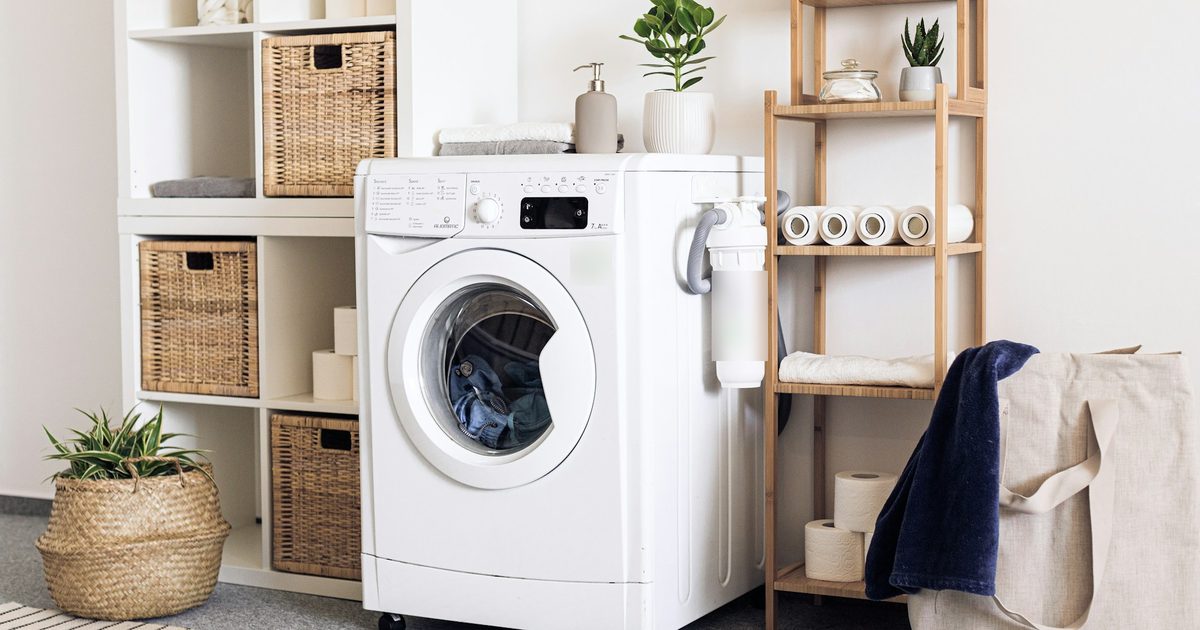
How to clean a washing machine comes down to a few hand jobs and one cycle: wipe the door gasket, wash the detergent drawer, empty the drain pump filter, wipe the lid and rim on a top-loader, then run the tub-clean cycle on an empty drum with the cleaner your manual names. Do it about once a month. GE Appliances says "we recommend cleaning the washer tub once per month to keep the wash basket fresh and clean." If the smell is back within days, or the washer leaves water behind, our washing machine repair technicians can find what's holding it.
Key Takeaways
- Clean the gasket, drawer and pump filter by hand first. The tub-clean cycle doesn't reach them.
- Run the tub-clean cycle once a month with nothing in the drum.
- Use the cleaner your manufacturer names. LG says to avoid chlorine-based or acidic cleaners in its front-load Tub Clean, while GE allows bleach, vinegar or a washer cleaner in its top-loaders.
- Never mix bleach and vinegar.
- Use less HE detergent. Metro Vancouver's water is very soft, and GE says soft-water homes should use less than the label suggests.
- Leave the door or lid open between loads so the machine dries.
What to clean inside a washing machine, and how often
Every washing machine has the same trouble spots: anywhere water, lint or laundry detergent can sit and stay damp. Front-loaders add rubber door seals and, on most models, a pump filter you can reach.
| Part | How often | What to use |
|---|---|---|
| Door gasket (front-load) | At least monthly (LG) | Mild detergent or diluted bleach (GE), or oxygen bleach in warm water (LG) |
| Detergent drawer and its housing | Once or twice a month (GE) | Warm water and a soft brush |
| Drain pump filter (most front-loaders) | Monthly or about every 40 washes (Samsung) | Rinse under the tap |
| Drum and outer tub | Monthly, or every 30 uses on LG | Tub-clean cycle plus the cleaner your manual names |
| Lid, tub rim and agitator (top-load) | With each tub clean (our habit) | Damp cloth with a little detergent |
How to clean a washing machine, step by step
Unplug the washer before you open the pump filter or reach deep into the gasket, and keep old towels close. Check the cleaning page of your manual too, because the cycle name and the approved cleaner change from brand to brand.
- Clean the door gasket. Pull back the rubber fold and wipe all the way round, paying most attention to the bottom, where water sits. Samsung explains that "The rubber gasket around the door can trap moisture, lint and detergent buildup." GE says "You may wipe the gasket surface with mild detergent, diluted bleach or diluted vinegar." LG's mix is "Dilute 5g of oxygen bleach in 5L of warm water." Dry it with a towel when you're done.
- Wash the detergent drawer. Pull it out (look for a release tab) and lift out the softener and bleach inserts. Rinse them in warm water and scrub the residue with a soft brush. Wipe the housing it slides into, since the same film grows there. Samsung's advice: "Cleaning the detergent drawer about once a month helps prevent buildup and keeps detergent flowing properly."
- Empty the drain pump filter. On most front-loaders, Samsung says to "Locate the pump filter access panel near the bottom of the washer." Lay a towel and a shallow tray down first. Remove the filter slowly and let the water run out, then clear the lint, hair and coins and rinse it. Samsung warns "If the pump filter is not cleaned regularly, it will cause odors." Many top-loaders have no filter you can reach; check your manual. If yours drains slowly, see our guide to a washing machine not draining.
- Wipe the top-loader lid and rim. Clean under the lid, along the top of the tub rim and around the agitator or impeller, where suds and lint dry on.
- Run the tub-clean cycle on an empty drum. It's called Clean Washer on Whirlpool, Tub Clean on LG, Self Clean or Pure Cycle on Samsung and Basket Clean on GE. Add only what the maker allows:
- Whirlpool: affresh or liquid chlorine bleach. It warns "Do not use thickened, easy-pour, or no-splash bleach".
- GE top-loaders: "pour 1 cup or 250 ml of liquid bleach, vinegar or a washing machine cleaner into the basket."
- LG front-loaders: an oxygen-based cleaner. LG says "Avoid using chlorine-based or acidic washing machine cleaners."
- Samsung, for mould: "Pour liquid chlorine bleach into the detergent compartment and fill it to the max line." Samsung's Self Clean takes about an hour on top-loaders and four hours on front-loaders.
- Let it dry. Wipe the drum, gasket and door glass, then leave the door and drawer open. LG says "Open the door and dispenser drawer after washing to allow the interior to dry."
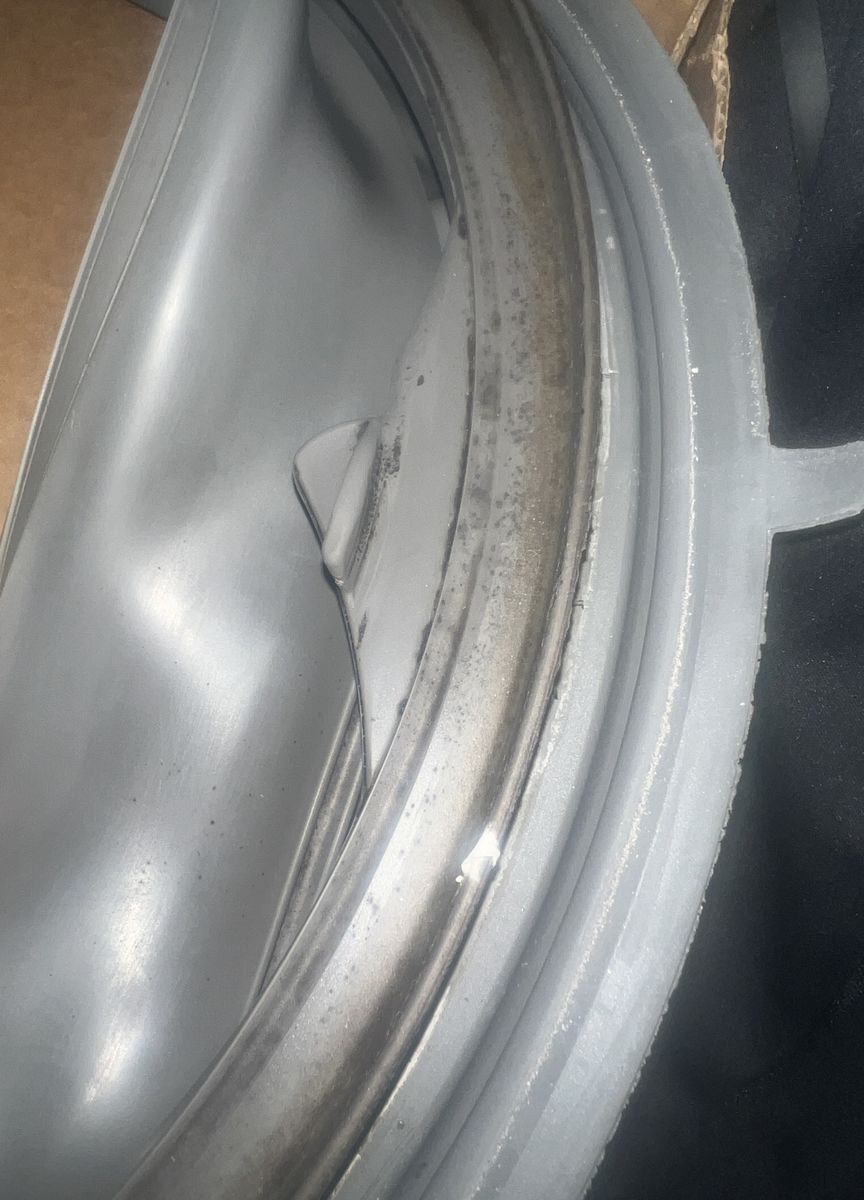
The door gasket below came off a Whirlpool front-loader on one of our service calls. The black spots sit in the fold where water pools. In our experience, spots that won't wipe off have stained the rubber, and a torn gasket, or one that smells again soon after cleaning, needs replacing.
Samsung owners can find cycle-by-cycle detail in our Samsung self clean and sanitize guide.
Vinegar, bleach or baking soda?
Go by your manual, because the makers don't agree. GE lists vinegar and baking soda as stand-ins for bleach in its top-loaders: "Add a 1 cup of bleach (baking soda or vinegar can be substituted)." Bosch takes the other side: "However, we do not recommend using vinegar," because it "may degrade the rubber parts of the machine over time." LG rules out acidic cleaners for its front-load Tub Clean.
Our view: a front-loader's door seal is a big ring of rubber, so we'd leave vinegar out of a front-loader unless the manual approves it. Baking soda shows up only in GE's top-load advice; none of the front-load makers above call for it. Whatever you pick, never use bleach and vinegar together. Health Canada warns that bleach mixed with acids, even vinegar, gives off toxic gas.
Why front-load washers smell, and how to keep yours fresh
A front load washer smell usually comes from residue and water that never dries. Whirlpool notes "Leaving wet clothing inside the wash basket can lead to mildew, which can cause odors both in the garment and in the washer." GE adds that "using too much detergent creates too many soap suds and excess soap gets trapped in the outer tub".
Too much soap is easy to do here. In Metro Vancouver's 2024 water quality report, treated water from the Capilano and Seymour systems averaged about 22 mg/L of hardness, and Coquitlam water 2.5 mg/L. Health Canada's hardness document cites a scale that calls anything under 50 mg/L "extremely soft". GE's advice for soft water is "you should use less detergent than detergent manufacturers recommend". To check for build-up, GE suggests washing a load with no detergent. If you see suds near the end of the wash, there's old detergent in the clothes.
- Use HE detergent only. Samsung says "Failure to use HE detergent will also cause excessive buildup."
- Keep the door open. Whirlpool: "It is recommended to leave the door open between loads to help avoid the build-up of odor-causing residue." On a top-loader, GE says leaving the lid up helps too.
- Take clothes out as soon as the cycle ends, so they don't sit wet in the drum.
- Wipe the gasket dry after the last load of the day. Wet rubber seals are where the mould in our photo grew.
From our own bookings, as published in our most reliable washer brands guide: "14% of our LG washer bookings this year mention a smell, mould or the door gasket, against 9% for Whirlpool and 7% for Samsung." We read those as cleaning calls, and the habits above apply to every brand.
When a smell means a repair, and what it costs
If you've done every step above and the smell is back within a week, the washing machine is probably holding water somewhere. A slow drain pump, a blocked drain path or a torn door gasket will all do that. Water on the floor after a cycle points to the gasket or a hose; see our guide to a washing machine leaking water.
In Vancouver, our diagnostic is $100 flat, and it comes off the labour if you go ahead. Most washer repairs come to $225 to $300 in labour, with the diagnostic included. A drain pump part is $80 to $150, and a door boot gasket is $100 to $200. Parts are quoted before they're ordered. Our appliance repair cost breakdown lists the rest. Our LG appliance repair page covers the brand with the most smell bookings in our numbers above.
Washing machine cleaning questions
What is the best way to deep clean a washing machine?
Start by hand with the gasket, drawer and pump filter, plus the lid and rim on a top-loader. Then run the tub-clean cycle on an empty drum with your maker's cleaner. For a heavy smell, we'd wipe the drum and gasket afterwards and run the cycle a second time.
Is it a good idea to put vinegar or baking soda in your washing machine?
Only if your manual allows it. GE accepts vinegar or baking soda in a hot water cycle on its top-loaders. Bosch doesn't recommend vinegar because of the rubber parts, and LG rules out acidic cleaners in its front-load Tub Clean. Never mix vinegar with bleach.
How do I get the sewer smell out of my washing machine?
Check the drain hose first. Samsung says "If a sulfur or sewage odor can be smelled, the drain hose is inserted too far down the drain or standpipe." Its fix is to "Make sure the drain hose is not inserted further than 6 inches, and is secured so it will not slip down." GE adds that a hose pushed too far in can siphon dirty water back into the tub.
How do I get rid of the horrible smell in my washing machine?
Clean the gasket, drawer and pump filter, run a tub-clean with bleach or the cleaner your manual names, and then keep the door open. Cut your detergent dose too. If it's still bad after two rounds, have the drain and gasket checked.
An annual appliance maintenance plan is $150 a year and covers your washer along with the rest of your appliances. Flat-rate repairs between visits are $75 plus parts. Call 604-265-3852 or book a visit online, 8AM to 8PM, seven days a week.
More about our technicians, or contact us about your washer. We cover Metro Vancouver and the Fraser Valley.