
A washing machine that won't drain is usually blocked rather than broken. Water leaving your drum passes through five stages on its way to the house drain, and a fault at any one of them strands a full load behind a locked door. Four of those five you can check yourself with a towel, a shallow pan and about an hour.
Related Services: Washing Machine Repair
The awkward one is the sump hose behind the drum, which means tipping the machine onto its back. What usually takes a professional sits beyond the drainage path: the motor, the pressure sensor or the control board.
That hour is worth spending. BC Hydro's laundry survey - run by Angus Reid across 800 census-representative BC residents from 23 to 28 September 2025 - found nearly 30 per cent of respondents do four or more loads each week, so a washer sidelined mid-week backs a home up fast.
The steps below start with the checks that require no tools. Work through them in order, because that is the order that most often finds the fault.
Key takeaways
- A blocked pump filter is the most accessible cause, and the only stage most washers let you open without tipping the machine over.
- Standing water plus a humming noise means the motor is running against a blockage. Silence points to power, the lid switch or the control board.
- Your error code narrows the problem fast: OE on LG, 5E or SE on Samsung, F9 E1 on Whirlpool and E18 on Bosch each mean the machine could not empty itself.
- Rule out the standpipe early. Where a washer does not drain into a laundry tray, BC's plumbing code sets a minimum standpipe length of 600 mm measured from the trap weir, and a hose pushed too far down it will siphon.
- Unplug the machine first, expect a spill when you open the filter, and keep towels under the panel.
Where the water actually goes
A washing machine not draining is nearly always failing at one stage of that path, and knowing which stage it is makes the fix obvious.
Start by listening to the machine and matching what you hear against the table below.
| What you see and hear | Most likely cause | Start with |
|---|---|---|
| Standing water, pump hums or buzzes, nothing moves | Pump or filter blocked | Step 3 |
| Standing water, complete silence when it should be draining | Power, door lock or control board | Step 1 to empty it, then get help |
| Empties slowly, or a puddle stays in the door seal | Partial blockage, or blocked seal drain holes | Steps 3 and 4 |
| Fills, then empties itself and never holds water | Siphoning at the standpipe | Step 5 |
| Error code on the display | Depends on the code | The error code table below |
| Washer errors and the utility sink backs up too | Household plumbing, not the washer | Step 5 |
What to do first
Unplug the machine at the wall. You are about to open a component that sits next to the motor, and every step below assumes the power is off.
Then accept that it is going to spill. A front-loader holds several litres below the door line, and most of it arrives the moment the cap turns. Lay towels down and have a shallow baking sheet or roasting pan ready, because a bucket will not fit under the access door on most machines.
Beyond that you want about an hour, a flathead screwdriver or a coin for the cap, and a second pair of hands if you get as far as the sump hose in Step 3. Your owner's manual will show where the cap sits on your model.
If the machine is completely dead rather than full of water, the fault is upstream of everything in this guide. Our guide to fixing a washing machine fuse covers that case.
Step 1: Get the water out
You cannot inspect anything while the drum is full, and you should not tip or move a washer with a wet load sitting in it.
Most front-loaders have a small drain spout beside the filter door, behind the same access panel at the bottom of the machine. Pull the cap off, let it run into your pan, empty the pan, and repeat. It is slow, and it takes several rounds.
If your washing machine has no spout, lower the drain hose from the standpipe into a bucket on the floor. Gravity does the rest, provided the end sits below the level in the drum.
Top-loaders without an access door are the exception. On those, bail the drum out with a jug.
Step 2: Inspect the drain hose
With the water gone, look behind the washing machine. LG's support page for a washer that will not drain says to "check behind the washer to ensure that the drain hose is not kinked or clogged". A machine pushed back against the wall after a move will crush its own hose, which is why that check heads their list.
Pull the washer forward, straighten the hose, and look for a sharp bend or a flat spot. Then disconnect it at the standpipe end and check inside for a clog. Detergent residue and lint build a soft plug over time, usually at the bend.
Step 3: Clean the drain pump filter
On most washing machines this is the only part of the drainage path you can reach from outside, which is why it is worth getting to early.
The pump filter, also called the coin trap, is a cartridge that catches debris on its way to the impeller. It sits behind the access panel at the bottom front. Bosch says outright that the E18 error code "usually means the washer can't drain because the drain pump filter is blocked".
Turn the cap counterclockwise and remove it. Expect the last of the spill first, then the contents: small items such as coins, hair clips and buttons, the missing sock, and a grey felt of lint bound together with detergent residue. Rinse the cartridge under a tap, clear any debris from the housing with a finger, check that the impeller behind it turns freely, and screw it back in firmly enough to seal.
A cartridge that will not turn, or an impeller that is seized or has lost vanes, is where the DIY route ends and washing machine repair starts. Either issue means the same job: the old unit comes off and a new one goes on.
If the filter is clean, the sump hose is next
Stage 2 on the diagram is the sump hose, the short wide one that carries water from the bottom of the drum to the pump. It is the single part of the path you cannot reach without tipping the machine over.
Something that got past the drum, a sock or a bra underwire, can lodge in it. The symptom is indistinguishable from a blocked filter: standing water, and a motor that runs without shifting anything. Reaching it means tipping the machine onto its back and releasing a spring clamp, which is where most DIY attempts reasonably stop.
Step 4: Clear the door seal drain holes
This one is easy to miss, and it only affects front-loaders.
Whirlpool's guidance is explicit: "There are small drain holes inside the door seal. If they get clogged, the washer/dryer may not drain well."
Peel the rubber boot back at the bottom of the opening and look along the lowest point. You will find a few small holes, and on an older machine they will be packed with lint and slime. Clear them with a cotton swab and wipe the channel clean. If your symptom was a puddle left sitting in the seal after every cycle rather than a full drum, this is usually the whole issue.
Step 5: Rule out the standpipe and the plumbing
Two separate problems live here, and both get blamed on the washer when it won't drain.
The first is siphoning. If the hose goes too far down the standpipe, the machine empties itself continuously and can never hold water. Whirlpool gives a specific limit: "Ensure the drain hose does not extend more than 4.5" (113 mm) into the drainpipe or laundry tub."
The second is your home's plumbing. GE's troubleshooting page puts the washer and the building plumbing side by side, listing trouble with the household standpipe alongside trouble with the drain hose as reasons a washer will not drain. If your utility sink or a nearby floor drain also backs up when the washer empties, the washer is fine and a plumber is the one to phone.
Worth knowing if your hookup was ever altered: in British Columbia the standpipe itself is regulated. A standpipe is the vertical pipe your hose hooks into, and it has a trap at the bottom like any other fixture. Where a washer does not drain to a laundry tray, the BC plumbing code requires that pipe to be at least 600 mm long, measured from the trap weir. It also has to terminate above the flood level rim of the washer.
That 600 mm minimum is what stops the trap being siphoned dry. A short standpipe improvised during a basement or closet conversion will cause intermittent drainage faults that no amount of cleaning will fix.
Step 6: Check the suds
Suds lock is a drainage failure caused by foam rather than by any blockage, and it is the one cause on this list that is partly regional.
LG's help library describes the mechanism directly, noting that "excessive suds could have triggered the error code by creating air pockets that the drain pump cannot effectively remove". The motor is pulling foam instead of water, so it moves nothing and the washing machine reports a fault on healthy hardware. The load sits there soaking, because the spin cycle never starts either.
Metro Vancouver's drinking water starts as rainfall and snowmelt in the mountains, held in the Capilano, Seymour and Coquitlam supply areas. Rain-fed supply has little contact with mineral-bearing ground, and the numbers show it. The Greater Vancouver Water District's 2024 quality report gives an average treated hardness of 22.4 mg/L as calcium carbonate in the Capilano system, 22.3 mg/L in Seymour and 2.5 mg/L in Coquitlam.
Soft supply needs less detergent to do the same job, because there is no dissolved mineral load consuming the surfactant before it reaches the laundry. A dose set by habit, or poured to the line on the cap, is often more than a washing machine can rinse away.
If your machine throws an error only on heavy loads, or only with a particular detergent, cut the dose by a third and run a rinse cycle with no detergent at all first. That is a dosing issue, not a hardware one. Residue that has already built up inside the drum is a separate job, and our guide to running a sanitize cycle on a Samsung washer covers it.
What your error code means
These codes were checked against each manufacturer's own support documentation.
| Brand | Code | What the manufacturer says it means |
|---|---|---|
| LG | OE | Water outlet error. The machine could not empty. |
| Samsung | 5E, SE, 5C, SC | "Water is not draining from the washer at the correct speed (or at all)." |
| Whirlpool | F9 E1 | "This error code indicates the washer is unable to drain correctly." |
| Bosch | E18 | A blockage in the pump, or a blockage or kink in the hose. |
One correction worth making, because it circulates widely on DIY forums: nd on a Samsung washer is not a drain code. Samsung's support documentation lists nd separately and describes it as the washer downloading an update, during which the controls stop responding. Samsung says "Updates take about 15 minutes". If you see nd, wait. The codes to act on are 5E, 5C, SE and SC.
What a drain repair costs
If the hose, the filter, the seal and the standpipe are clear and it is still not draining, the pump is the likely culprit, and replacing one is predictable.
In Canadian dollars that is a $100 diagnostic which is credited against the repair, $80 to $150 for the part itself, and $225 to $300 labour depending on the model and how awkward the access is. Our full appliance repair cost breakdown for Vancouver lists the same figures for other faults.
The decision point is the age of the washing machine. Consider a five-year-old front-loader: a replacement on that is straightforward economics. On a fifteen-year-old machine with worn bearings, weigh it against replacement, and a professional should tell you which one you have before you commit.
When to call a professional
Book a visit once you have worked through the six steps and the washing machine is still not draining. At that point the remaining candidates are the pump, the pressure sensor that tells the board how full the drum is, or the board itself, and all three need a meter.
Get help sooner if the filter housing is dry despite a full drum, which means water is never getting that far, or if you can smell burning, or if it trips a breaker. A motor that hums without moving anything is drawing current against a locked rotor, and leaving it to keep trying is how a small issue turns into a much bigger one.
Grinding or rattling alongside the drainage issue is worth reading up on separately, since it points at something loose in the drum rather than the drain path. Our guide to a rattling washing machine walks through those causes.
Once it drains properly again, keep the filter on a schedule. Cleaning it every few months is the cheapest way to prevent a repeat, and it helps the machine spin properly too. An annual tune-up picks up the same things early, and our yearly maintenance plan covers it across every major machine in the home.
Vancouver Appliance Service Pros repairs washing machines across Metro Vancouver and the Fraser Valley. Call 604-265-3852 and we will tell you whether it is worth replacing, or send us a question about your washing machine.
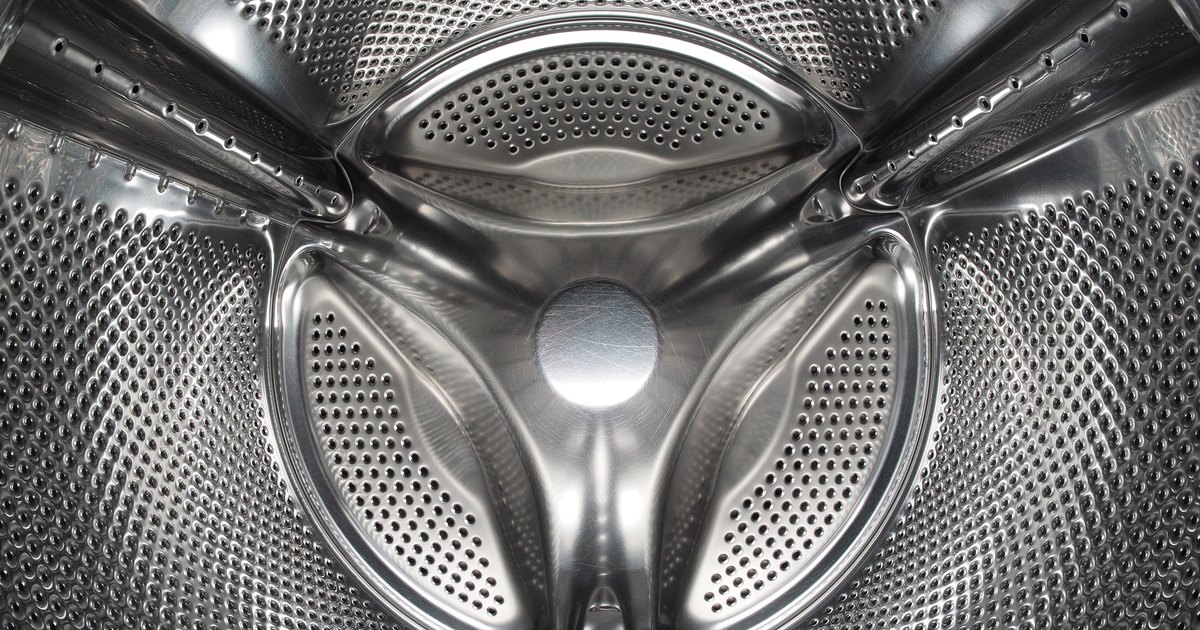
Photo: Drum of a washing machine (Bosch Maxx WFO 2440) by Petar Milošević, CC BY-SA 4.0. Cropped.