
A dishwasher not draining is usually blocked, not broken. Remove the standing water and clean the filter at the bottom of the dishwasher, then check the garbage disposal (in BC, the garburator), the air gap and the drain hose under the sink. On our service calls, those four checks clear more dishwasher drain issues than any part replacement, and you need little more than a screwdriver. If water still sits in the dishwasher after that, the drain pump or its check valve has probably failed, and that is a repair job.
Before you start, turn the dishwasher off at the breaker or unplug it. Put towels down before you open anything.
Key Takeaways
- A clogged filter is the fault we find most often, and the easiest one to fix.
- A little water in the bottom is normal. GE says 1 to 2 cups is expected on some models.
- A new garburator with its knockout plug still in place stops a dishwasher draining completely.
- Never pour Drano or any chemical drain cleaner into the tub. Whirlpool warns against it.
- If the filter, garburator, air gap and hose are all clear, the drain pump or check valve is the likely fault.
Why is there standing water in the bottom of my dishwasher?
Standing water means something between the dishwasher and your sink drain is stopping the flow. Water leaves the dishwasher through a filter, gets pushed along by a drain pump, and travels up the drain hose to the kitchen plumbing. A blockage or a failed part anywhere along that path leaves water behind.
A small amount of water is not a problem. GE's support page says that on models without an Ultra Fine filter, "1 to 2 cups of clean water covering the bottom of the tub is normal." Dirty water sitting above the filter is the real warning sign.
Your error code can confirm it. Bosch says E24 means "the dishwasher is not draining properly due to the drain filter being blocked." LG owners can run a self-test with our guide to LG dishwasher diagnostic mode.
Match what you see against this table before you start.
| What you see | Most likely cause | Start with |
|---|---|---|
| 1 to 2 cups of clean water covering the tub floor | Normal on some GE models | No action |
| Dirty water above the filter, or Bosch E24 | Clogged filter | Step 2 |
| Won't drain since a new garburator went in | Knockout plug still in place | Step 3 |
| Water spilling from the cap beside the faucet | Clogged air gap | Step 4 |
| Sink water backing into the dishwasher | Missing high loop or failed check valve | Step 5, then service |
| Pump hums but no water moves | Drain pump | Call for service |
How to fix a dishwasher that won't drain
Work through these troubleshooting steps in order. They start inside the dishwasher and move out to the sink, and none of them take much time.
Step 1: Force a drain and remove the water
You can often force a dishwasher to drain by cancelling the cycle. On GE models, pressing and holding Start or Start/Reset for 3 seconds cancels the cycle. In our experience most models then run a short drain, but the button and behaviour vary by brand, so check your manual.
If nothing drains, bail the dishwasher by hand with a cup and a sponge. You need the bottom dry to see the filter.
Step 2: Clean the dishwasher filter
A clogged dishwasher filter is the fault we find most often, and Bosch ties its E24 code to it. Food, labels and broken glass collect here, and the dishwasher backs up once it's full.
Whirlpool's instructions are simple: "Remove the lower rack. Twist the upper filter counterclockwise and lift it out. Lift out the lower filter, if present. Rinse filters under warm water." An old toothbrush helps clear the mesh. Then check the sump underneath for debris like bones or noodles.
While the filter is out, Bosch suggests you make sure the drain pump cover under it is not loose. Put the filter back until it locks.
Step 3: Check the garbage disposal
Most dishwashers drain through the garbage disposal, or garburator. A garburator full of food waste leaves the dishwater nowhere to go. GE advises: "You should always turn on your garbage disposer prior to running the dishwasher to clean out any food or debris within the drain system."
If the garburator is new, look for the knockout plug. Whirlpool warns: "If a disposal was recently installed or replaced, make sure the knockout plug in the disposal inlet was removed. A retained plug blocks drainage completely." If the garburator itself is jammed, that's a separate garburator repair.
Step 4: Clear the air gap
The air gap is the small cylindrical cap beside the kitchen faucet, if your sink has one. GE says to "remove the cap on the air gap and clean out any build-up of debris."
A clogged air gap often shows itself. Dirty water spills onto the counter when the dishwasher tries to drain.
Step 5: Check the drain hose and high loop
Look under the sink for the drain hose. Whirlpool says to make sure it is "not kinked, crushed, or sagging" and that "a proper high loop is secured to the underside of the counter."
A hose without a high loop lets dirty sink water flow back into the dishwasher. In our experience this fault can hide for years, then show up as the drain pump weakens with age.
To clear a blockage, loosen the clamp with a screwdriver, disconnect the hose at the sink end and flush it through. Any food debris lodged in the hose should wash free.
What can I pour down my dishwasher to unclog it?
Hot tap water is the safest thing to pour into a clogged dishwasher. Remove the standing water first, then clean the filter, because nothing you pour will get past a blocked filter.
Can vinegar and baking soda unclog a dishwasher drain?
Vinegar and baking soda can freshen a smelly drain, but they won't clear a real blockage. The fizz is mostly the two cancelling each other, and it won't break up a bone or a piece of glass in the sump.
Use them for cleaning, not as a fix. Once the dishwasher drain is flowing again, set a cup of vinegar on the top rack of an empty dishwasher and run a hot cycle.
Can I put Drano in my dishwasher?
No. Whirlpool says: "Do not use drain-opening chemicals inside the dishwasher; they can damage components and create safety hazards."
Drano's own FAQ lists kitchen sinks, bathroom sinks, showers and bathtubs as the places to use it. Dishwashers are not on the list. A caustic cleaner sitting in a dishwasher that won't drain can splash whoever opens the door next, so call a technician instead.
Dishwasher still not draining? When to call for service
Call for service once you have cleaned the filter and cleared the garburator, air gap and drain hose, and the dishwasher still won't drain. At that point the problem is usually the drain pump, which you may hear humming without moving any water.
A faulty check valve is the other common cause. The valve is a one-way flap after the pump, and when it fails the dishwasher stops draining or water flows back in. Our technicians see check valve issues most often on Miele and Bosch models.
In Metro Vancouver, a drain pump part costs $80 to $150 and labour runs $225 to $300. The $100 diagnostic goes toward the repair if you go ahead. Our appliance repair cost breakdown covers other dishwasher repairs, and our dishwasher repair service page lists the brands we fix.
Maintenance tips to prevent clogs
- Scrape food into the bin before loading. Bones, noodles and labels cause most of the clogs we pull out of filters.
- Clean the filter regularly. We suggest once a month for a busy household.
- Run the garburator before every dishwasher cycle.
- Use the new drain hose when you replace a dishwasher. GE says re-using old, worn out drain hoses "may promote kinking or a blockage."
If your washer has the same problem, see our guide to a washing machine not draining. An annual appliance maintenance plan catches both before they become a repair.
Vancouver Appliance Service Pros repairs dishwashers across Metro Vancouver. Call 604-265-3852 and we'll tell you whether the pump is worth replacing.
More about our technicians, or contact us with a question about your dishwasher. We cover Metro Vancouver and the Fraser Valley.
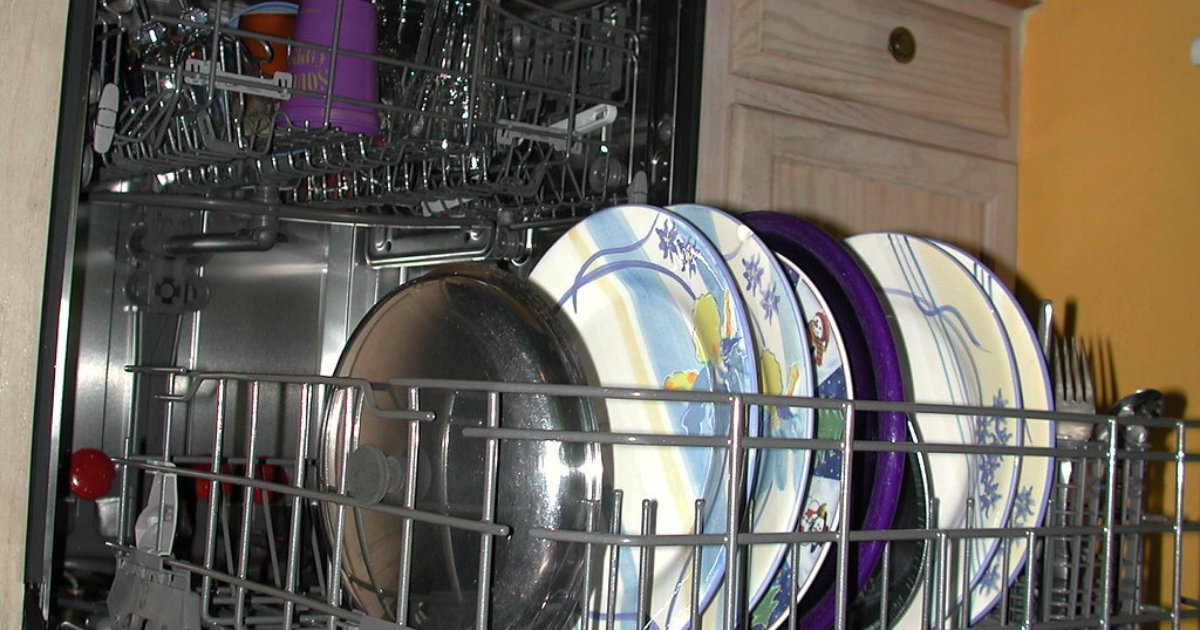
Photo: Dishwasher by Editor B, CC BY 2.0. Cropped.