
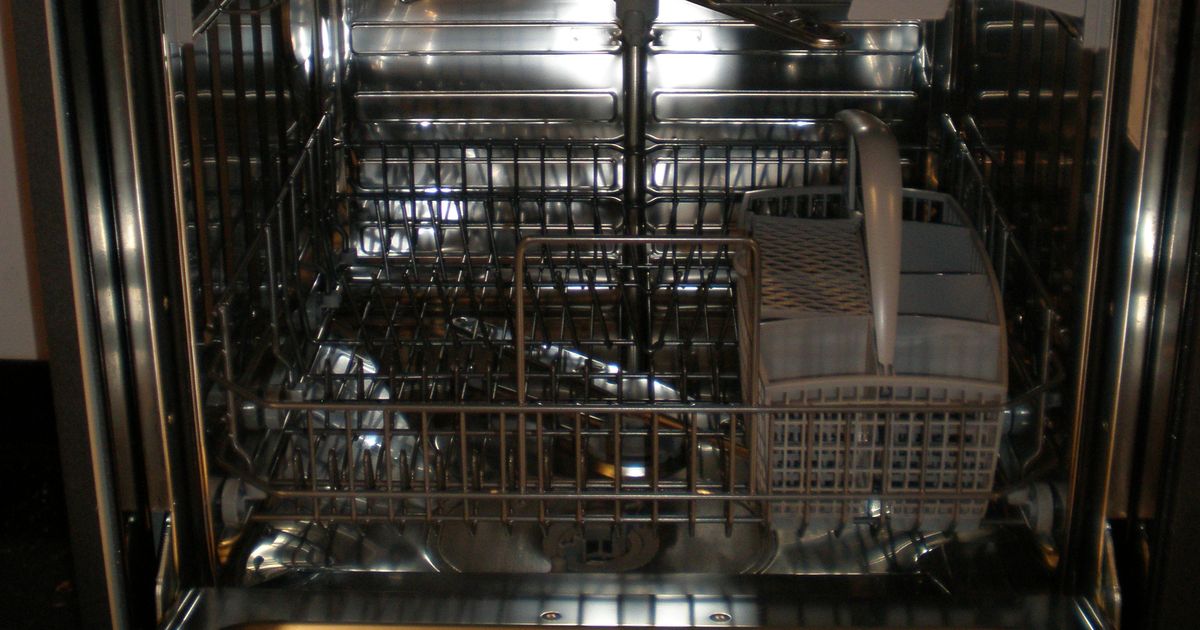
Here's how to clean a dishwasher: take out and wash the filter, clear the holes in the spray arms, wipe the door seal and edges, then run an empty hot cycle with a dishwasher cleaner, or with 2 cups of white vinegar in a cup on the bottom rack. Start with the filter, because it's where most of the dirt ends up. If the dishwasher still smells or leaves food on the dishes after a proper clean, our dishwasher repair technicians can check the pump and drain.
Turn the dishwasher off before you reach into it. On most built-in models that means the switch or breaker; on others, unplug it under the sink.
Key Takeaways
- Clean the filter first. Bosch suggests every few months, and more often helps in a busy kitchen.
- Whirlpool says to clean the dishwasher about every 30 days with a dishwasher cleaner such as affresh.
- For a vinegar clean, Whirlpool puts 2 cups (500 mL) of white vinegar in a cup on the bottom rack and runs a full cycle with no detergent.
- Don't overdo vinegar. Whirlpool and LG both warn that using it too often can damage the dishwasher.
- Never use chlorine bleach in a stainless steel tub. GE says it will permanently corrode the metal.
How often should you clean your dishwasher?
Clean the filter and run a cleaning cycle about once a month. Whirlpool says "Dishwashers should be cleaned approximately every 30 days for optimal performance." Bosch's guide recommends cleaning the filter "every few months." We suggest the shorter interval if you cook a lot or don't scrape plates.
| Part | How often | What to use |
|---|---|---|
| Filter | Monthly to every few months | Warm, soapy water and a soft brush |
| Spray arms | When dishes come out dirty, or every few months | Warm, soapy water and a soft brush |
| Door seal and door edges | Monthly | Soft cloth and warm water |
| Tub and hidden pipes | About every 30 days | Dishwasher cleaner, or vinegar now and then |
How to clean a dishwasher in 5 steps
These steps work on most built-in dishwashers. Your manual shows exactly how your filter and spray arms come out.
Step 1: Empty it and check the bottom
Take out both racks and look at the tub floor. Pick out food, labels, seeds and anything else sitting around the filter. Scraping plates before loading dishes keeps most of this out. Wear gloves and go slowly: broken glass in the drain pump or hose has turned up on 14 of our BC dishwasher jobs.
Step 2: Clean the dishwasher filter
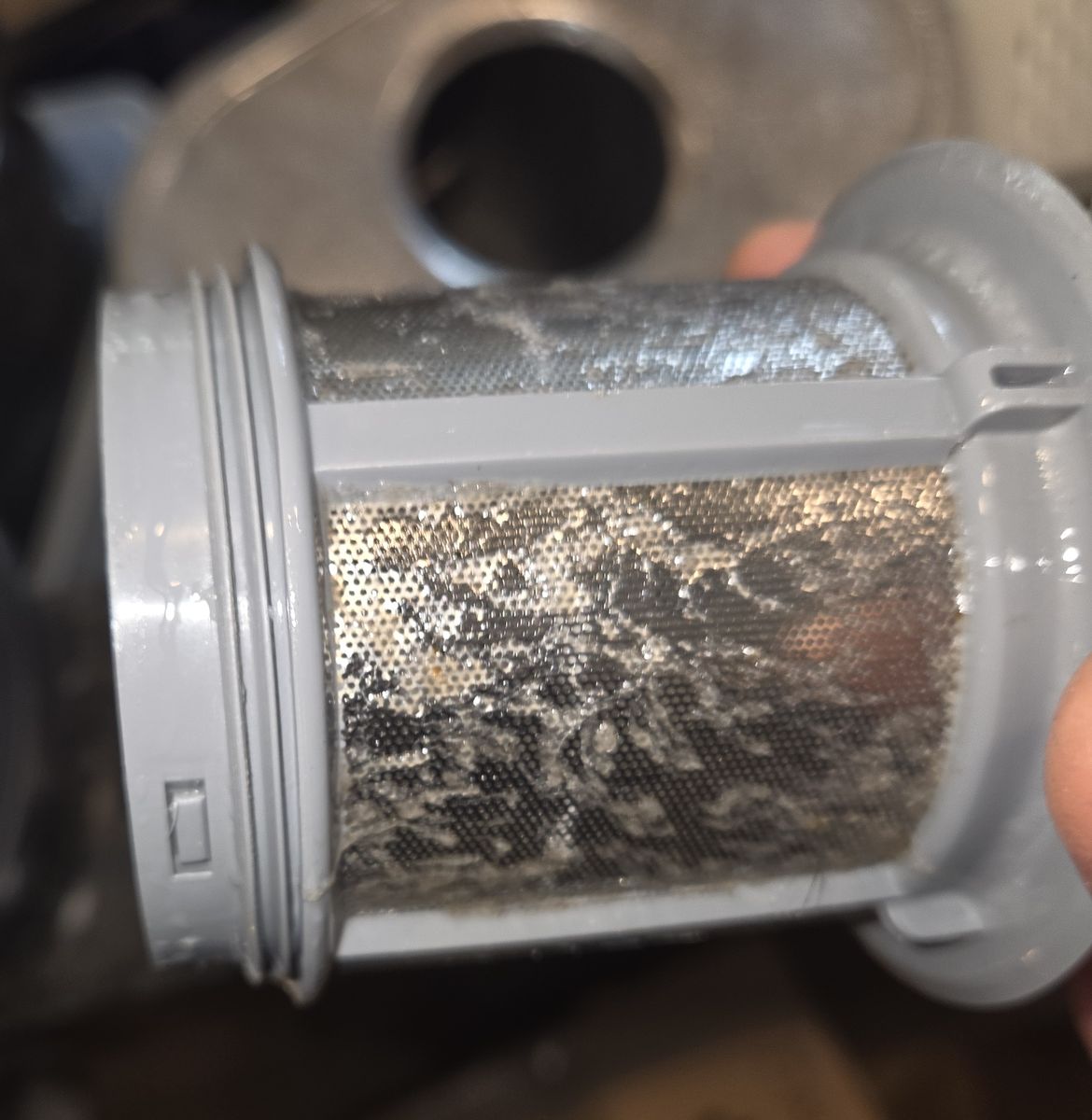
The filter is the most important part of cleaning a dishwasher. Bosch's method is to "Rotate the filter knob to the left and lift up to remove," then "Wash the filter with warm, soapy water and a scrub brush." Separate the fine mesh screen from the cylinder if yours comes apart, rinse both, and lock the filter back in place. A blocked filter is serious enough that Bosch shows it as error E22; our list of Bosch dishwasher error codes covers the rest.
Step 3: Clear the spray arms
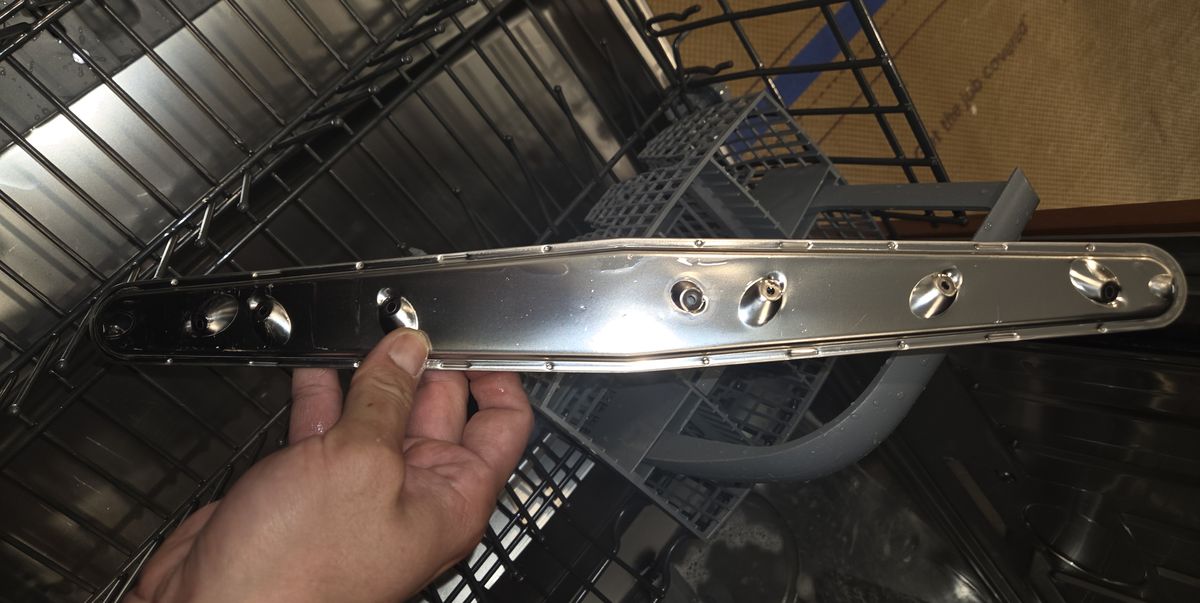
Spin each spray arm by hand. If it catches, or you can see food in the holes, take it out. Samsung's care guide says to "Wash the arms in warm and soapy water and use a soft brush to clean the jets," then rinse them and put them back. A toothpick clears a stubborn hole. Removal differs by brand, so check your manual first.
Step 4: Wipe the door seal and edges
The water spray doesn't reach the door gasket, the bottom edge of the door or the sides of the tub opening. Whirlpool says to "Use a soft cloth or sponge with warm water and thoroughly wipe the door seals." Samsung warns against spray cleaners on the door panel, as they "could damage the door lock and electrical components."
Step 5: Run a cleaning cycle
Put the racks back with nothing in them. Then use a dishwasher cleaner, following the package directions, or the vinegar method below. Run the hottest full cycle your dishwasher has.
That's the deep clean, and the best way to clean the inside of a dishwasher: hand-clean the parts the spray can't reach, then let a hot cycle deal with grease and detergent residue in the tub. Clean your dishwasher this way monthly with a dishwasher cleaner, and save vinegar for the occasional extra clean.
Vinegar, baking soda or a dishwasher cleaner?
For a regular monthly clean, Whirlpool recommends a dishwasher cleaner such as its affresh, used every 30 days to "keep dishwasher fresh, reduce odors, and eliminate detergent build-up." Use whichever dishwasher cleaner your manual names, and follow the package. Vinegar works for an occasional deep clean.
Can I pour vinegar in my dishwasher to clean it?
Yes, but don't pour it straight into the bottom. To clean a dishwasher with vinegar, Whirlpool's method is to "Put 2 cups (500 mL) of white vinegar in a glass or dishwasher-safe measuring cup on the bottom rack," then run a complete cycle on an air-dry or energy-saving dry setting with no detergent. It also warns: "Vinegar is an acid; using it too often could damage your dishwasher." LG gives the same caution. Keep vinegar for the odd deep clean, not every month.
Never mix vinegar with bleach. Health Canada says "Bleach will react with any cleaning product containing ammonia or an acid, including vinegar," and the gases it gives off can be deadly. GE also says "Never use chlorine bleach in a stainless steel interior dishwasher, as bleach will permanently corrode the metal."
Is it better to use baking soda or vinegar?
Vinegar, if you're choosing between the two. None of the support and care pages we checked from GE, Bosch, LG, Samsung or Whirlpool's product help site give a baking soda method for cleaning a dishwasher, while several give a vinegar one. GE suggests a citric acid cleaner for yellow, brown or rust stains on the tub walls, and LG gives a citric acid cycle for odours. Mineral build-up is less likely in Metro Vancouver. Metro Vancouver's 2024 water quality report puts treated water at about 2.5 to 22 mg/L of hardness, which Health Canada's hardness document classes as extremely soft (0 to 50 mg/L). None of our BC dishwasher job notes mention scale.
How do I run a clean cycle on my dishwasher?
Some dishwashers have a dedicated cleaning cycle; check your manual for what it expects. If yours doesn't, empty the dishwasher, add the cleaner as the package directs, and run the hottest full cycle with no dishes.
Why put a ball of tinfoil in the dishwasher?
The foil-ball tip is usually shared as a way to brighten tarnished cutlery. It doesn't clean the dishwasher, and none of the manufacturer guides we checked recommend it. We'd leave it out. Anything loose that drops through the racks ends up at the filter, which is where we find debris on drain calls.
When cleaning doesn't fix it
A clean dishwasher that still smells, still leaves grit on the dishes or still holds water has a fault cleaning won't reach. Our guide to why a dishwasher smells covers odours, and our guide to a dishwasher not cleaning dishes covers wash problems. If water sits in the bottom, start with our dishwasher not draining checks.
Too many suds is another one we see. On our service calls, it's usually the wrong product: liquid dish soap or a whole laundry pod. Flushing the dishwasher and switching to proper dishwasher detergent usually fixes it.
In Metro Vancouver, our diagnostic is a flat $100 and comes off the labour if you go ahead with the repair. Most repairs run $225 to $300 in labour with the diagnostic included; built-in and high-end units can go above that. Parts are quoted before we order them. A drain pump part is $80 to $150. See our appliance repair costs in Vancouver for more.
A yearly appliance maintenance plan is $150 a year and covers your dishwasher with the rest of your appliances, with $75 flat-rate repairs between visits (parts extra). Our guide to cleaning a washing machine follows the same routine for your laundry.
Vancouver Appliance Service Pros fixes dishwashers across Vancouver and the Lower Mainland, 8AM to 8PM, seven days a week. Call 604-265-3852 or book a visit online.
Photo: Asko D3112 dishwasher open by BrokenSphere, CC BY-SA 3.0. Cropped.